Dive Brief:
- A dual-acting cancer drug developed by China-based Akeso helped people with lung cancer live longer after treatment than did Merck & Co.’s blockbuster immunotherapy Keytruda, the company said Thursday, results that support an emerging body of evidence suggesting the medicine may become a future backbone of non-small cell lung cancer care.
- Akeso and its U.S.-based licensee Summit Therapeutics didn’t disclose full results, which came from a new data cut of the trial in Chinese enrollees with non-small cell lung cancer that first brought wide attention to “ivonescimab.” Full data is expected at a lung cancer conference later this month.
- The trial won’t be used as the main evidence to support U.S. approval, as the Food and Drug Administration will want to see outcomes from a global trial in this setting. Those are expected to come in 2028. It does, however, build confidence that a separate, all-important trial could show ivonescimab in combination with chemotherapy outperforms Keytruda and chemo.
Dive Insight:
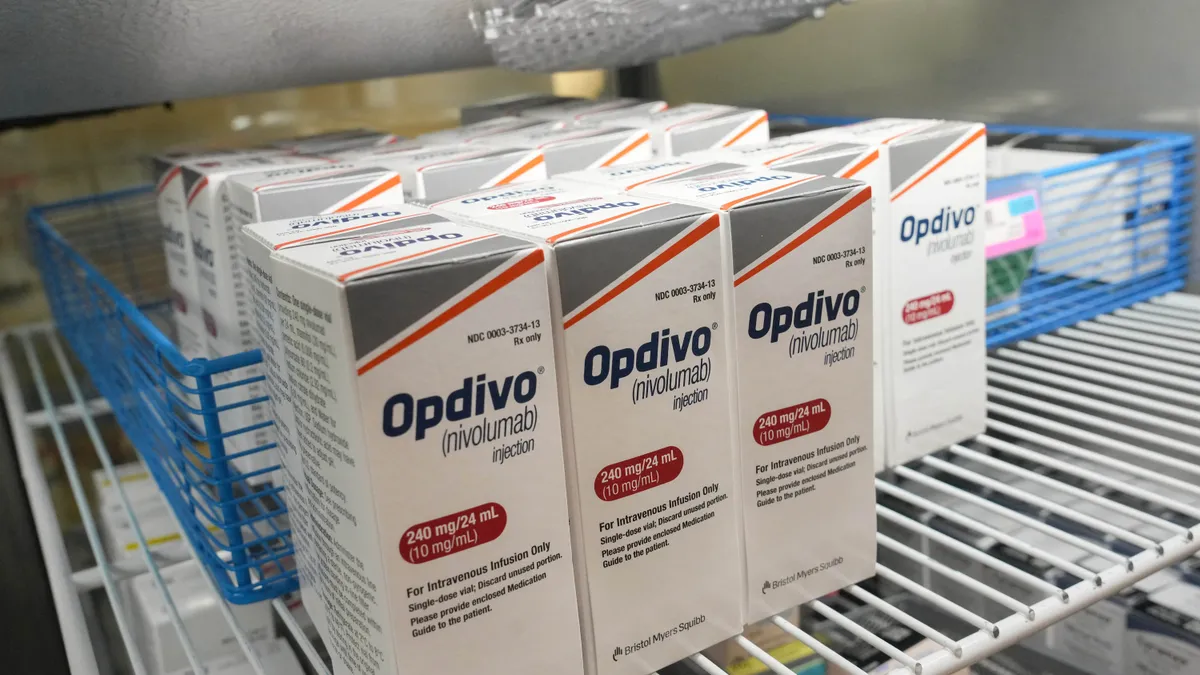
Dual-acting antibody drugs are on the cusp of reshaping lung cancer treatment paradigms already radically altered by innovation in the last decade. Adding immunotherapies like Keytruda and Bristol Myers Squibb’s Opdivo to treatment pathways materially improved on chemotherapy, while targeted therapies in people whose treatments express specific genetic mutations have also altered patients’ prognoses.
Bispecific antibodies like ivonescimab and so-called antibody-drug conjugates are classes of treatments now nearing key data readouts and regulatory review that could upend cancer care. Ivonescimab’s progress spurred Merck to join a rush of investment into drugs like it, which inhibit not only an immunity-evading protein named PD-1, as Keytruda does, but also an essential tumor-growth protein known as VEGF.
Merck, though, has hedged its bets by investing as well in an antibody-drug conjugate that could rival ivonescimab.
Regulators look for cancer drugs to extend overall survival in addition to delaying disease progression. Achieving that in this trial was an important milestone for ivonescimab, as it hints the drug will continue to do so in head-to-head trials against Keytruda and other PD-1 inhibitors, both as single agents and in combination regimens.
TD Cowen analyst Tyler Van Buren wrote in a client note that the data from this single-agent trial “derisks” the global study of ivonescimab and chemotherapy against Keytruda and chemotherapy, results of which are expected later this year or early next.
That has been the subject of debate among doctors and investors since the readout from a trial pitting those two combinations against each other in Chinese enrollees due to the differences in patient characteristics in China compared with the rest of the world.
UBS analyst David Dai expects that, when data from this single-agent trial are fully disclosed at the World Conference on Lung Cancer, Akeso will show ivonvescimab reduces the relative risk of death by around 24%.
Summit shares rose as much as 14% in Thursday morning trading, while Akeso closed with a 3% increase on the Hong Kong market.