
Controversy and upheaval have roiled the Food and Drug Administration this year, but there’s one issue on which industry leaders and regulatory officials remain aligned — the need to accelerate early-stage clinical trials and bring them back to the U.S.
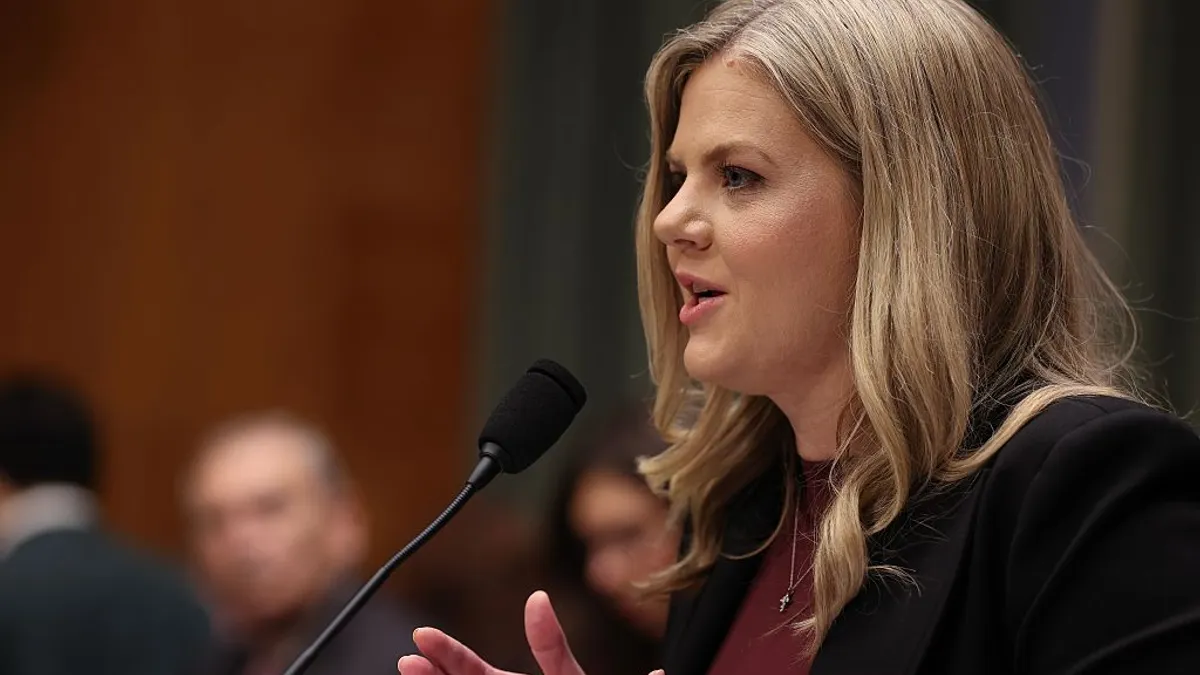
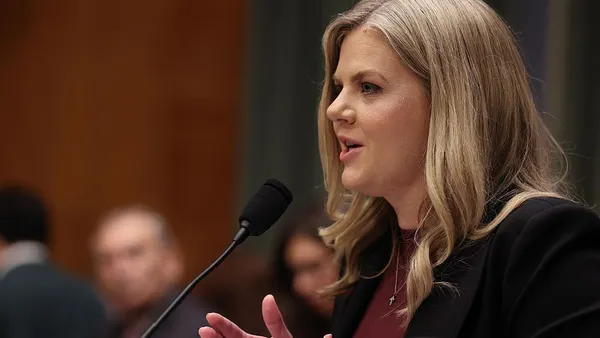
Will recent leadership changes, including the exit of FDA Commissioner Martin Makary, and turnover at the divisions responsible for reviewing biologics and drugs, derail momentum toward that goal? It’s unlikely, according to Tala Fakhouri, the chief artificial intelligence and regulatory strategy officer at Parexel, and a former FDA AI policy official.
“The White House and HHS have unequivocally declared they want the U.S. to remain No. 1 and highly competitive for drug development, and bring early trials to the U.S. and manufacturing back,” she said. “I don’t think these policies and priorities are going to change.”
Even so, it’s not a straight line from intention to trial acceleration, she added. “The secret will be in how you actually do that. We need more implementation than just policy,” Fakhouri said.
Moves to accelerate trials
Several recent initiatives at the FDA have aimed to grease the wheels of development, including the Commissioner’s National Priority Voucher pilot program, which offers chosen drugs a rapid review process. Then there’s the real-time clinical trial monitoring initiative that gives regulators access to live data to speed reviews, while the “plausible mechanism” pathway permits the use of a single trial instead of two to demonstrate substantial evidence of effectiveness.
“If you also look at the proposed 2027 budget for the FDA, there's also emphasis on pre-IND reforms to expedite early trials,” Fakhouri said.
The potential sticking point, however, is that some of these initiatives were made outside of the traditional FDA guidance process and published in journals like The New England Journal of Medicine or JAMA, or announced at press conferences.
This informality presents challenges for industry, often removing the valuable feedback loop engrained in the typical approach.
Typically, draft guidance would be opened up for comment, drug companies would submit questions, concerns or talking points, and the agency might make modifications as a result. Such feedback is critical for giving FDA policymakers needed granular detail about day-to-day trial work to ensure their initiative hits the mark without creating unintended complications for developers.
“When I was at the agency, we read every single comment we got on the public docket,” she said. “These comments are taken seriously, they're categorized, they're thought about and responded to thoughtfully by different multidisciplinary teams.”
But some decisions are still being made using the old paradigm, which is creating uncertainty for companies running trials.
“It's hard to know what to operationalize for your drug development program,” Fakhouri said, pointing out that this is a particular challenge for biotechs with limited resources. “They can't follow a drug development program based on a paper that was published in a journal. They need to be able to anchor their decisions in guidance and formal policy by the agency.”
A consistent return to the traditional rule-making process would provide more stability, she added.
What it’ll take to stay on track
There are also questions about whether officials at the White House and the Department of Health and Human Services can effectively operationalize changes to speed the pace of clinical trials. FDA staff layoffs and departures have raised doubts about whether the agency has the bandwidth to carry out new policies, many of which are labor intensive.
Real-time clinical trial monitoring, for example, needs staff to check signals more frequently, Fakhouri said. Increasing the number of U.S-based trials will require additional subject matter experts and training for review staff, which takes time.
“You don't just walk into the FDA one day, and then the next day you're reviewing. There has to be planning for scaling up and getting to numbers that would be acceptable to perform the level of effort that the agency is envisioning with all of the changes,” Fakhouri said.
So far, Parexel, which runs a global network of clinical trial operations, hasn’t been hampered by staff-related issues at the agency.
“We have not experienced delays for the programs that we are supporting. But if you imagine a smaller, inexperienced company trying to do this for the first time without any formal support, I don't know what their experience is,” she said.
Drugmakers, meanwhile, have reported conflicting feedback from the agency, which has led to application denials. But there are signs of stability and potentially a change in direction.
Following recent announcements, “some really capable and trusted people are now in acting positions,” Fakhouri said. Mike Davis, now the acting director of the Center for Drug Evaluation and Research, has experience as an FDA reviewer. “He's loved by FDA review staff and highly respected within CDER. So, that is a very good sign,” Fakhouri said.
Industry leaders have shown similar support for Karim Mikhail, who spent two decades in leadership roles at Merck & Co. and is now acting director of CBER.
“These are all changes that are trending positively. These are ... people with experience in drug development,” she said.
The agency’s direction will depend heavily on who will be the next FDA commissioner, which for now, is being filled by Kyle Diamantas. But a cohesive push to strengthen the clinical trial infrastructure will require more than just the FDA.
“It really has to be a whole government approach,” Fakhouri said. “It can’t just be left on the FDA.”
“FDA is just a part of that entire ecosystem,” she added. “You have to have CMS, NIH, all of HHS. Many things have to align to actually make that work.”