Dive Brief:
- Novo Nordisk’s experimental combination obesity shot CagriSema spurred less weight loss than Eli Lilly’s Zepbound in a head-to-head Phase 3 trial, the company said Monday, casting more doubt about the company’s potential to reclaim a bigger share of the ultra-lucrative market for obesity drugs.
- CagriSema helped people lose an average of 20% of their body weight over 84 weeks, compared with the 24% figure recorded for those who got Zepbound. The difference was too great for study investigators to declare CagriSema “non-inferior,” or statistically equivalent to, Lilly’s popular medication.
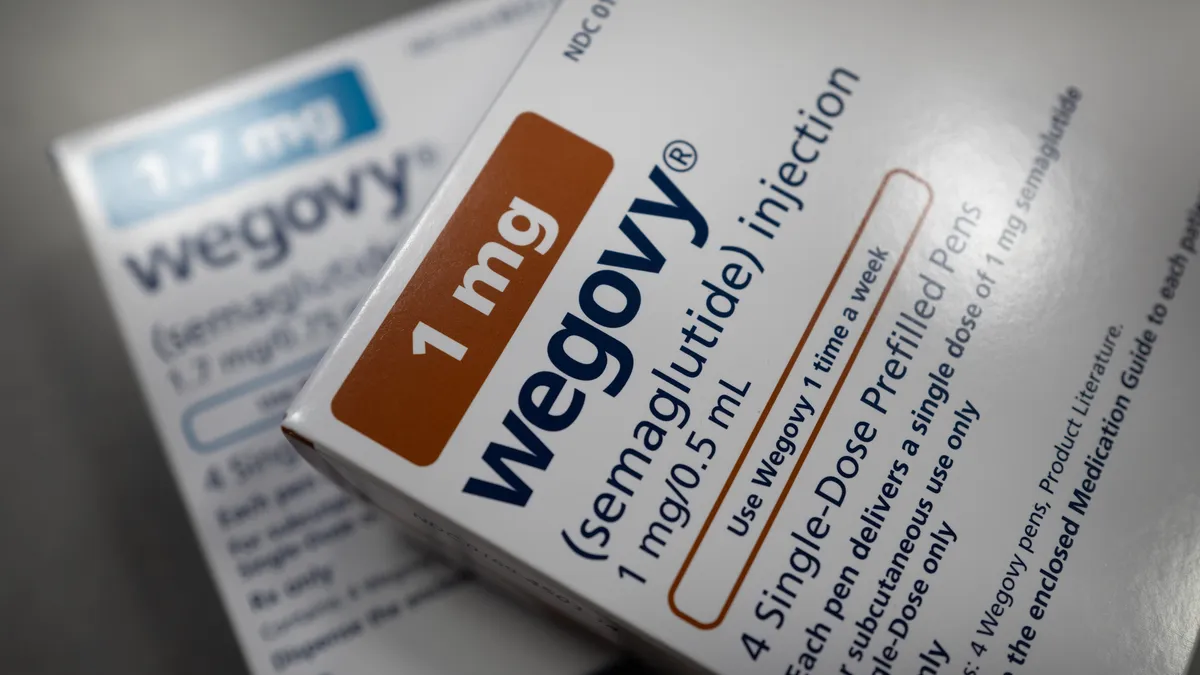
- Earlier this month, Novo predicted sales of its obesity drugs would shrink in 2026 amid pricing pressure and growing competition for its once-dominant obesity shot Wegovy. Wall Street analysts said CagriSema’s latest data likely wouldn’t help matters.The Denmark-based drugmaker’s already battered shares took another hit, falling 15% on the U.S. market in Monday morning trading.
Dive Insight:
CagriSema is supposed to be a step forward for Novo’s obesity business. The medicine combines the active ingredient in Wegovy with a second metabolic drug in the hopes of spurring greater weight loss. But prior to Monday, its outlook was already uncertain, as the drug in a previous Phase 3 trial didn’t achieve a weight loss threshold set by Novo’s own executives.
The head-to-head trial represented a chance for Novo to change the narrative on CagriSema. Yet early signs suggested a poor outcome loomed. Novo extended the amount of time enrollees received treatment from 72 to 84 weeks before their final weight loss measurement. That change was intended to address a hypothesis that emerged following the initial Phase 3 result and that indicated patients’ weight loss hadn’t yet plateaued after 68 weeks.
The results revealed Monday, though, showed that change wasn’t enough to boost CagriSema’s performance. The drug’s weight loss number in the head-to-head study was roughly equivalent to the 20% previously reported in the other trial.
Novo executives noted on Monday that the 20% weight loss registered with CagriSema is roughly in line with what’s on Zepbound’s prescribing information. “From a strict label perspective, CagriSema will actually have a strong and very competitive weight loss label,” said Martin Holst Lange, Novo’s research and development head, on a call with reporters.
Wall Street analysts aren’t so sure, however. William Blair analyst Andy Hsieh called the finding a “worst case scenario,” adding that Zepbound and drugs like it “will continue to command market leadership in the United States against the backdrop of the increasing number of new entrants.”
In a separate note, Jefferies analyst Michael Leuchten argued that “it is difficult to command a premium positioning for the drug,” and that his team is struggling to understand “what role” CagriSema will play going forward.
Novo has asked the Food and Drug Administration to approve CagriSema. A decision is expected later this year.
Monday’s news dimmed one of Novo’s recent bright spots — the fast launch of its Wegovy pill. The pill and CagriSema have been seen as keys to growing obesity drug sales as it advances a broader pipeline of other weight loss and metabolic disease medicines.
But Novo is also battling with compounders that capitalized on an earlier drug shortage and legal loopholes to erode some of the company’s market share. That scuffle continues to this day. The company lost a bidding war for obesity startup Metsera, too.
Shares have fallen more than 50% in the past year and are 72% off the record highs achieved in mid-2024.