Dive Brief:
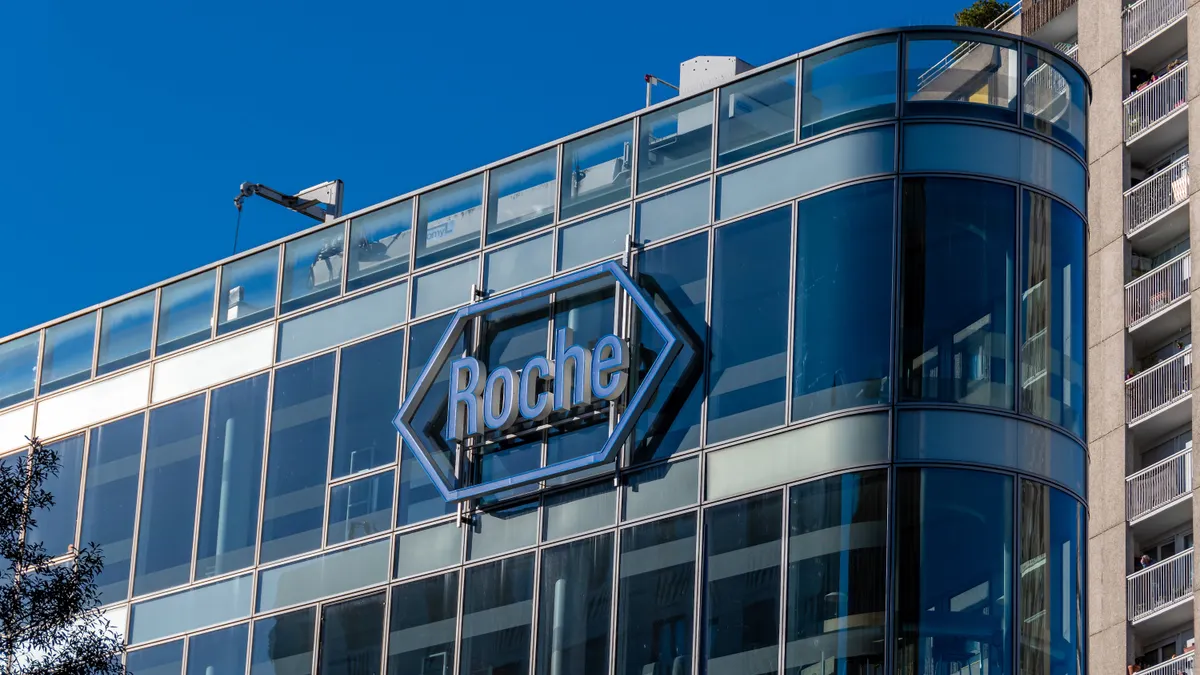
- Roche’s experimental medicine divarasib helped patients with a certain type of lung cancer live longer than two approved treatments in a new study.
- The Phase 3 trial compared divarasib with Amgen’s Lumakra and Bristol Myers Squibb’s Krazati in patients with KRAS G12C non-small cell lung cancer who had already received previous treatment. Researchers found significant improvements in both overall survival and progression-free survival for the group taking divarasib, Roche said Thursday.
- Roche did not release detailed data, saying the results would be presented at an upcoming medical meeting. There were no new safety findings of concern and most treatment-related side effects were “manageable and reversible,” the company said.
Dive Insight:
Roche is trying to break into a relatively new market for medicines targeting a genetic mutation known as KRAS G12C that occurs in about 14% of non-small cell lung cancer cases. When working properly, the KRAS gene helps regulate cell growth, acting as an on-and-off switch. The G12C mutation locks the switch to “on,” leading to continuous cell growth that drives tumors.
Amgen won the first approval for a KRAS-targeting medicine in 2021. The Food and Drug Administration cleared Krazati for sale the next year. The promise of the medications caught the eye of Bristol Myers Squibb, which announced its $4.8 billion acquisition of Krazati’s developer, Mirati Therapeutics, in 2023.
Now, Roche wants to carve out part of the market for itself. The company’s head-to-head study, titled Krascendo-1, “should establish divarasib as a new standard of care for previously treated lung cancer patients with this genetically defined tumor subtype,” Roche’s chief medical officer, Levi Garraway, said in the company’s statement.
The second-line treatment study is a boost for Roche, but the bigger market opportunity is in patients who have not yet received therapy, Jefferies analyst Michael Leuchten wrote in a note to clients. Roche is testing those patients in the “Krascendo-2” trial, which compares a regimen of divarasib plus Merck & Co.’s blockbuster cancer drug Keytruda against Keytruda plus chemotherapy.
Success in that trial would open up a revenue opportunity of as much as 5 billion Swiss francs, or about $6.2 billion, compared with 1 to 2 billion francs in the second line, according to Leuchten. “Krascendo-1 is a small win for Roche, but we view it as premature to claim overall victory,” he wrote.