Dive Brief:
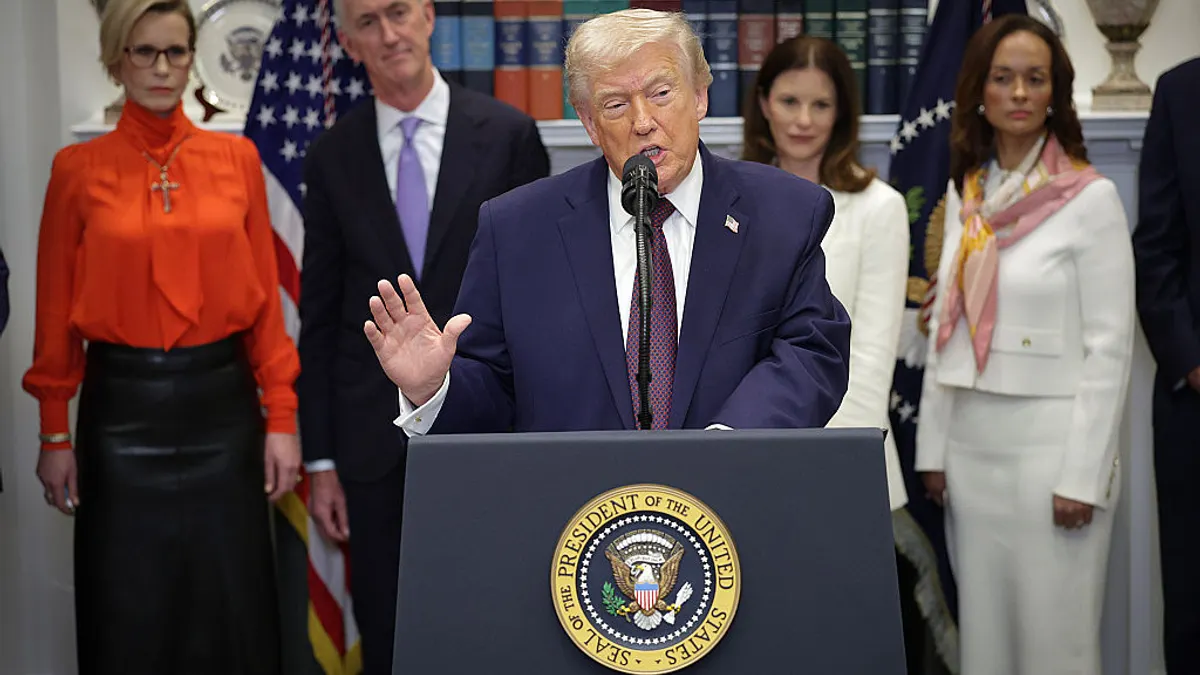
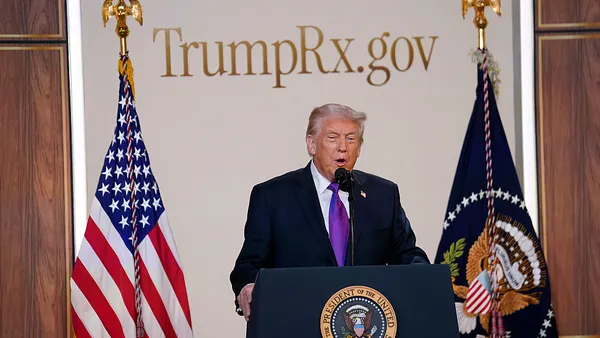
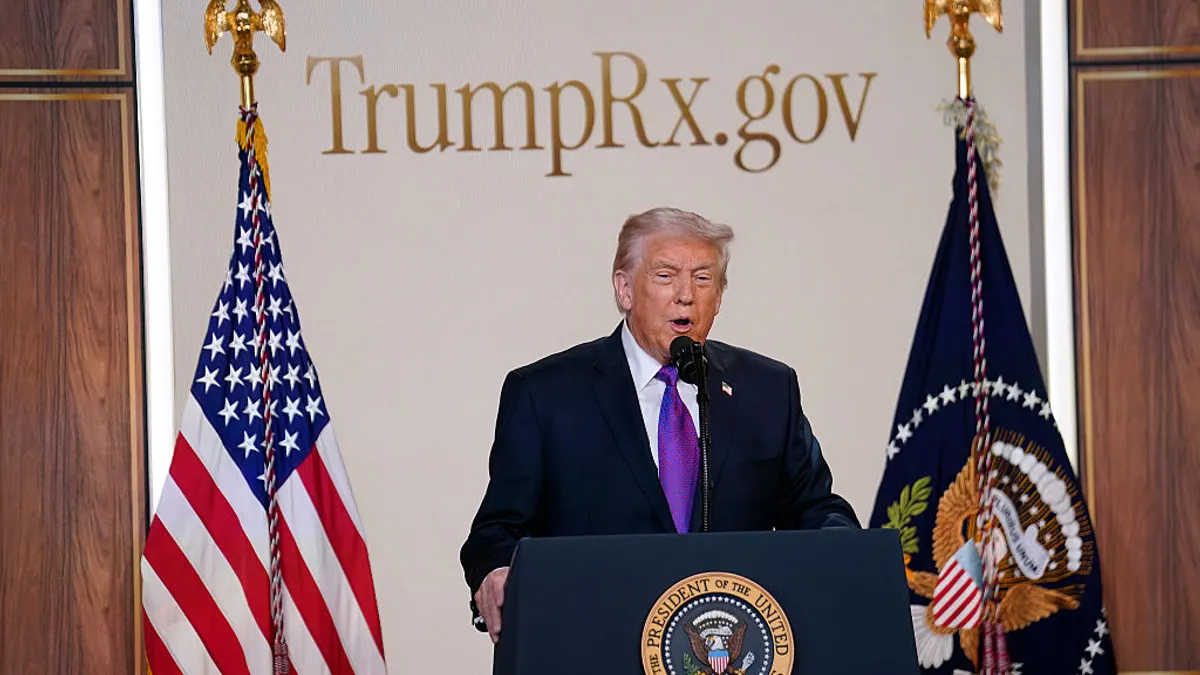
- The Trump administration on Thursday unveiled a new online portal that will, at the outset, allow people to purchase around 40 drugs from a handful of manufacturers that have struck pricing deals with the White House.
- Dubbed TrumpRx, the platform will offer many medications already available through drugmakers’ own direct-to-consumer channels, such as Eli Lilly and Novo Nordisk’s obesity treatments Zepbound and Wegovy. Drugs from Pfizer, Merck & Co. and AstraZeneca, as well as an IVF treatment from EMD Serono, are also being offered through the website.
- The products involved have all been featured in “most favored nation” pricing agreements meant to equalize U.S. drug costs with the lowest rate charged overseas. While the service could offer some financial relief to people who pay cash for drugs, it will have little effect on the vast majority of people whose medications are covered by health insurance.
Dive Insight:
Direct-to-consumer drug sales, which bypass traditional methods of paying for pharmaceuticals, represent a small but growing part of big drugmakers’ marketing strategies.
In the past, pharmaceutical companies used these channels as tools to compete with lower-cost generics. But they’ve become more prominent amid pressure from the Trump administration and, more recently, demand for obesity medications that are frequently excluded from private insurance plans.
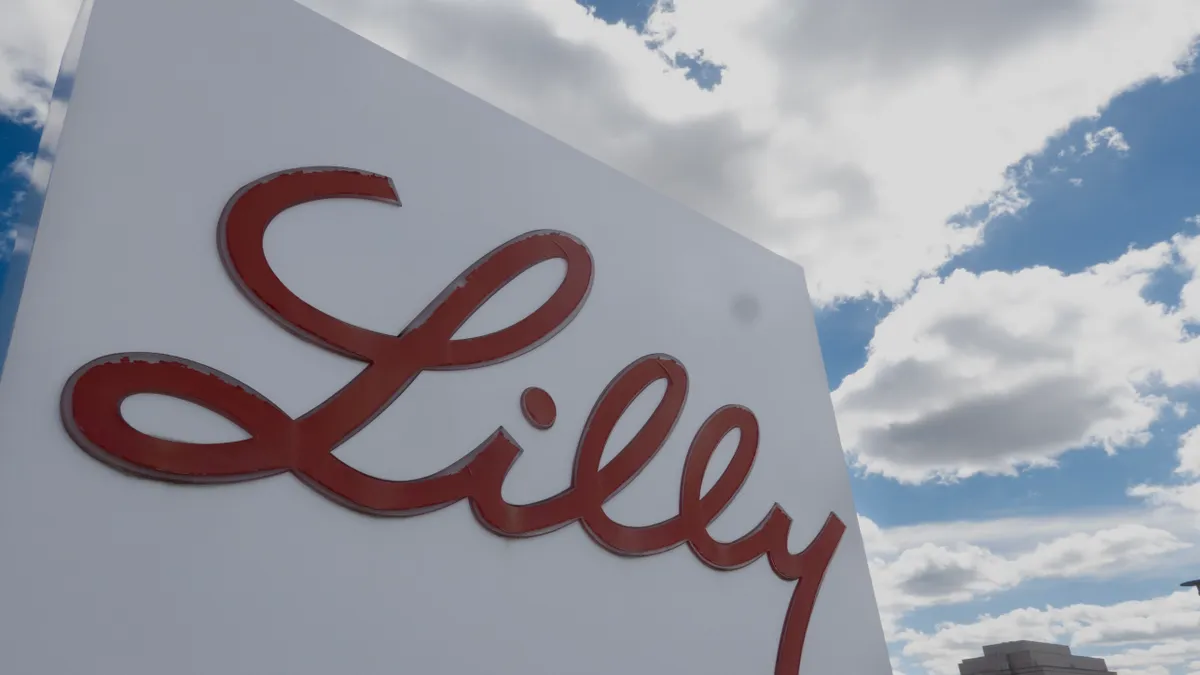
“I think it’s going to be a big part of our future,” said Lilly CEO David Ricks, at the J.P. Morgan Healthcare Conference in January.
TrumpRx is the latest example. On Thursday, the Trump administration highlighted a dozen medicines that will be sold on the site, most of which are for common conditions like obesity, diabetes, asthma, eczema, infertility and osteoporosis. Aside from obesity drugs, Novo’s version of Wegovy for diabetes, called Ozempic, and AstraZeneca’s lung disease medicine Bevespi Aerosphere were the best-selling products included in the White House’s pricing deals.
More drugs will be added to the site “in coming months,” the administration said Thursday.
Drug companies that cut deals with the White House gained a three-year reprieve from pharmaceutical tariffs in return. Notably, those agreements also largely include medicines that aren’t big earners, are already heavily rebated, or are nearing the end of their exclusivity. And the discounts offered, in many cases, don’t represent a better deal than securing drugs through insurance plans, premiums for which are spiking under the current administration.
“TrumpRx is nothing more than a glorified coupon book, and it will advance the Republican agenda to undermine affordable health care for American families,” said Ron Wyden, D-Ore., in a statement.
It’s not year clear what will happen to the drug pricing pacts should the Supreme Court reject President Trump’s authority to impose tariffs under the International Emergency Economic Powers Act. The court heard oral arguments on lawsuits seeking to overturn those tariffs three months ago, and a decision is expected soon.
The White House aims to codify the pricing agreements under a healthcare plan revealed in January.