U.S. health officials on Monday said they would reduce the number of vaccines recommended for children, a drastic and unprecedented decision that was made in response to a directive from President Trump.
The Centers for Disease Control and Prevention will now universally recommend 11 vaccines instead of the previous 17, a move that the Department for Health and Human Services said would better align the U.S. schedule with those of certain other wealthy nations. The decision is effective immediately.
The agency will continue endorsing immunizations against “diseases for which there is international consensus,” among them polio and measles. However, shots for other infections, such as respiratory syncytial virus, meningitis and hepatitis A and B, will only be recommended for “high-risk groups,” while vaccines for flu, COVID and rotavirus would be given through “shared clinical decision-making.”
The new recommendations aren’t a mandate, as individual states craft their own vaccine requirements. But the agency’s guidance does influence statewide decisions.
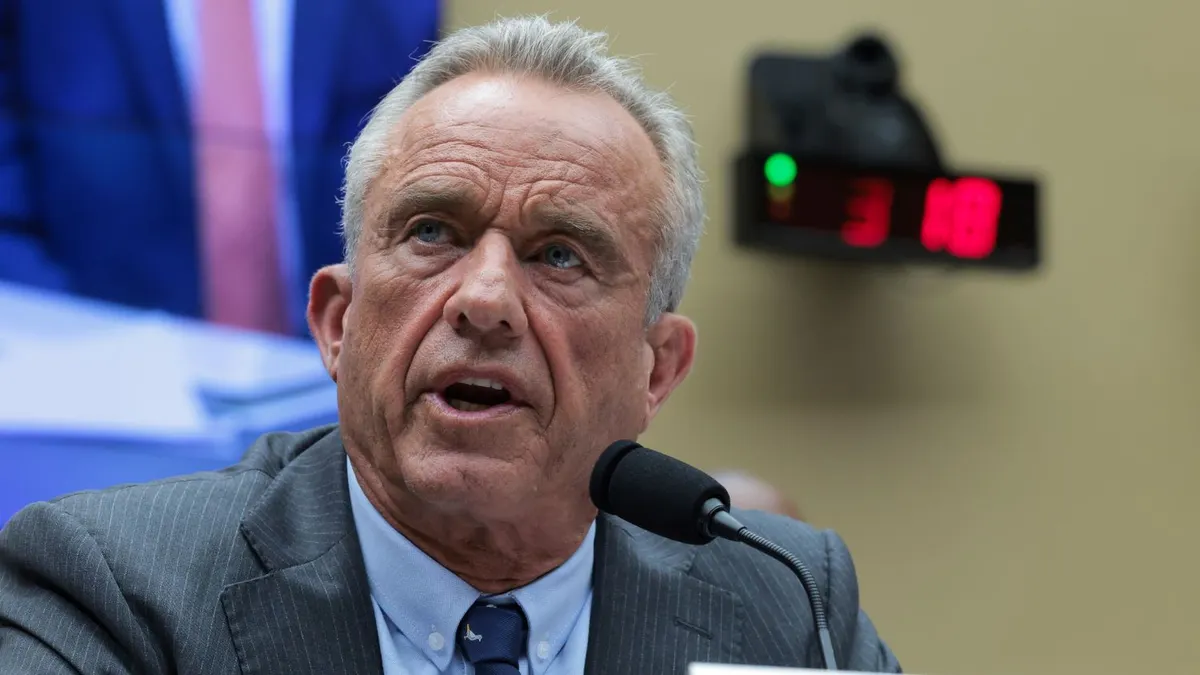
The move, then, represents a massive shift in vaccine policy and one enacted without the CDC’s typical rigorous process, which involves the public vetting of evidence by independent scientific reviewers. It also achieves a long-held goal of HHS Secretary Robert F. Kennedy Jr. — who founded the anti-vaccine group Children’s Health Defense before his short-lived presidential run — and follows a Dec. 5 order from Trump to look into the way “peer nations” recommend vaccines.
"This complete overhaul of our vaccine system had no public deliberation by experts, nor were there any opportunities for open comment," said Kawsar Talaat, an infectious disease physician and associate professor in the Department of International Health at the Johns Hopkins Bloomberg School of Public Health, in an email to BioPharma Dive. "This is a purely politically motivated change."
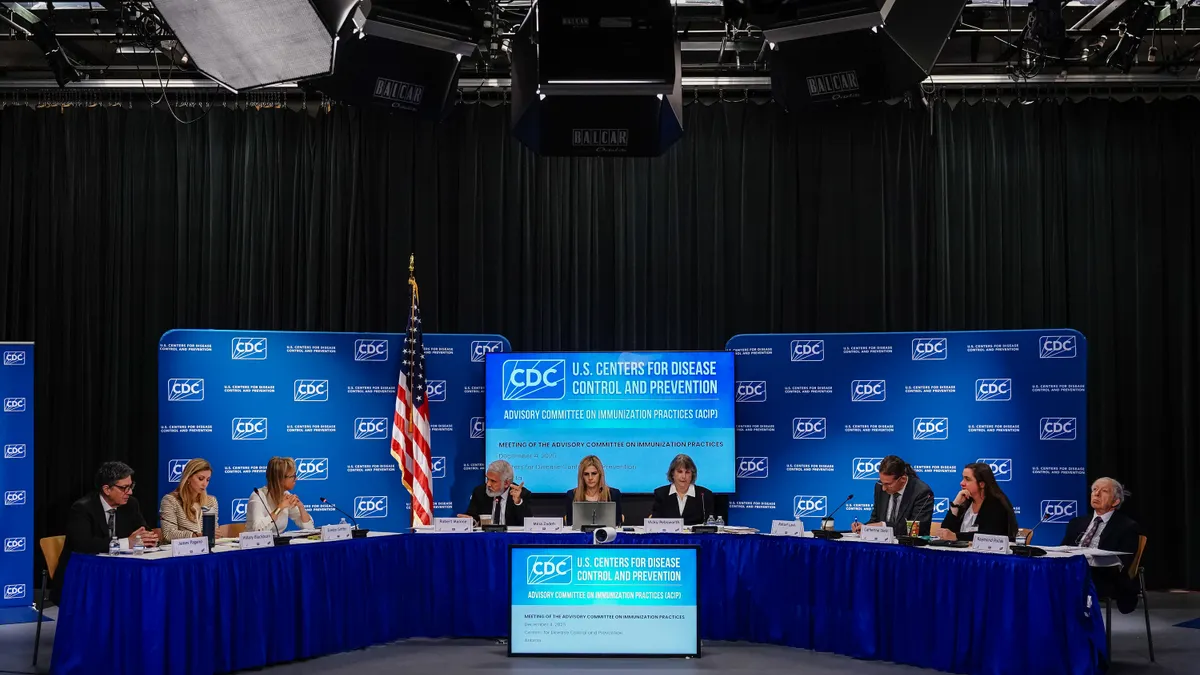
According to the HHS, the decision to upend current standards was the result of an assessment led by Tracy Beth Høeg — a COVID-19 vaccine critic who now runs a top Food and Drug Administration office — and Martin Kulldorff, a recent CDC vaccine panelist who previously served as an expert witness in litigation against Merck & Co. over its HPV shot Gardasil.
That review determined that the U.S. is a “global outlier” among 20 developed nations in terms of the number of diseases addressed by routine shots and the total recommended doses. It also claimed the current U.S. schedule is at least partly to blame for declining vaccination rates, arguing nations with less immunizations “maintain high vaccination rates through public trust and education rather than mandates.”
“The data support a more focused schedule that protects children from the most serious infectious diseases while improving clarity, adherence, and public confidence,” said acting CDC Director Jim O’Neill, in a statement. Officials also noted that all vaccines recommended as of Dec. 31, will continue to be covered by insurance.
However, the U.S. schedule has been demonstrated as generally safe and effective through decades of research. According to the American Academy of Pediatrics, the policy has also helped save more than 1 million lives and save trillions of dollars in healthcare costs over the last three decades.
Additionally, the U.S. schedule closely resembles the immunization protocols in multiple countries involved in the HHS’ review — among them Britain, Australia, Canada and Germany. The vaccine policies of many nations also depend on population demographics, as well as differences in healthcare coverage and the types of disease threats their citizens face.
“Comparing the U.S. childhood immunization schedule to that of Denmark or other countries ignores fundamental differences in population size, diversity, healthcare access, and infectious disease risk. These differences matter,” said Robert Hopkins, Medical Director of the National Foundation for Infectious Diseases, in a statement. “U.S. immunization policies must be guided by a transparent, evidence-based process and grounded in U.S. epidemiology and real-world risk.”
Richard H. Hughes, a partner at the law firm Epstein Becker Green, also noted in an e-mail that the move may be “unlawful” under what’s known as the Administrative Procedure Act, which directs agencies to carry out thorough processes before making major policy shifts.
Editor’s note: This story has been updated with outside commentary.