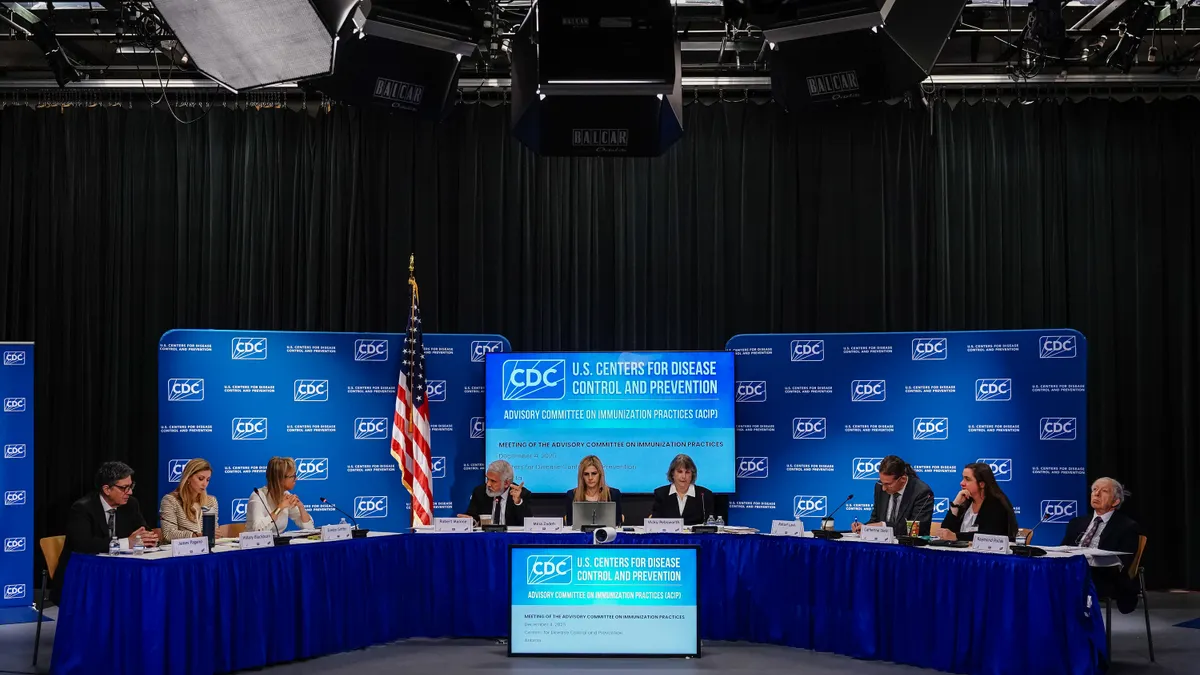
A key vaccine committee hand-picked by Robert F. Kennedy Jr. closely scrutinized the childhood immunization schedule at a high-stakes meeting Friday, in the latest indication the panel may consider additional changes in the future.
The committee, which voted earlier in the day to change a decades-old standard for hepatitis B vaccines, didn’t vote on any new recommendations for the routine practices that inoculate children against a bevy of other infectious diseases. But in an hours-long discussion, they focused on whether that schedule may increase the risk of chronic conditions despite extensive research proving otherwise.
The immunization schedule calls for vaccines to be administered at certain milestones in a child’s life. The series includes inoculations against many diseases that can lead to severe illness, such as polio, measles and tetanus, among others. It’s been demonstrated as generally safe and effective through decades of research, and has been credited with saving millions of lives across the world.
“We've had at least two children die from the measles in the United States in the last year. It's 100% preventable. I think the safety of vaccines is something that has been demonstrated over and over and over again, decades of use in billions of babies around the world,” said Kawsar Talaat, an infectious disease physician and associate professor in the Department of International Health at the Johns Hopkins Bloomberg School of Public Health, in an interview with BioPharma Dive.
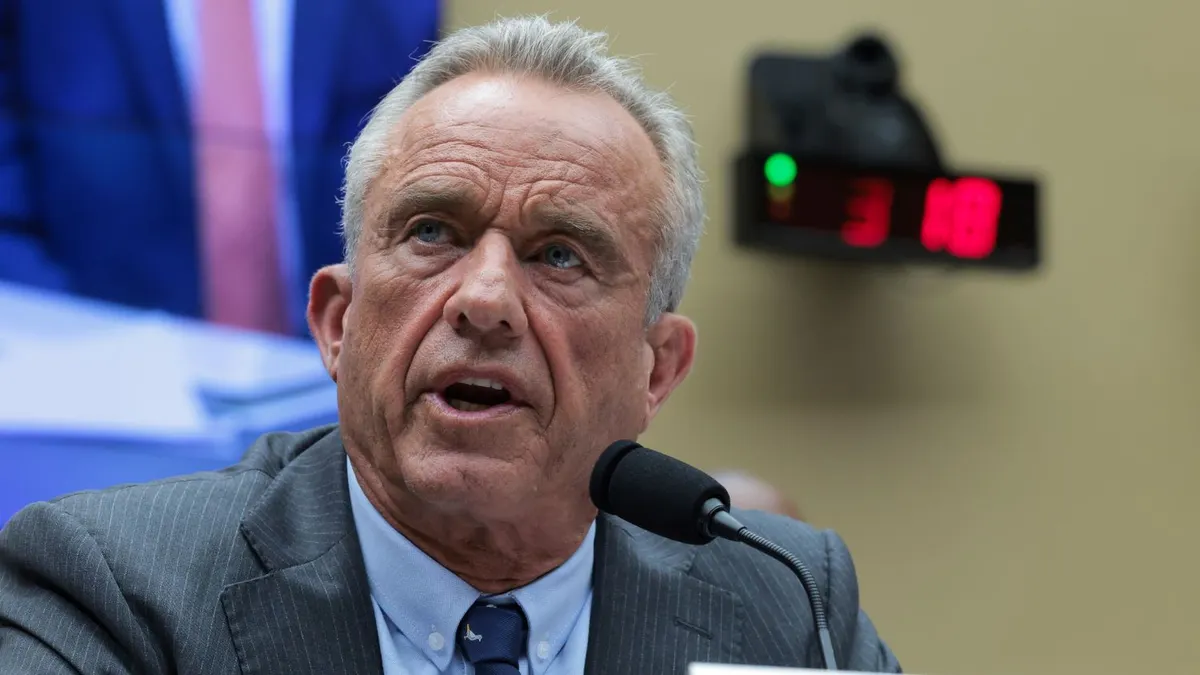
Yet the immunization schedule has long been a target of Kennedy, the Secretary of Health and Human Services and a prominent anti-vaccine activist. As the head of HHS, he’s reformed the vaccine advisory panel, ACIP, and stacked it with multiple members aligned with his views. That panel has already questioned the safety and impact of multiple shots and now softened support for the hepatitis B vaccine. It’s also increasingly hearing presentations from sources with a history of vaccine skepticism.
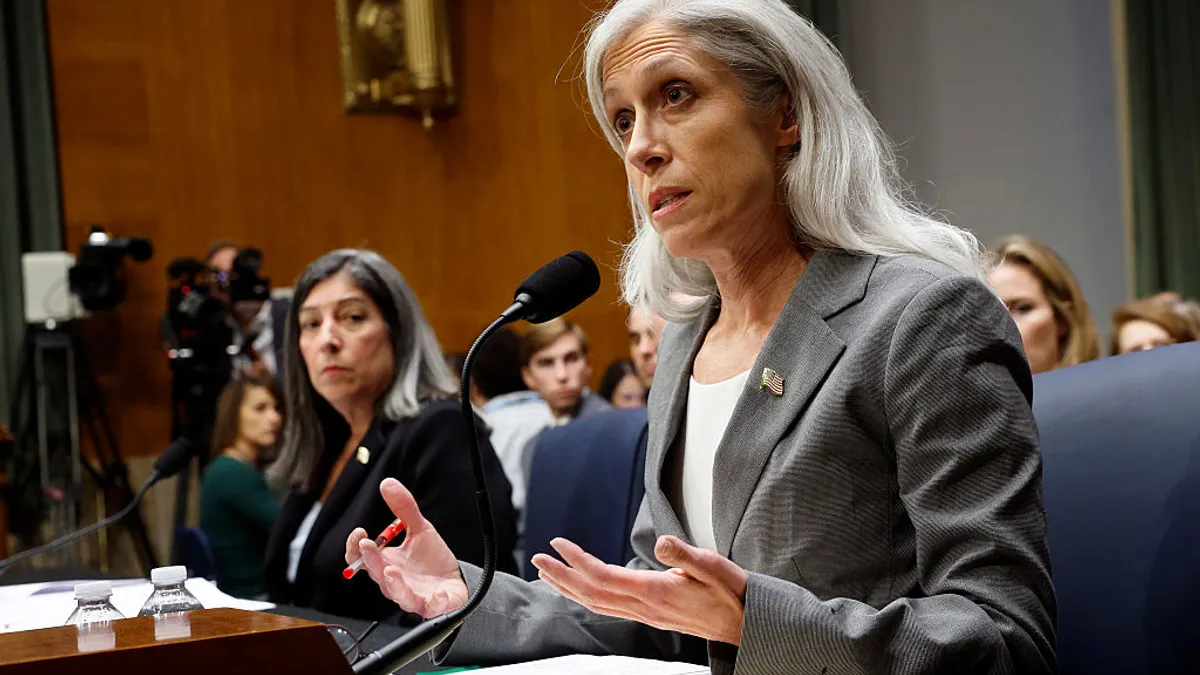
Friday’s presenters were the latest example. One was Aaron Siri, a lawyer who’s sued vaccine manufacturers and petitioned the FDA to revoke the polio vaccine. The other was Tracy Beth Høeg, a COVID vaccine critic recently named to one of the agency’s highest-ranking positions.
In a 76-page slide deck, Siri falsely claimed that most childrens’ vaccines were not tested against a control or a placebo prior to approval. Many were, according to the American Academy of Pediatrics. Siri additionally argued against the cumulative number of shots kids receive and the way they’re spaced out compared to other countries, echoing a talking point from anti-vaccine groups — which scientists have refuted — that these inoculations overwhelm the immune system.
He also contended more safety data is needed, and that all of ACIP’s vaccine recommendations should involve “shared decision making,” a weaker endorsement in which a clinician and patient work together to make a medical decision.
Cody Meissner, an expert in pediatric infectious disease epidemiology, vaccine development and immunization safety, castigated Siri afterwards, calling his work a “terrible distortion of all the facts.” The spike in vaccines administered has resulted in plummeting rates of infectious disease in the U.S., he noted, and an adverse event that occurs around the time of vaccination doesn’t prove the shot was to blame.
“All you're focusing on are these very rare, ill-defined side effects, and completely ignoring the extraordinary benefit and promise that these vaccines apply to us,” Meissner said, contending Siri shouldn’t have been invited to speak in the first place.
Høeg, meanwhile, compared the U.S. and Danish vaccination schedules, highlighting how Denmark requires fewer immunizations for children. She also claimed there to be an association between vaccination and chronic health issues, noting how the rates of such health problems have climbed "precipitously" since the early 1980s.
No evidence was presented linking vaccines to a rise in chronic diseases. And Adam Langer, the CDC’s acting director for the National Center for HIV, Viral Hepatitis, STD, and TB Prevention, noted Denmark’s smaller population and different healthcare system make it a misleading comparator to the U.S.
“So let's talk about apples to apples, not apples to oranges,” Langer said.
Multiple ACIP members also focused on the use of aluminum in immunizations. Aluminum has been safely used for decades as an immune-boosting adjuvant in more than a dozen standard childhood vaccinations. A massive study evaluating the impact of aluminum adjuvants in over 1 million children in Denmark over the course of three decades found no link between exposure and a wide range of chronic conditions. And Talaat noted how the aluminum exposures from diets and the surrounding environment are “so much more” than what’s contained in vaccines.
ACIP panelists didn’t say they intended to recommend the elimination of aluminum salts from vaccines, more that they wanted to elevate a discussion about the potential risks and have a work group examine it in the future.
Removal, though, would usher in major challenges for vaccine manufacturers. New vaccine formulations would take years to develop and test and potentially affect the availability of several shots, including inoculations against HPV, meningococcal B and hepatitis A and B, among others.