Dive Brief:
- Immune drug developer Alumis said on Tuesday that its top prospect has succeeded in two Phase 3 trials, helping people with psoriasis eliminate most of their skin lesions after four months of treatment.
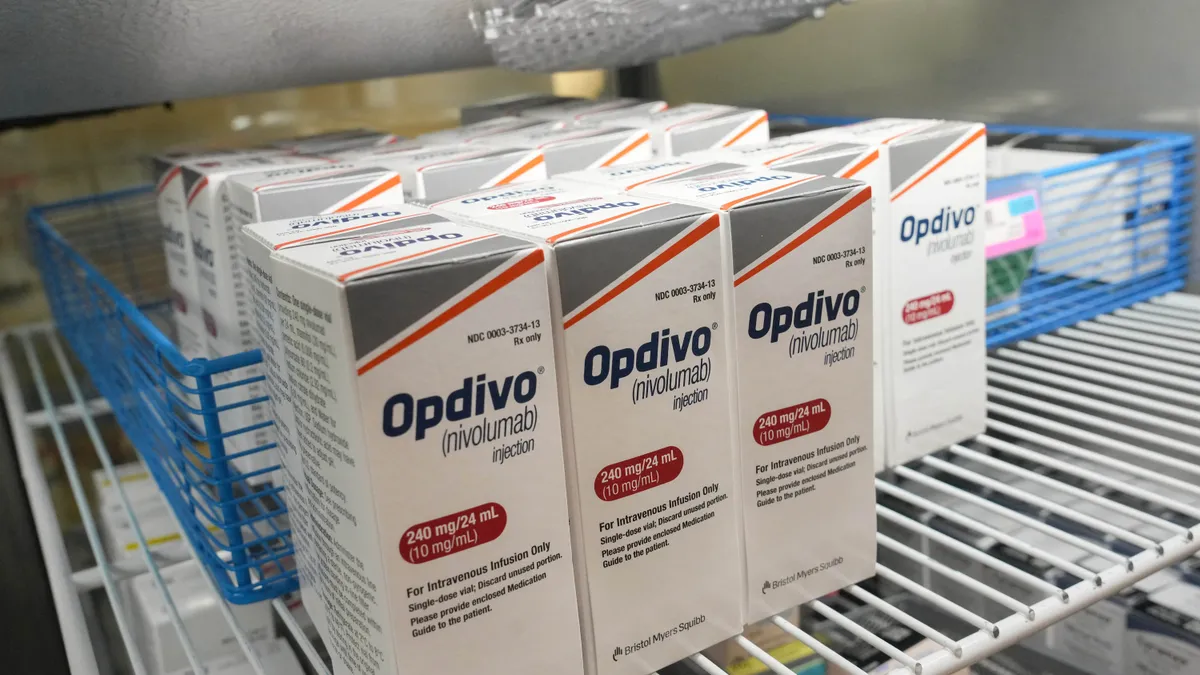
- Called envudeucitinib, the drug is a newer type of medicine aimed at a popular target known as TYK2. The first TYK2 blocker, Bristol Myers Squibb’s Sotyktu, was approved in 2022. But Alumis, Takeda and many other biotechs are working on successor drugs and testing them against psoriasis and other immune disorders. Takeda’s medicine produced positive Phase 3 results in December.
- Alumis’ data, though, suggest that envudeucitinib has the potential for “class-leading” TYK2 inhibition and a treatment effect approaching what’s observed with injectable biologics, wrote Leerink Partners analyst Thomas Smith. Company shares more than doubled in morning trading, changing hands at around $17 apiece. The company intends to seek U.S. approval of envudeucitinib later this year.
Dive Insight:
Envudeucitinib is now one of at least three medicines poised to offer stiff competition to Sotyktu, an oral medication aiming to challenge standard biologics for psoriasis.
So far, the drug hasn’t lived up to commercial expectations, with sales of $126 million through the first nine months of 2025. But Takeda’s zasocitinib, Johnson & Johnson and Protagonist Therapeutics’ icotrokinra — which has a different mechanism — and now Alumis’ drug have shown the potential for superior efficacy, which could give each better market appeal.
Blocking TYK2 is seen as a potentially attractive approach against multiple immune disorders, as doing so reduces levels of messenger proteins that can cause inflammation. Like others in its class, envudeucitinib is being tested against additional diseases like Crohn’s and lupus.
In psoriasis, envudeucitinib met the primary goal of its two late-stage trials by helping an average of 74% of people who received it in those studies see 75% clearance of their skin lesions, or “PASI75,” after four months. A co-primary goal based on a physician evaluation also was achieved, with 59% of people taking envudeucitinib judged as “clear” or “almost clear” at four months.
Alumis said envudeucitinib was “generally well tolerated,” with mostly mild to moderate side effects like headaches, congestion and respiratory infections.
Though the drugs haven’t been tested head to head, envudeucitinib posted similar results to what’s been reported by J&J and Takeda. In Phase 3 testing, J&J and Protagonist’s drug hit that PASI75 endpoint in as many as 77% of recipients, while Takeda’s zasocitinib, which hit that mark in as many as 68% after 12 weeks, Smith wrote in a note to clients. (Takeda hasn’t yet unveiled detailed Phase 3 results for zasocitinib.)
“We believe initial results show that envu’s efficacy appears competitive with other late-stage oral [psoriasis] programs” and could rival blockbuster injectable biologics like AbbVie’s Skyrizi, he wrote.
Alumis launched as a private company called Esker Therapeutics in 2021, changed its name to Alumis and then went public in 2024. It acquired a struggling biotech, Acelyrin, in an all-stock deal less than a year ago.