Dive Brief:
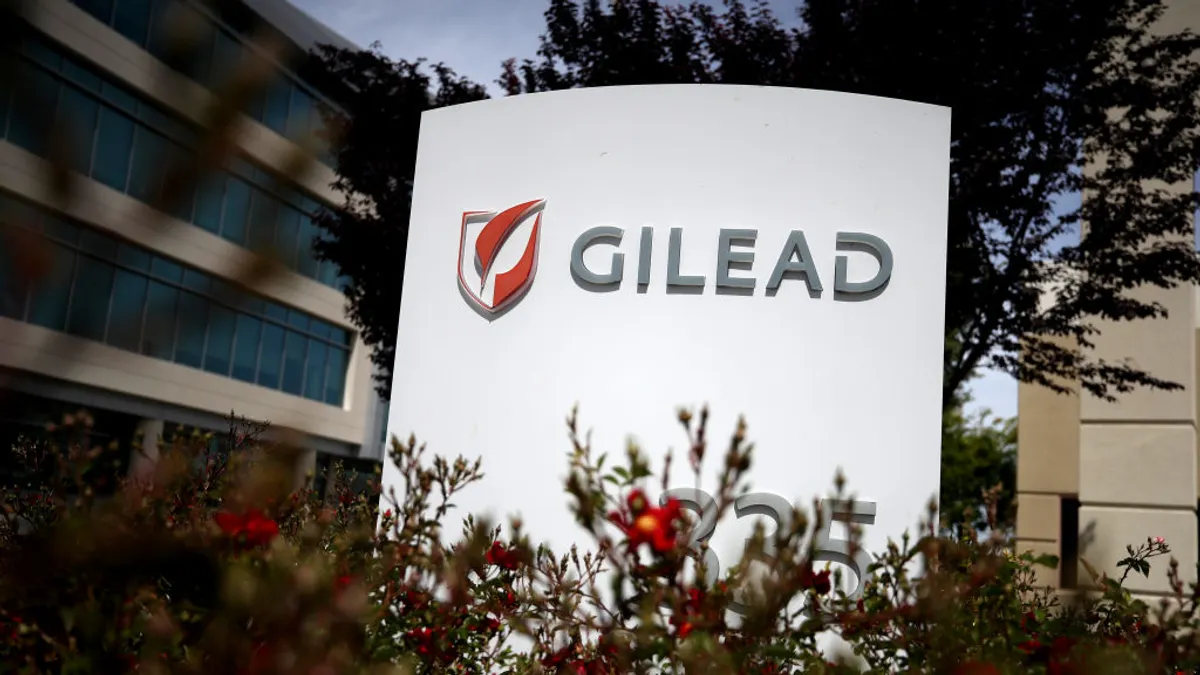
- Gilead Sciences will acquire German biotechnology startup Tubulis in a potentially $5 billion deal that expands the company’s growing pipeline of cancer drugs.
- Per terms of a deal announced Tuesday, Gilead will pay $3.15 billion upfront for Tubulis and could shell out another $1.85 billion if certain unspecified milestones are met. The deal hands Gilead a technology for making next-generation antibody-drug conjugates along with two products, TUB-040 and TUB-030, in clinical testing against different tumor types.
- The acquisition is the latest in a series of company buyouts Gilead, historically known for its HIV drugs, has struck to build up its cancer portfolio. It’s also the third M&A deal the company has made since late February, following purchases of Arcellx and Ouro Medicines.
Dive Insight:
Tubulis is making ADCs, a type of targeted medicine that’s become a staple of cancer treatment over the past decade. These therapies pair a targeting molecule with a cancer-killing toxin, an approach that’s meant to more precisely kill cancer cells.
Many ADCs are now on the market or in development. Launched as a spinout from two research institutes in Germany in 2019, Tubulis is among the companies aiming to take the technology a step further. Using a special type of chemical linker, the company has been hoping to prove it can overcome some of the toxicity issues associated with earlier ADC technology and access tough-to-reach drug targets. It’s also been trying to predict what cancer patients might need in the future as ADCs become more popular.
“At some point, there will also be a lot of patients that have built up resistances against this mode of action, and we need to have an answer for these patients as well,” Dominik Schumacher, Tubulis’ CEO, told BioPharma Dive last year.
Tubulis’ approach had already drawn the interest of venture investors, which have poured some $600 million in private funding into the company. It also attracted partnerships with Gilead and Bristol Myers Squibb.
“Today’s agreement follows a two-year collaboration with Tubulis, which has given us strong conviction in their programs and research capabilities,” Daniel O’Day, Gilead’s CEO, said in a statement. “Bringing this potential into Gilead would further expand what is already the strongest and most diverse pipeline in our company’s history.”
Tubulis will remain “a dedicated ADC research organization within Gilead” and retain its facilities in Munich for R&D and manufacturing, the company said.
Gilead has spent billions of dollars trying to build a cancer drug business over the last decade. An acquisition of Kite Pharma yielded a cell therapy business that now brings in more than $1 billion annually. A $21 billion buyout of Immunomedics marked its first big foray into ADCs, handing the company a now-marketed drug known as Trodelvy that hasn’t yet become the kind of seller Gilead once envisioned.
Tubulis’ prospects and technology have “broad potential across multiple tumor types,” complementing Gilead’s existing cancer drug work, the company said. The startup’s lead program, TUB-040, demonstrated “promising efficacy” in early testing in ovarian cancer, wrote RBC Capital Markets’ analyst Brian Abrahams in a Tuesday note to clients.
The acquisition “represents a strategically sound bolt-on that addresses [Gilead’s] oncology pipeline growth needs while securing differentiated next-gen ADC platform capabilities,” Abrahams added.