Dive Brief:
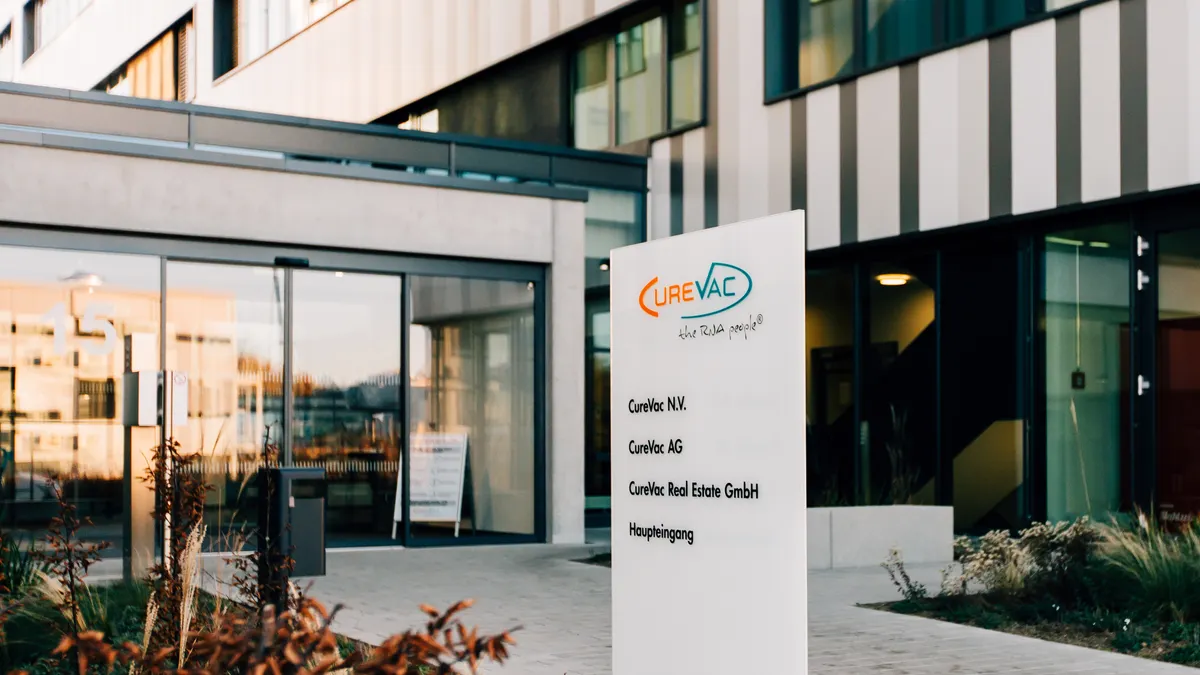
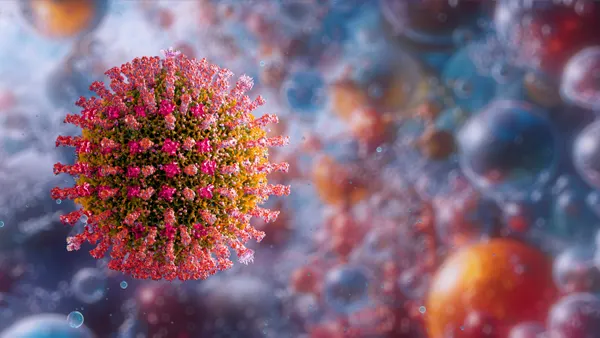
- Invivyd said Thursday it has discovered and is preparing for human testing an antibody drug for measles, infections of which have spiked as of late in the U.S. due in part to rising vaccine hesitancy.
- The Connecticut-based biotechnology company also provided an update for its lead program, an antibody for COVID-19 prevention, alongside its plans for the new drug’s development. Invivyd sees the antibody, known as VMS063, as a possible treatment for the disease or a preventive option for those who can’t, or won’t, get vaccinated.
- VMS063 uses a similar strategy as approved antibody drugs for respiratory syncytial virus, which work by latching onto a surface “fusion” protein and blocking entry into cells. Invivyd said VMS063 could be the “first precision therapy” for measles and address the “immunity gap” emerging due to lower vaccination rates.
Dive Insight:
Measles is one of the world’s most contagious infectious diseases, a potentially deadly infection that can cause pneumonia, brain swelling and weaken immune memory. Vaccines had nearly eradicated measles in the U.S. for decades. But a persistent rise in vaccine skepticism and rhetoric downplaying the disease’s severity has led to a series of outbreaks that’s left its “elimination” status in the U.S. in doubt.
In its statement, Invivyd highlighted the newfound need that exists. Outbreaks occurred in more than 30 states in 2025, as well as the first measles deaths on U.S. soil in a decade. Dipping vaccination rates have put communities below the thresholds required for herd immunity, leaving what the company said are more than 9 million school-age children — as well as millions more adults with weak immune systems — vulnerable.
Michael Mina, Invivyd's chief medical officer, noted in the company's statement that there aren't any approved treatments for symptomatic disease. And while the measles vaccine is the "cornerstone of measles prevention," doctors haven't had an option for those who are susceptible, such as infants too young to get vaccinated.
As a treatment, VMS063 might be useful for eradicating symptoms more quickly or avoid the disease’s worst complications. It could provide “passive” immunity” to babies prior to vaccination, or be used in pre- or post-exposure settings to prevent or respond to outbreaks, the company said.
Invivyd has advanced the therapy towards the studies that precede human testing and begun regulatory outreach that might support “rapid” development. The company hopes to be ready for those studies by late 2026.
The program represents another chance at a rebound for Invivyd. Once known as Adagio Therapeutics, the company raised hundreds of millions of dollars in the early days of the COVID-19 pandemic, aiming to support development of antibodies that could treat or prevent coronavirus infections. The company’s initial efforts fell short, however, causing its shares to plunge and its former CEO to resign.
Afterwards, though, the company rebranded to Invivyd and kept pushing ahead against COVID-19. It won an emergency use authorization in the U.S. for one antibody, Pemgarda, and has brought to late-stage testing a more advanced therapy, VYD2311, that it hopes to prove is more able to deal with evasive viral variants.
Invivyd is approaching a Phase 3 readout for VYD2311 and, on Monday, said it boosted the size of its pivotal study. Results are now expected in the third quarter of 2026.