Today, a brief rundown of news involving Johnson & Johnson and Gilead Sciences, as well as updates from the Federal Trade Commission, Syndax Pharmaceuticals and Pfizer that you may have missed.
Johnson & Johnson shares fell 6% Tuesday despite delivering third-quarter results that met Wall Street expectations and hiking its 2026 financial guidance. Investors’ chief concern with J&J appears to be “underwhelming” performance from its medical device business, though the company also has a dearth of important “upside catalysts,” wrote RBC Capital Markets analyst Trung Huynh in a client note. It’s unclear, Huynh noted, when one of J&J’s most anticipated readouts — a trial involving the next-generation blood thinner milvexian — might come. Still, his team believes the share sell-off is “excessive,” emblematic of broader market volatility, and sets a “negative tone” for the sector as earnings season begins.
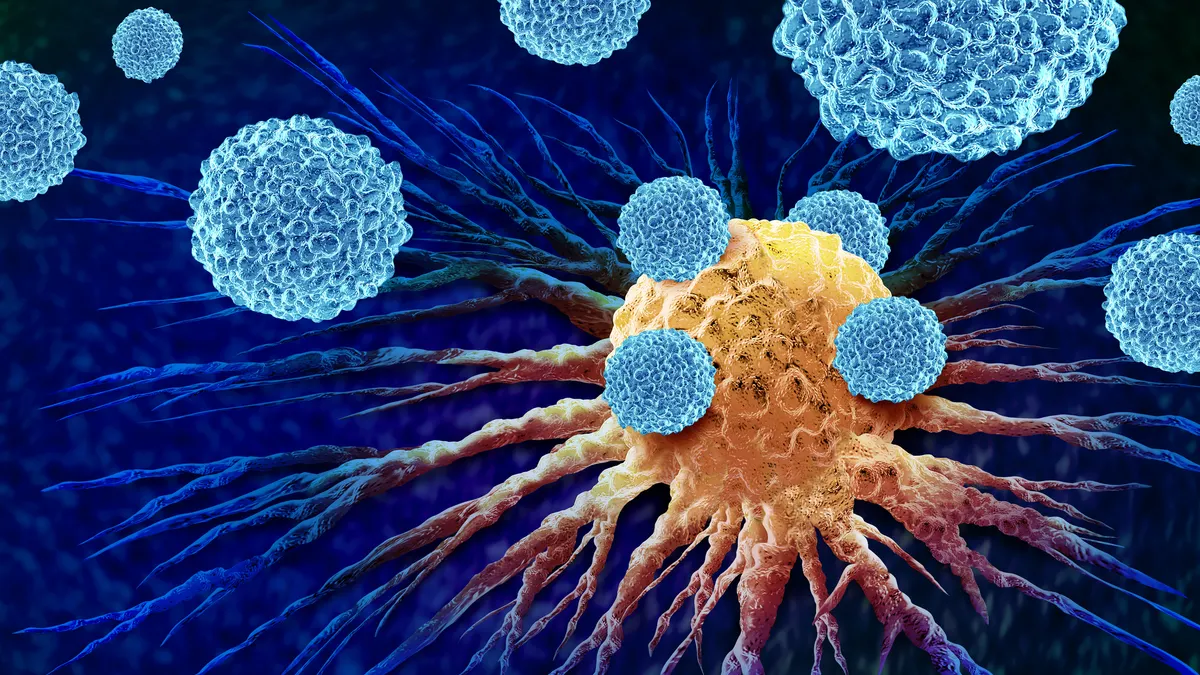
Gilead Sciences is collaborating with Vir Biotechnology in a deal to develop T cell engagers for cancer. Vir is one of a few companies working on T cell engagers specially designed to evade immune system detection until reaching a tumor. Through Wednesday’s deal, Vir and Gilead will direct three of these “dual-masked” therapies against unspecified solid tumor targets. Vir will receive $135 million in upfront and near-term payouts, and could gain up to $1.74 billion more if drugs in the agreement hit a variety of milestones. The alliance is the second recent pact for Vir following a deal with Astellas Pharma.
The Federal Trade Commission and seven states have asked a New York judge to rule that Martin Shkreli has "flagrantly and repeatedly" flouted a court order banning him from the pharmaceutical industry. In a motion filed Tuesday, the FTC and its co-plaintiffs alleged that, since his May 2022 release from prison, Shkreli has consistently violated the lifetime ban by trading in more than 60 industry stocks and "broadcasting his opinions" about many pharmaceutical companies on various social media channels. They've called for Shkreli to be held in civil contempt and to divest ownership of any drug stocks. "Very surprising from [President Donald] Trump's FTC," Shkreli commented in a response on X. Shkreli drew broad criticism a decade ago, when his then-company bought a medicine called Daraprim and dramatically increased its price. He was later convicted of securities fraud and sentenced to seven years in prison.
A drug Syndax Pharmaceuticals sells for graft-versus-host disease failed a mid-stage trial in idiopathic pulmonary fibrosis. Syndax said the therapy, known scientifically as axatilimab and sold as Niktimvo, didn't meaningfully improve a measure of breathing capacity when compared to a placebo. It'll stop developing Niktimvo in that indication, though the company stressed that the findings don't affect other ongoing studies. The study was a "high-risk, high-reward" bet in a "historically difficult disease," wrote TD Cowen analyst Phil Nadeau. Nadeau also noted that partner Incyte hadn't opted into co-developing Niktimvo in IPF, one of multiple reasons his team's valuation of Syndax didn't change following the study setback.
Pfizer will work with biotech startup Enodia Therapeutics on drugs that target a particular kind of protein gateway. Under the collaboration, the companies will develop small molecules that block “Sec61,” an opening newly made proteins pass through before they’re shepherded to their final destination. Enodia claims this approach enables it to target disease-causing proteins before they might cause harm. The startup could receive more than $500 million from Pfizer in the deal, though it didn’t specify how much of that cash is guaranteed.