Dive Brief:
- Eli Lilly is boosting its production in China, announcing Wednesday a plan to invest $3 billion to build a “localized production and supply system for oral solid dosage forms” and bolster its capacity to distribute its first obesity pill, orforglipron, in China.
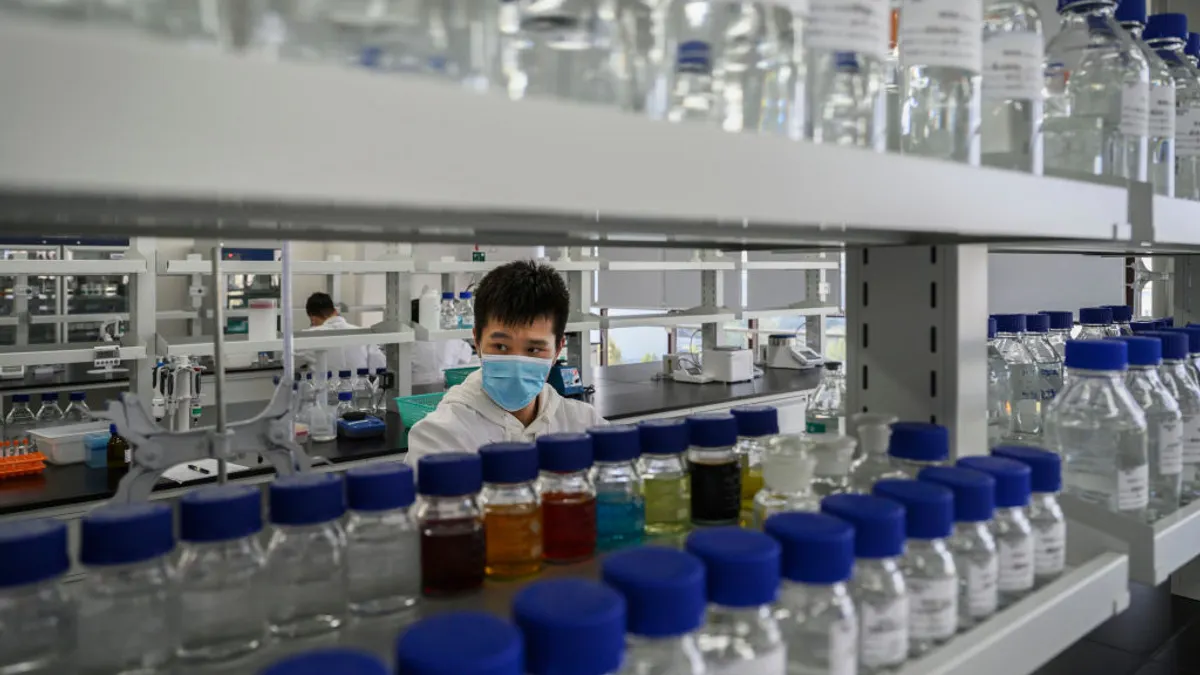
- The investment will involve Lilly’s established facility in Suzhou as well as developing a network of partners to help expand production. As part of the announcement, Lilly said it has inked a $200 million deal with contract manufacturer Pharmaron that will allow it to expand scale “as needed.”
- U.S. and European drugmakers are deepening their investment in China, both to supply the local market and increasingly find and develop new medicines. Lilly recently expanded an already large collaboration with Suzhou-based Innovent to develop cancer and immune-disease drugs.
Dive Insight:
China is both a source of experimental new medicines and a huge market for approved and commercialized ones. While big drugmakers have for years sought to build commercial organizations on the ground in China, they have in recent years become more entrenched in the country’s life sciences ecosystem.
For example, Roche, AstraZeneca, Novartis and AbbVie are among the most prominent big pharma names that have signed licensing deals with China-based manufacturers. AstraZeneca, for one, has recently announced it will boost its manufacturing investment there by $15 billion.
Meanwhile, the industry is under pressure from the Trump administration to build manufacturing in the U.S. to “reshore,” or create a supply chain independent of China and other geopolitical rivals, prompting tens of billions of dollars in U.S. investment to achieve that. Lilly was among the leaders in responding to this push, adding $27 billion to its target of U.S. investment to bring its total to $50 billion.
But Lilly wants to sell drugs in China, too, and aims to make them inside the country. In particular, orforglipron, now being reviewed for approval by China’s National Medical Products Administration, could find plenty of new customers in a country of more than 1 billion people that has an estimated obesity rate of nearly 9%.
Lilly’s announcement Wednesday said the investment will focus on its Suzhou plant, “leveraging the technological and talent advantages ... to strengthen production capacity synergy,” while using outside partners to “release incremental production capacity.”
In the past two years, Lilly has spent $200 million on its Suzhou plant and, in addition, created a company innovation center and an incubator for small biotechs. The company said it’s invested $6 billion overall in China to “deeply integrate across the entire value chain from R&D to commercialization.”