Brain drug developer MapLight Therapeutics lost two-thirds of its market value Monday after unveiling clinical trial results that, while positive, raised doubts about whether one of its experimental medicines can compete against a rival product from Bristol Myers Squibb.
The mid-stage trial found MapLight’s medicine generally safe and effective in adults with schizophrenia who were experiencing a sudden worsening of psychotic symptoms. On the study’s main measure, which used a well-known scoring system for schizophrenia symptoms, participants given twice-daily doses of the medicine experienced an average 4.5-point improvement compared to those on a placebo.
The effect was even more pronounced, MapLight said, in the subset of participants who stayed on the medicine for the entirety of the core five-week treatment period. Patients on the twice-daily regimen also fared significantly better on a series of “secondary” tests and “exploratory outcomes.” The trial evaluated a once-daily option as well, but the drug didn’t hit the study’s primary endpoint. MapLight is still analyzing the results to see if there’s a path forward for that regimen.
In a statement, MapLight CEO Chris Kroeger said the company is “very encouraged by these results,” which represent a “powerful, comprehensive overall efficacy profile in schizophrenia.”
Kroeger also said researchers saw a “robust signal” on one of those secondary tests that supports MapLight’s drug having cognitive benefits in addition to antipsychotic activity. Such a finding “strengthens the rationale” for a separate, ongoing trial that’s testing the drug against Alzheimer's disease psychosis.
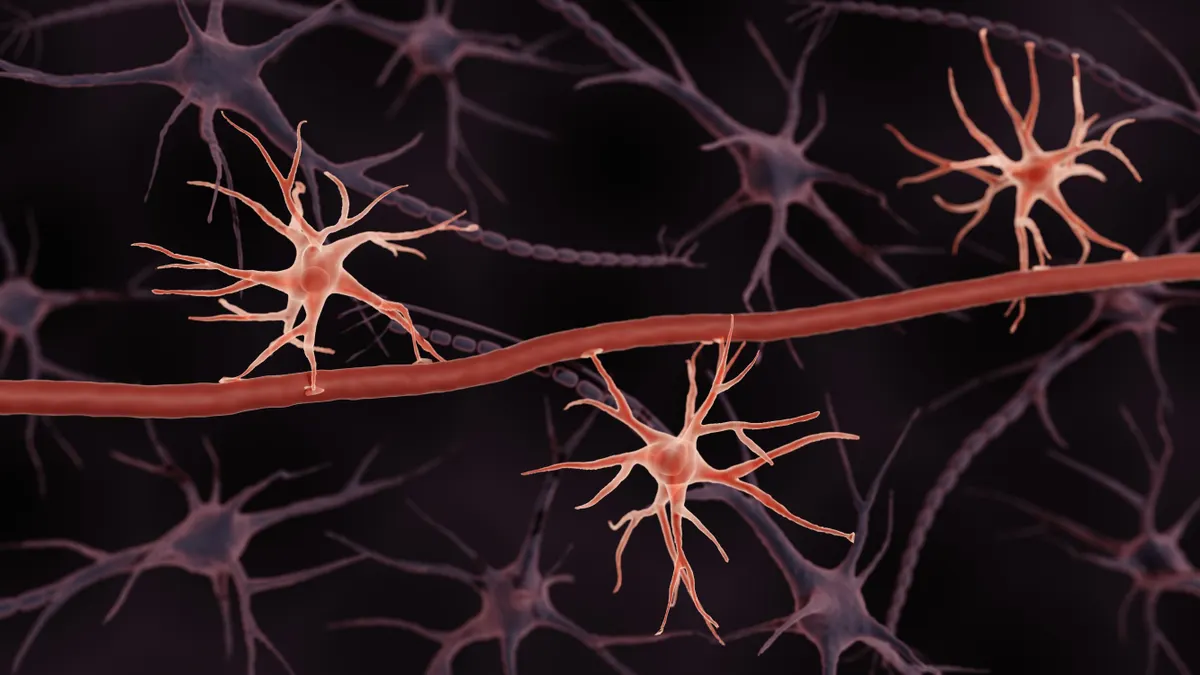
MapLight’s drug comes as a fixed-dose tablet, with one of the active ingredients being a chemical that amplifies two types of “muscarinic receptors.” These proteins regulate neurotransmitters like dopamine, glutamate and acetylcholine and can therefore stabilize brain cell signaling, making them attractive targets for psychiatric diseases.
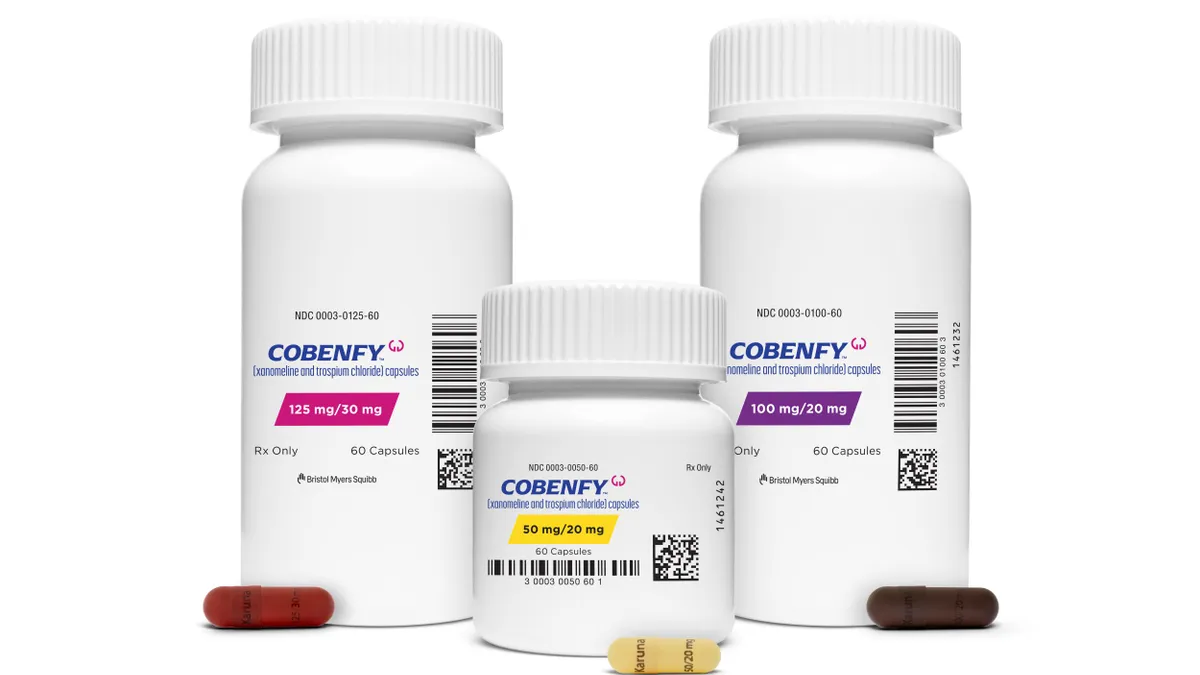
Bristol Myers’ Cobenfy acts on the same receptors as MapLight’s medicine and won Food and Drug Administration approval almost two years ago. Across two pivotal studies using that well-known “PANSS” scoring system, the Cobenfy-treated groups experienced 8.4-point and 9.6-point improvements over their placebo arm counterparts.
Cross-trial comparisons are often tricky. Even so, MapLight investors “may push back on the magnitude of PANSS reduction here [versus Cobenfy’s] pivotal studies,” according to Stifel analyst Paul Matteis. They appeared to do just that, as MapLight shares were down 66% by late Monday morning, to trade at $12.14 apiece.
“We get it,” Matteis wrote in a note to clients, but while Cobenfy's efficacy was “awesome” in testing, “this profile seemingly isn't being achieved in the real world” because of tolerability and dosing issues.
Cobenfy capsules are supposed to be taken twice daily on an empty stomach and following a specific titration schedule. MapLight’s drug, meanwhile, has no fasting requirement. So-called treatment-emergent adverse events were mostly mild, and “all-cause” discontinuation across the active arms in MapLight’s study was 19.9%.
Matties noted how discontinuation rates were roughly 28% across the key Cobenfy studies, and that, aside from nausea and abdominal pain, MapLight’s results show lower rates for all the other most important adverse events. MapLight “thus has a case for an important drug in schizophrenia, but also potentially [Alzheimer’s disease psychosis] where the differentiation case strengthens,” he wrote.
"Despite recent advances in schizophrenia treatment, patients and clinicians continue to need therapies that pair meaningful symptom control with a tolerability profile patients can sustain over time," said John Kane, a professor of psychiatry and molecular medicine at Hofstra University and member of MapLight’s clinical advisory board, in the company’s statement.