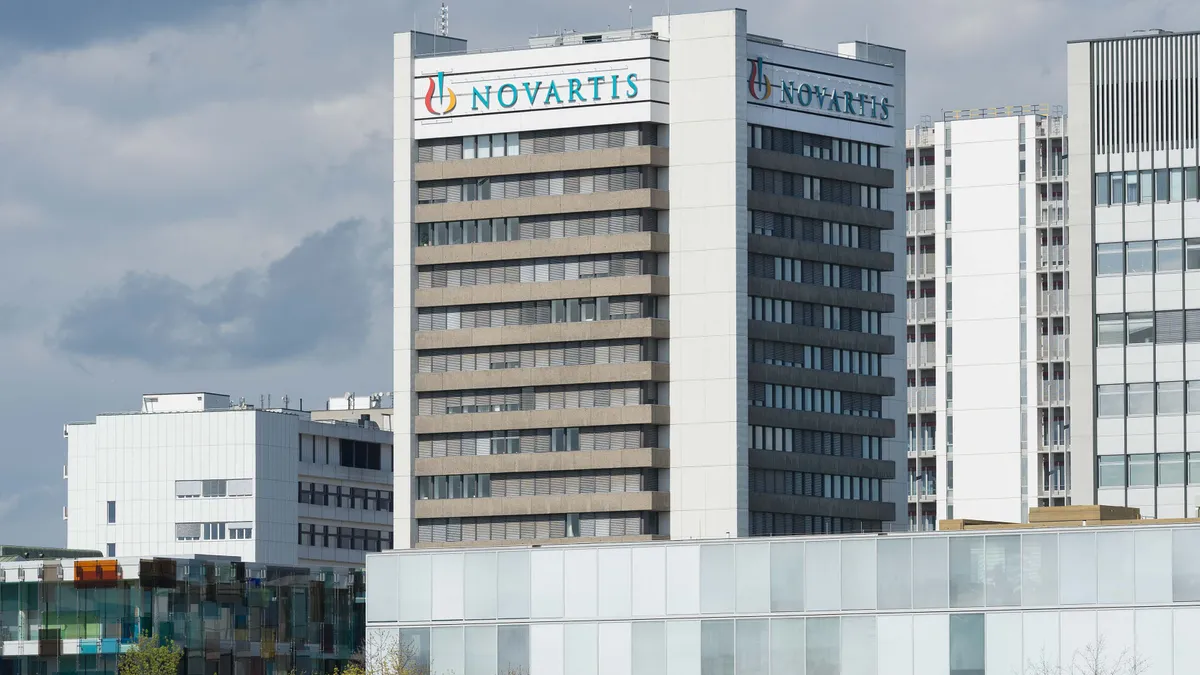
An experimental medicine that Novartis acquired in a $12 billion buyout has failed a key clinical trial, an outcome at least one analyst believes could sow doubt not only about the technology platform behind the treatment, but Novartis’ dealmaking strategy as well.
Without providing many details, Novartis on Tuesday said the medicine failed to hit the main goal of a late-stage study that evaluated it in people with a muscle-weakening disease known as myotonic dystrophy type 1. The disease — “DM1,” for short — stems from genetic mutations that cause toxic buildup of certain RNA molecules, which then keeps proteins critical for muscle relaxation and organ health from doing their job.
Hallmark symptoms of DM1 include muscles that are locked, fatigued or wasting, as well as cataracts, stomach issues and heart irregularities. According to Novartis, its drug, which is called del-desiran, was not significantly better than a placebo on a test that measures a patient’s ability to relax hand muscles.
The Swiss pharmaceutical giant said researchers did observe “evidence of clinical activity” on secondary goals and in “exploratory analyses.” It now plans to “engage with health authorities to determine the most appropriate development path for del-desiran.”
“Developing therapies for a complex disease like DM1 remains challenging, and setbacks are part of scientific progress,” said Shreeram Aradhye, Novartis’ chief medical officer, in a statement.
“As we continue to evaluate the full [trial] dataset, we remain committed to identifying the most appropriate development path for the del-desiran program and advancing innovative approaches for people living with DM1 and other serious neuromuscular diseases,” Aradhye added.
Del-desiran comes from a drugmaking technology crafted by Avidity Biosciences, which Novartis agreed to buy late last year. Avidity’s platform uses targeted antibodies to shuttle pieces of engineered genetic material to and inside muscle cells, where they’re designed to effectively silence disease-causing genes.
Del-desiran specifically is meant to destroy the faulty genetic instructions — the messenger RNA — that trap helpful, muscle-regulating proteins. Novartis got two other main drugs from its deal, “del-zota” and “del-brax,” which are, respectively, in testing for Duchenne muscular dystrophy and facioscapulohumeral muscular dystrophy.
To Jefferies analyst Michael Leuchten, Tuesday’s setback is potentially indicative of a bigger issue. In a note to clients, Leuchten described how the Avidity acquisition “came with controversy,” as some investors wondered why Novartis would make such a big bet on this type of technology versus others for the treatment of DM1.
“The problem goes beyond this failed trial as at the time of acquisition, other assets with different data and different approaches were available,” he wrote. As such, the negative results “will likely raise questions again about Novartis' due diligence and [business development] approach.”
Leuchten’s team had previously given the del-desiran development program an 80% chance at success and a peak annual sales estimate of $1.5 billion, representing about one-third of the raw potential of the Avidity acquisition. But following this failure, the analyst expects investor confidence in Novartis’ growth post-2030 to waver, and therefore the company will likely find itself “under scrutiny” to do more acquisitions.
Novartis shares were down more than 13% by late Tuesday morning, to trade just under $139 apiece.
Dyne Therapeutics, a Massachusetts-based biotechnology company working on a similar therapy for DM1, saw its stock price fall 22% following the Novartis news.
In his own note, Eric Schmidt, an analyst at Cantor Fitzgerald, guessed that “a high degree of variability” in the hand relaxation test is what “tripped up” Novartis’ study.
That has a read-through to Dyne, according to Schmidt, because the biotech is also using that test in its study. As such, the Cantor team has lowered their probability of success forecast on Dyne’s medicine from 50% to 25%.