The Food and Drug Administration has put a partial clinical hold on one of Merck & Co. and Daiichi Sankyo’s antibody-drug conjugates following an unexpected number of deaths in a late-stage clinical trial.
Daiichi initiated a voluntary pause recruiting and enrolling the trial, called IDeate-Lung02, after “higher than anticipated incidence of grade 5 interstitial lung disease events,” a spokesperson for Merck and Daiichi said in a statement to BioPharma Dive. Following the pause, the FDA verbally placed the trial on a partial clinical hold in October. The spokesperson did not say the number of deaths recorded.
During the hold, Daiichi, along with the FDA and an independent committee will review the safety data and “decide on any necessary further actions.” Trial enrollees will be able to continue treatment, but no new participants will be recruited.
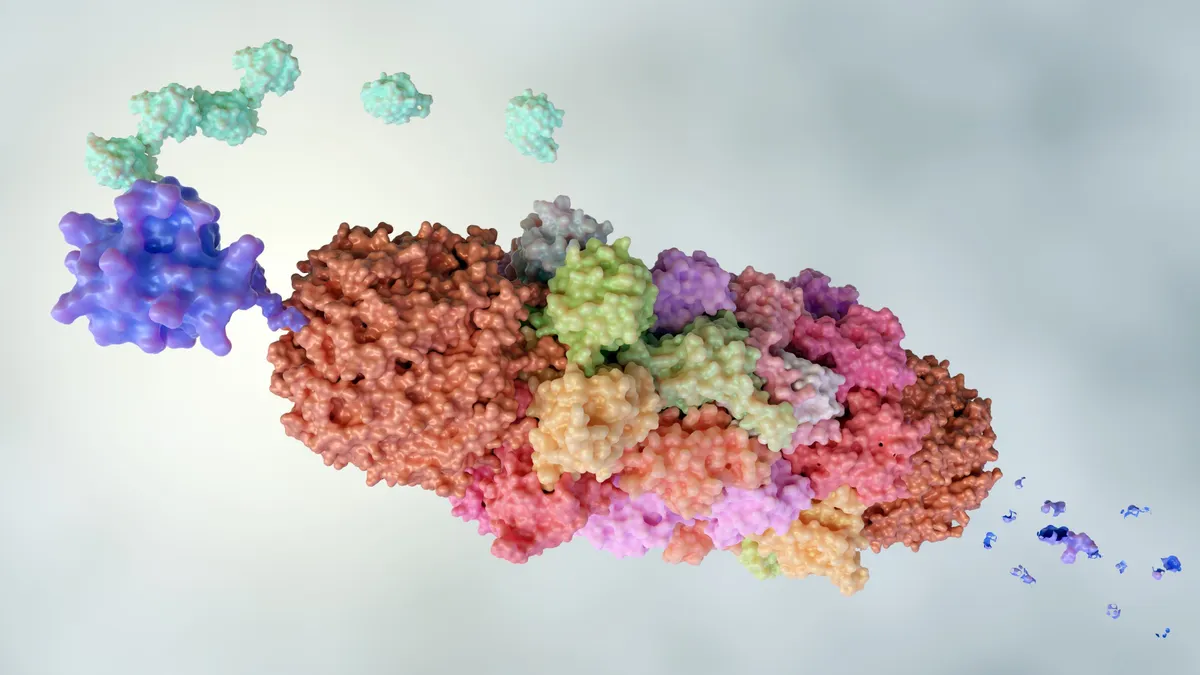
The experimental drug, called ifinatamab deruxtecan, or I-DXd, is one of three ADCs Merck gained the rights to through a major licensing deal with Daiichi in 2023. ADCs, which link an antibody to a toxic payload, are meant to more effectively target and destroy cancer cells while sparing the surrounding healthy tissue.
Though they’ve been around for decades, ADCs became a major asset for drug developers relatively recently. AstraZeneca and Daiichi, for instance, found success with their medicines Enhertu and Datroway, which are approved to treat several cancers. However, interstitial lung disease is a known side effect of Daiichi’s antibody-drug conjugates, and is listed on the labeling of Datroway and Enhertu.
The Phase 3 trial testing I-DXd enrolled over 500 participants with small cell lung cancer, who were treated with the drug or randomized to receive a chemotherapy regimen of either topotecan, lurbinectedin or amrubicin.
Expectations for the drug rose after Phase 2 results demonstrated “promising objective response rates” in people with pretreated, extensive-stage small cell lung cancer. The FDA granted breakthrough therapy designation to I-DXd based on those results.
The spokesperson said the companies are in discussions with global regulatory authorities over the latest trial data, but would not comment further on regulatory strategy.
The clinical hold represents another blow to Merck’s ADC program. Earlier this year, the company pulled its approval application for a therapy called patritumab deruxtecan, after finding it did not extend survival in people who have a certain kind of non-small cell lung cancer with mutations in the “EGFR” gene. The FDA also rejected patritumab deruxtecan last year due to third-party manufacturing problems.
The spokesperson said the clinical hold does not impact other studies of I-DXd. Merck and Daiichi are evaluating the potential impact of the hold on trial readout data timing, which is currently expected in 2027.