Dive Brief:
- The Food and Drug Administration has declined to review an application to approve Moderna’s messenger RNA-based influenza vaccine in a surprise decision that represents another regulatory setback for the company directed by current leadership at the Department of Health and Human Services.
- Moderna said Tuesday that it received a “refuse-to-file” letter stating that the agency won’t consider approval of the shot, mRNA-1010, because of the comparator the company chose to test it against in a Phase 3 trial. The letter, dated Feb. 3 and written by top vaccine official Vinay Prasad, said that trial wasn’t “adequate and well-controlled” because that comparator didn’t reflect the “best-available standard of care” in the U.S. at the time. Prasad didn’t cite any safety or efficacy concerns.
- Moderna, which took the unusual step of publicly posting Prasad’s letter, claimed that the agency’s rationale was “inconsistent” with prior guidance. The agency had recommended Moderna test its shot against a higher-dose flu vaccine, but didn’t voice concerns about the study when the company submitted the trial protocol or thereafter, the company said. Moderna also submitted data from a separate Phase 3 trial last year that involved a high-dose flu shot as a control. The company has requested a meeting to “understand the path forward.”
Dive Insight:
The letter amounts to another new regulatory hurdle in the U.S. for Moderna, whose mRNA technology helped end the COVID-19 pandemic but has since become a target of federal health officials under the Trump administration.
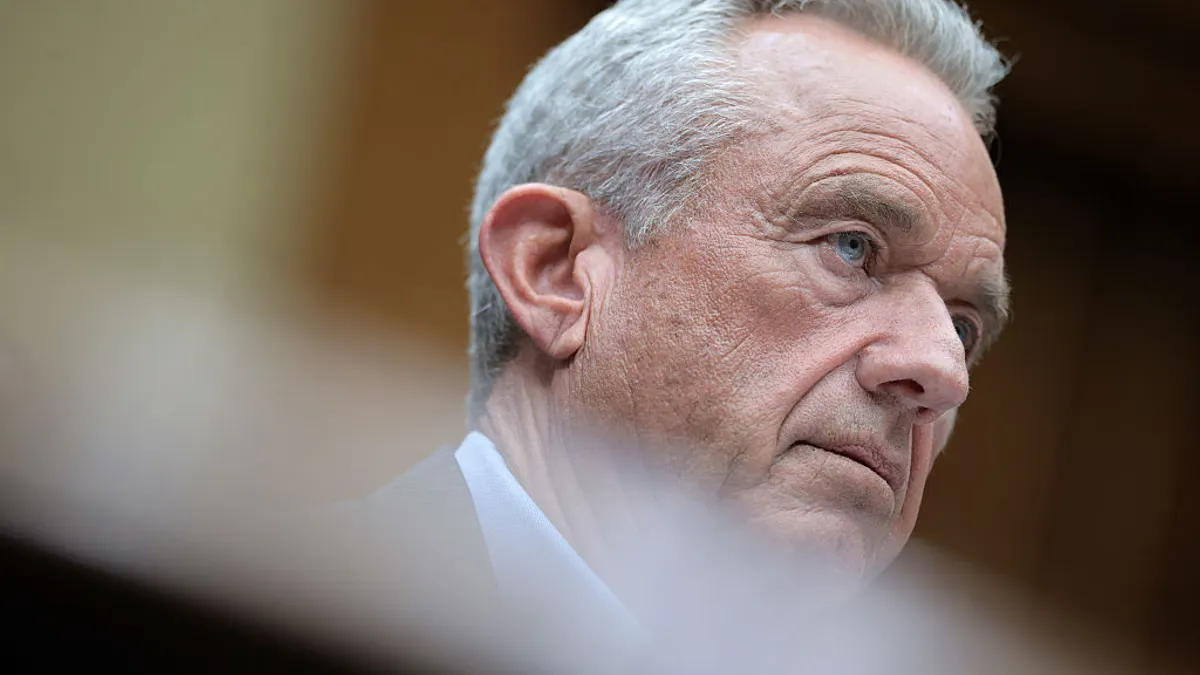
Prior to becoming HHS Secretary, Secretary Robert F. Kennedy Jr. long questioned the safety and efficacy of mRNA technology and COVID vaccines, specifically. The technology allows for the speedy creation of vaccines that can be used to quickly respond to viral threats such as COVID, respiratory syncytial virus and influenza. During the pandemic, that potential was showcased with the development and large-scale testing, in record time, of mRNA shots credited with saving millions of lives.
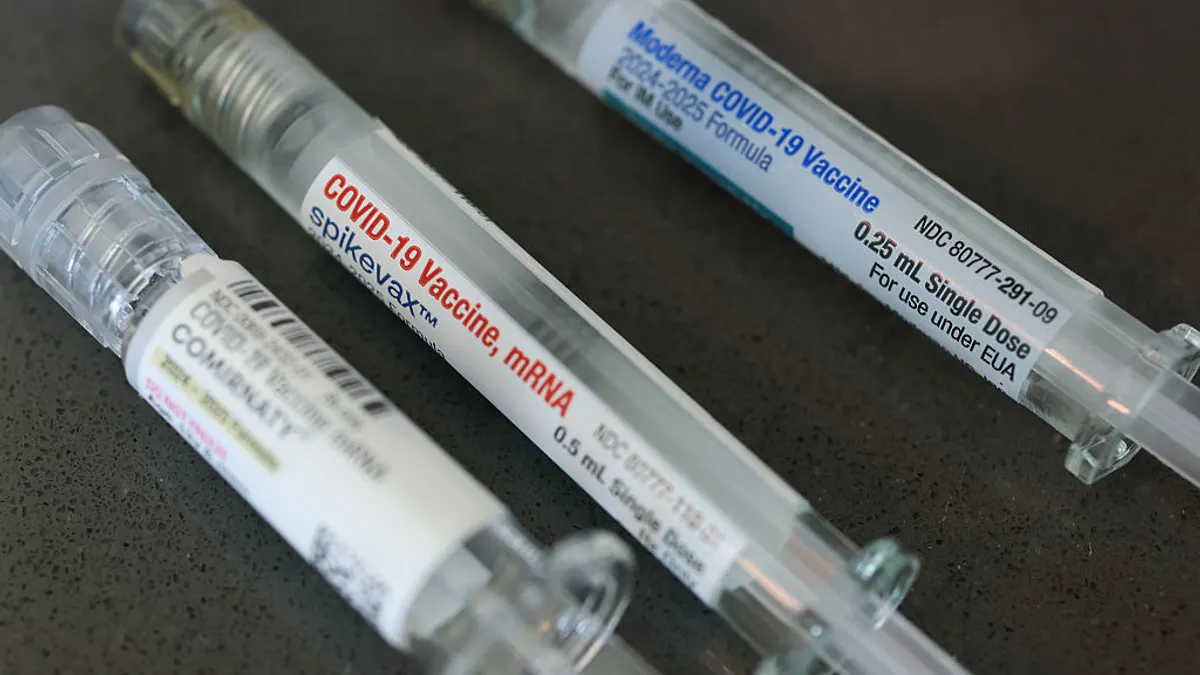
Kennedy, though, has falsely claimed that mRNA shots fail to effectively protect people against respiratory infections like COVID and the flu. And under his leadership, the HHS has terminated millions of dollars in government contracts for mRNA vaccine research. The FDA, meanwhile, has set stricter approval standards for COVID vaccine shots and narrowed their use when issuing new approvals.
Moderna has felt the brunt of this shift in sentiment. Despite a recent stock run, the company has lost most of its market value since the pandemic amid dwindling COVID shot sales and the presence of a more unpredictable regulator. The oppositional climate led CEO Stéphane Bancel to claim last month that the company will pull back investments in late-stage trials for vaccines.
Its back-and-forth with the FDA over a flu vaccine — a product Moderna has spent years developing and testing — is the latest example. Moderna has been working on that shot, as well as a related, combination COVID and flu vaccine it’s seen as important to its future. But the company pulled an application for the combination vaccine last year following a request from the FDA for more data from the shot’s flu-preventing component, a move some Wall Street analysts viewed as suggestive of a newly higher bar for vaccine approvals. It has since accumulated that data in a large, late-stage trial showing mRNA-1010 reduced the risk of flu-like illness by 27% compared to a standard-dose vaccine.
Moderna had been expecting an approval this year and even used a “priority review voucher” in anticipation of a speedier review. The company argued that the FDA has gone against its own guidance for flu vaccines in declining to evaluate the application, as that protocol doesn’t “contain any reference” to the use of the “best-available standard of care” as a comparator.
The FDA letter “does not further our shared goal of enhancing America’s leadership in developing innovative medicines,” CEO Bancel said in a statement. “It should not be controversial to conduct a comprehensive review of a flu vaccine submission that uses an FDA-approved vaccine as a comparator in a study that was discussed and agreed on ... prior to starting."
The agency’s decision “reflects the ‘maximum pressure’ footing vis-a-vis mRNA vaccines by current HHS/FDA leadership,” wrote Leerink Partners analyst Mani Foroohar, in a Wednesday note to clients.
Foroohar added that the situation leaves the future of Moderna’s combination shot in doubt, “imperils” its chances of breaking even financially in 2028, and prolongs its reliance on COVID vaccine revenue.