Dive Brief:
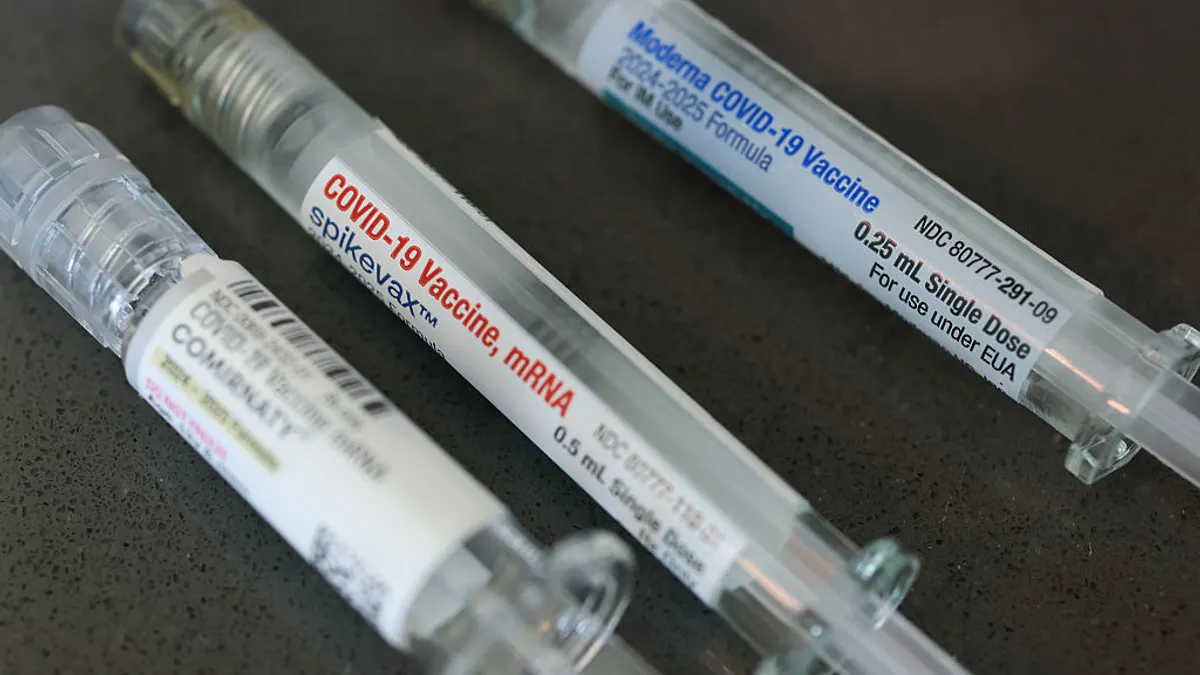
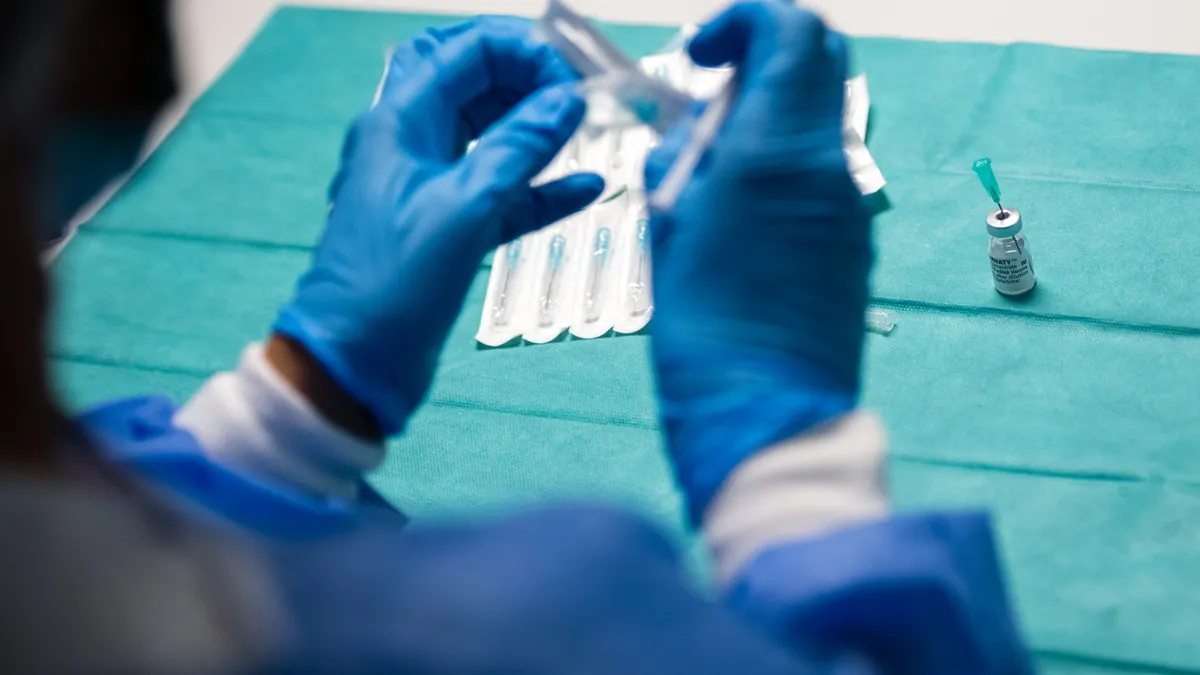
- Moderna said Thursday its experimental bird flu vaccine, which was cut from federal funding earlier this year, will receive up to $54.3 million from a global coalition to advance the candidate.
- The Coalition for Epidemic Preparedness Innovations, or CEPI, a public-private global partnership working to develop vaccines against pandemics, agreed to fund Moderna’s candidate mRNA-1018 against H5 avian influenza into Phase 3 testing. As part of the agreement, if the shot is approved and in the event of an influenza pandemic, Moderna will allocate 20% of its production capacity for low- and middle-income countries, “at affordable pricing.”
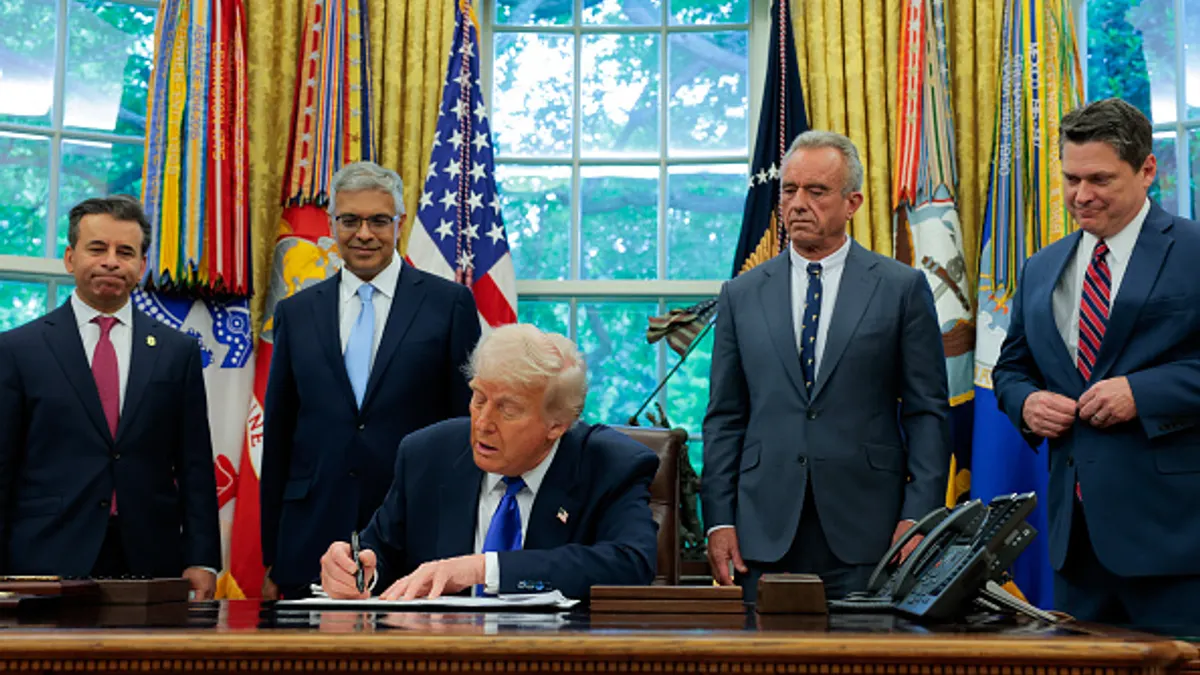
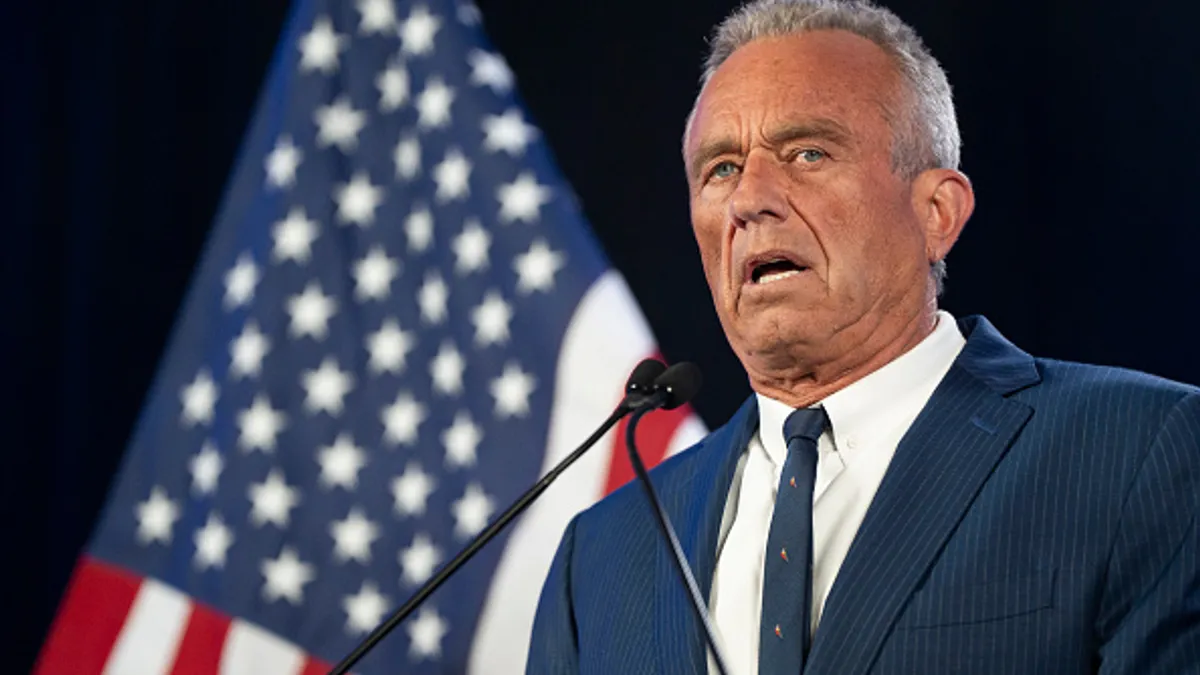
- Under the Biden administration, the experimental vaccine was awarded over $700 million in government contracts from the Biomedical Advanced Research and Development Authority, or BARDA. Those contracts were later canceled by the Department of Health and Human Services under Secretary Robert F. Kennedy Jr., a major critic of messenger RNA technology.
Dive Insight:
The new grants come amid an outbreak of avian influenza, with cases recently rising again in poultry and dairy cows. So far, there have been 71 human cases, with two deaths recorded. While the Centers for Disease Control and Prevention say human-to-human spread is low, concern remains as to whether the virus could lead to another pandemic.
Compared to other vaccine technologies that require processes that take months, mRNA vaccines can be manufactured faster, making them ideal candidates in response to pandemics.
Kennedy, however, has touted the technology as not effective or safe, despite the success of the COVID-19 vaccines. Prior to Moderna’s contract termination, HHS said it would invest $500 million in Generation Gold Standard, a vaccine initiative that would use a whole-virus platform to develop shots against “pandemic-prone” viruses.
Many experts criticized the moves, expressing concern that a turn away from mRNA would leave the U.S. prone to future pandemics.
Moderna, a prominent developer of mRNA vaccines, has been particularly hit by these HHS actions. Sales of its COVID shot have dipped since the height of the pandemic, and a disappointing commercial performance for its shot against respiratory syncytial virus led the company to revise its financial forecasts multiple times. And with a lack of future catalysts, analysts covering Moderna are focused on cost cuts, “vaccine uptake and headlines from the administration.”
The CEPI money is a positive addition on top of a recent $1.5 billion loan with Ares Management Credit Funds that Moderna said will provide “increased flexibility over the coming years.” The company is additionally reevaluating its pipeline in an effort to break even by 2028.
The Phase 3 trial for the H5 avian influenza vaccine is expected to begin across the U.S. and U.K. in early 2026. The study will build upon early-stage results in healthy adults. Data from Moderna’s Phase 3 trial of its seasonal influenza vaccine could also aid the company’s application for approval.