Today, a brief rundown of news from Moderna and IO Biotech, as well as updates from Insilico Medicine, Think Bioscience and Novavax that you may have missed.
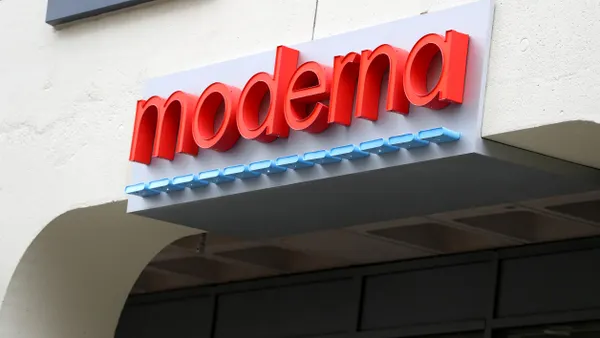
A regimen involving Moderna’s personalized cancer vaccine intismeran autogene and Merck & Co.’s immunotherapy Keytruda cut the risk of relapse or death in half over five years in study participants with melanoma when compared with Keytruda alone, the companies said Tuesday. Moderna and Merck reported three years ago that the Phase 2 study, which evaluated the vaccine-immunotherapy regimen after surgery, had met its primary endpoint. The partners have continued following trial enrollees to assess its impact on long-term health outcomes, though, and at the latest data check found that the shot maintained the survival benefit seen in 2023. The result is a “signal of durable tumor control,” wrote William Blair analyst Myles Minter. Moderna and Merck, which first partnered on cancer vaccines nearly 10 years ago, could announce Phase 3 results later this year. Merck paid Moderna $250 million to license intismeran autogene in 2022. — Jonathan Gardner
Cancer vaccine maker IO Biotech said Wednesday it will explore strategic alternatives — including a possible sale or liquidation — while in the meantime evaluating another round of layoffs or other cost cuts. IO Biotech had been hoping to seek U.S. approval of a vaccine dubbed Cylembio despite Phase 3 results that fell short of statistical significance. The Food and Drug Administration rejected its plan and advised the company to run another trial, leading the company to let go of half of its staff. IO Biotech hasn’t given a timetable for its strategic search. — Delilah Alvarado
Insilico Medicine and Hygtia Therapeutics, a startup incubated by Fosun Pharma, will co-develop an experimental medicine aimed at a popular drug target. Through a deal announced Tuesday, the two will advance an Insilico-discovered drug that blocks NLRP3, an inflammasome that’s attracted interest from several pharmaceutical and biotech companies. Insilico said its drug is “brain penetrant” and will be tested against neurological diseases. Hygtia is getting 50% of commercial rights in the deal and paying Insilico as much as $66 million, including a $10 million upfront payment. — Ben Fidler
Colorado biotechnology company Think Bioscience has raised $55 million in a Series A round it says will be used to develop a therapy aimed at an underlying cause of the genetic disorder Noonan syndrome. Regeneron Ventures, Innovation Endeavors and Janus Henderson Investors co-led the funding, which involved a total of 10 investment firms, the biotech said in a Tuesday announcement. Think Bio is using synthetic biology to help design small molecule medicines that can bind to historically “undruggable targets.” — Gwendolyn Wu
Pfizer is paying Novavax $30 million up front in a deal that will enable it to use the vaccine maker's immune-boosting adjuvants in some of its products. According to Novavax, Pfizer has obtained a non-exclusive license to use those adjuvants, dubbed Matrix-M, in up to two disease areas. Novavax could receive another $500 million in milestone payments, as well as sales royalties, if the programs eventually reach market. Pfizer is solely responsible for development and commercialization costs. Novavax shares ticked up about 8%. — Ben Fidler