Dive Brief:
- Novo Nordisk is suing its biggest obesity drug rival, alleging on Tuesday that Eli Lilly is engaging in deceptive advertising by intentionally using outdated studies to compare the higher doses of its medicines to lower doses of Novo’s products.
- Filed in a New Jersey District Court, the lawsuit follows a cease-and-desist order in which Novo asked Lilly to take down the advertisements. Lilly hasn’t, so the Danish drugmaker is seeking a permanent injunction to get the ads pulled and for Lilly to “conduct a corrective advertising campaign.” Lilly countered in a statement that the advertising is “truthful, it is transparent, and it is grounded in the most direct scientific evidence available.”
- The lawsuit comes as Lilly has gotten the upper hand in a high-stakes battle for market share. Lilly’s medicine, Zepbound, recorded $4 billion in sales in the first quarter of 2026 compared with the 18.2 billion krone, or $2.7 billion, generated by Novo’s Wegovy. The turf war escalated this year with both companies launching obesity pills that could extend the reach of weight-loss medicines.
Dive Insight:
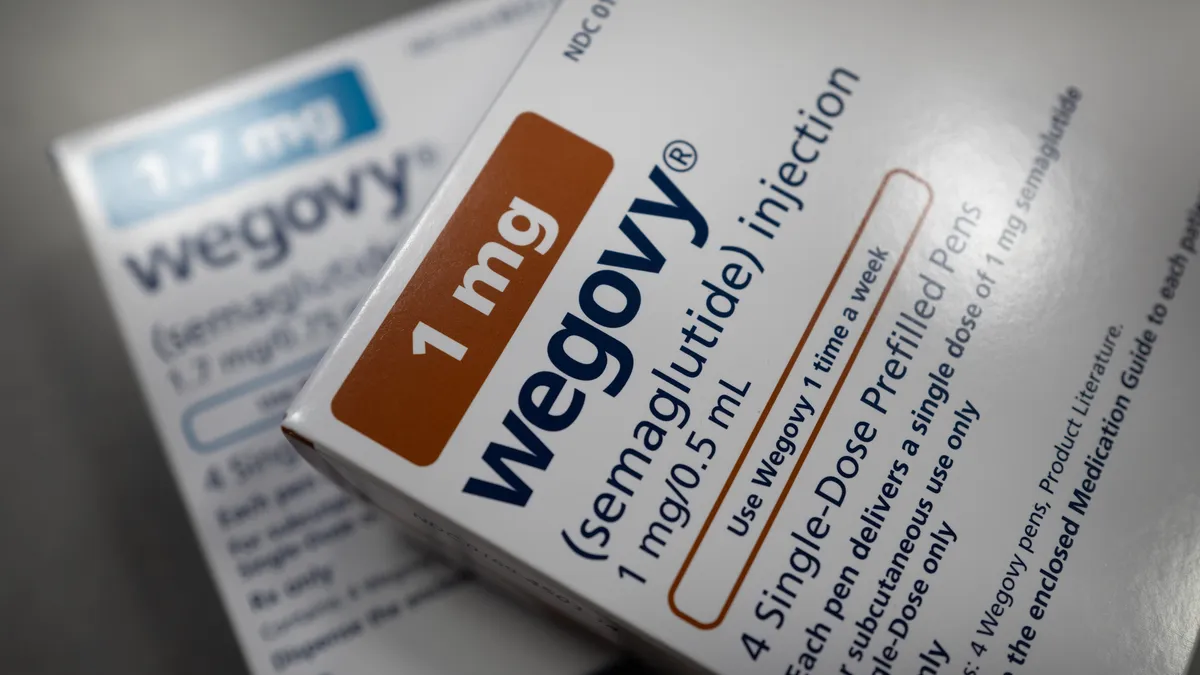
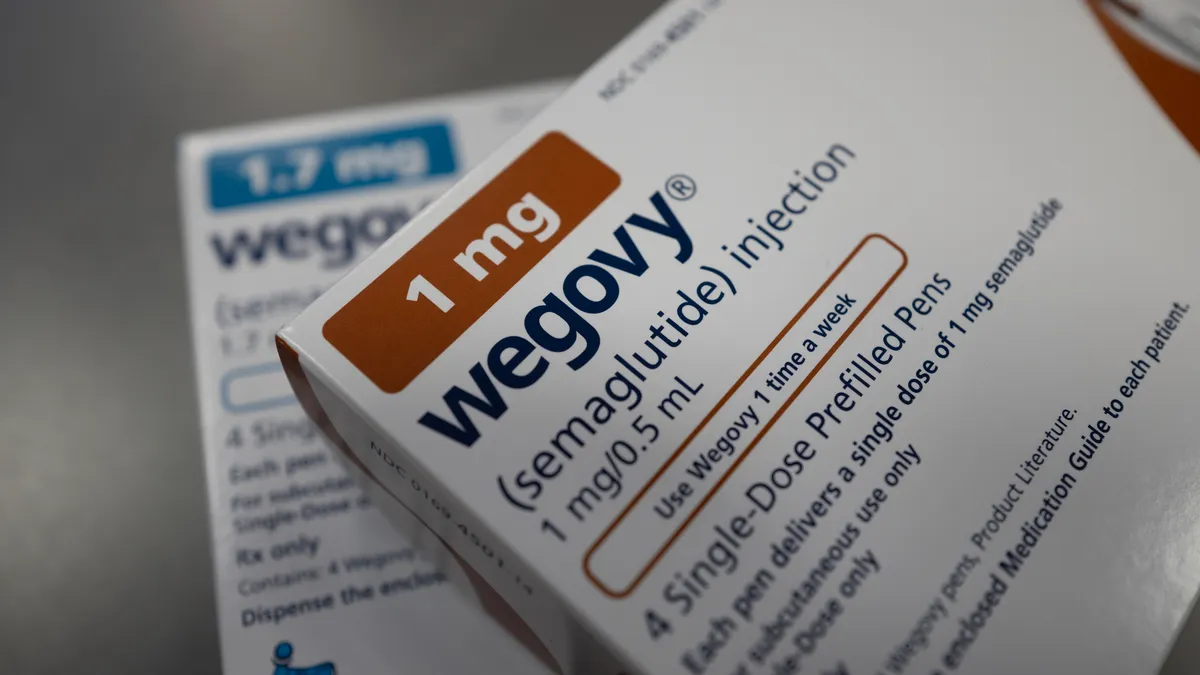
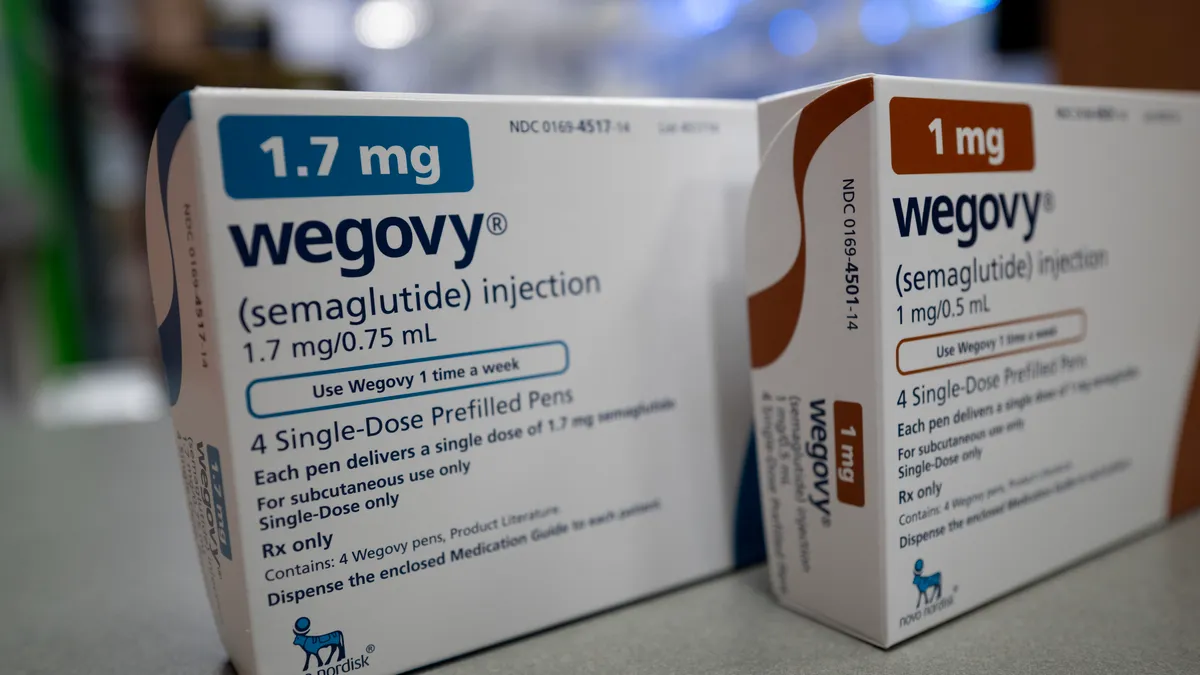
Novo is arguing that Lilly’s advertisements for Zepbound and Mounjaro — the diabetes treatment that shares Zepbound’s active ingredient — are making purposefully deceptive comparisons. Those ads pit the highest injectable doses of Lilly’s medicines against the lower, original doses of Wegovy and Novo’s diabetes medicine Ozempic that were approved by U.S. regulators.
Novo, though, recently brought to market a higher-dose version of Wegovy with more powerful weight loss effects. Approved in March, that 7.2-milligram-per-week dose helped people with obesity lose around 19% of their body weight in clinical testing. Zepbound was associated with weight loss of up to 21% in human trials.
In its statement, Novo said Lilly’s ads are now “especially misleading” because there hasn’t been a head-to-head trial testing the highest dose of both medicines against one another.
“This consumer campaign has aired during recent, widely viewed global sporting broadcasts and on TikTok and Facebook, causing widespread confusion,” Novo said. If Lilly doesn’t pull the ads voluntarily, Novo said it will ask the court to force Lilly to stop airing them, based on evidence “that consumers are being confused and misled.”
Lilly contends that its campaign is using the results of a head-to-head trial, Surmount-5, showing that the lower, 2.4 milligram dose of Wegovy resulted in 47% lower relative weight loss than Zepbound.
“The gold standard for comparing medicines is a robustly designed, well-conducted head-to-head clinical trial — like Surmount-5, which remains the only head-to-head, randomized clinical trial directly comparing [the two drugs] in weight management,” Lilly’s statement said.
In response, John Kuckelman, Novo’s group general counsel, retorted that “ineffective, fine-print disclaimers do not fix the misleading impression created by major national campaigns.”