Biotechnology startup Orum Therapeutics has banked 145 billion Korean won, or about $100 million, to fuel development of medicines that merge elements of two popular drugmaking approaches.
Orum on Thursday said that proceeds from the round — which was led by KB Investments and involved seven other firms — will help advance a potential acute myeloid leukemia drug called ORM-1153 and that recently became its top candidate.
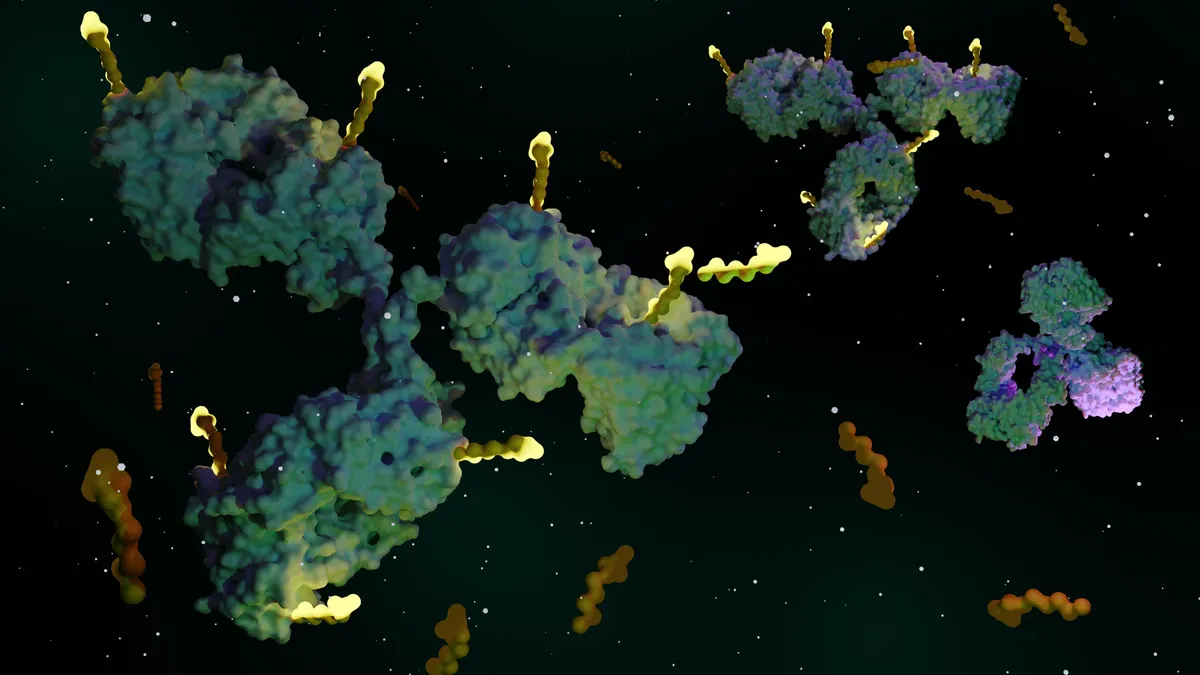
The startup, which has offices in Lexington, Massachusetts, and Daejeon, South Korea, is developing what are known as “degrader-antibody conjugates.” These drugs are a twist on the antibody-drug conjugates, or ADCs, used to treat multiple cancers. ADCs link a targeting molecule to a tumor-killing toxin. Orum’s drugs, by comparison, use a protein-degrading compound as a payload.
Previously, Orum’s program ORM-5029 was being evaluated against HER2-positive breast cancers and was due to read out Phase 1 study results over the summer. However, CEO Sung Joo Lee said in an interview the company shelved that program after observing instances of liver toxicity.
"That particular asset had some issues, but not the whole platform,” he said.
The company is now focusing on ORM-1153, which targets CD123, a protein that’s overexpressed in the majority of acute myeloid leukemia cases. Orum isn’t alone in that pursuit. Some other companies have been working on ADCs aimed at the same protein. Still, Lee believes that because patients are likely to encounter resistance to ADCs, a drug like ORM-1153 with a different mechanism can have an important role.
Hematology “needs its own class of payloads that are better fit, and at least from the preclinical data we've seen, this seems to be a promising possibility,” Lee said.
Orum’s drug could enter the clinic as soon as the end of 2026. Behind it is an experimental drug being studied against small cell lung cancer and neuroendocrine tumors.
Orum has two partnerships in place with Bristol Myers Squibb and Vertex Pharmaceuticals. A drug involved in the Bristol Myers collaboration, called BMS-986497, advanced last year into early human testing for AML and higher-risk myelodysplastic syndromes. Orum’s deal with Vertex gives the latter an opportunity to license up to three programs in a bid to find better conditioning regimens for gene-editing treatments.
In February, Orum raised 50 billion Korean won in an initial public offering in South Korea. It first tried to do so at the end of 2024, but withdrew its registration statement weeks after filing as political tensions flared in the country.
Editor’s note: This story has been updated to clarify Orum’s funding total in Korean won and one of its office locations.