Biotechnology startup Prolynx has raised $70 million in Series A funding that will support plans to develop obesity drugs that require less frequent dosing than existing medications.
Announced Thursday, the Emeryville, California-based startup’s financing was led by 5AM Ventures, OrbiMed and Monograph Capital. The company will use that cash to advance a portfolio of longer-acting “incretin” drugs — which stimulate or mimic the effects of certain gut hormones — as well as “non-incretin” therapies, according to CEO Chris Boulton.
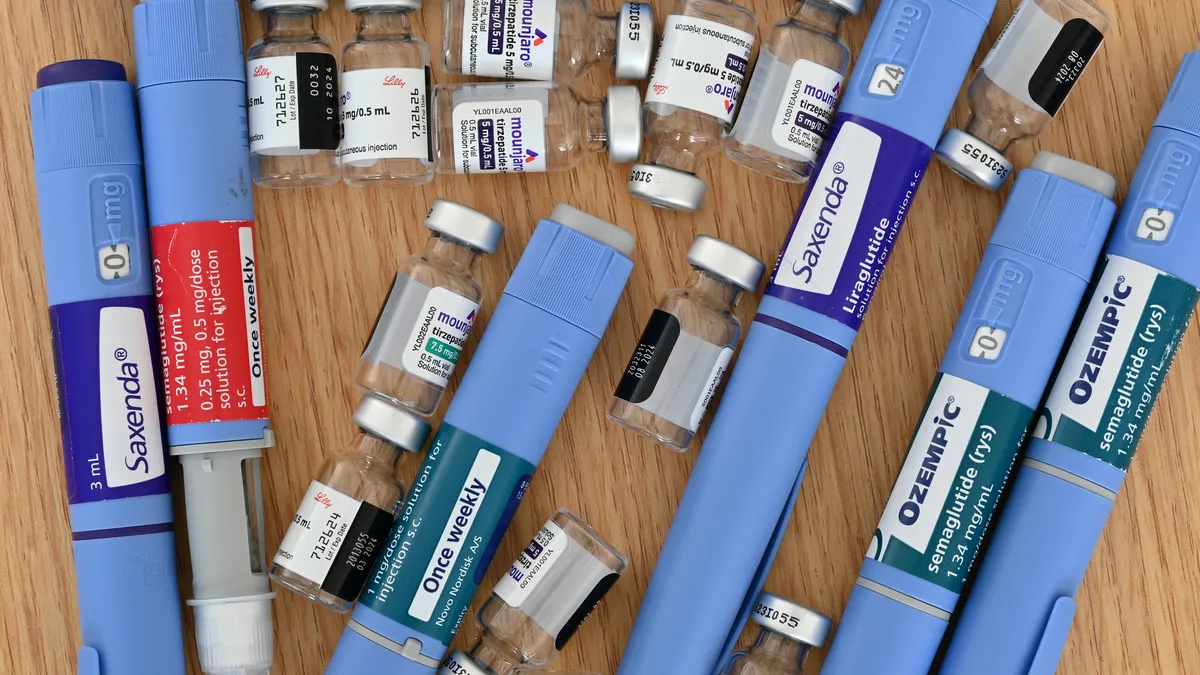
Boulton described the biotech’s portfolio as potential solutions for a disease, obesity, that “is not just one condition, but multiple conditions.” That view is reflected by the opportunity drugmakers still see in making new obesity medicines, despite the dominance of two effective and widely used therapies, Eli Lilly’s Zepbound and Novo Nordisk’s Wegovy.
Those drugs spur significant weight loss, but also require weekly injections and are associated with certain gastrointestinal side effects that can lead people to stop treatment. Many drugmakers are tinkering with new variations that might be more potent, convenient, tolerable or dosed less frequently, increasing the likelihood that a patient stays on treatment.
The potential reward is substantial. Combined sales this year of Lilly’s Zepbound and Mounjaro — a diabetes drug that shares Zepbound’s same active ingredient — have made it the world’s most lucrative medicine. Some analysts expect the market for Zepbound and other drugs like it to surpass $100 billion by 2030.
That opportunity has spurred dealmaking by large pharmaceutical companies and investments by venture capitalists. Each of the last two years, venture firms have poured at least $1 billion into startups working on metabolic disease drugs, according to BioPharma Dive data.

Prolynx aims to stand out by focusing on drugs that can be dosed as infrequently as once monthly or quarterly. It’s leaning on a type of extended-release technology Prolynx originally targeted for use in cancer when the company was launched more than a decade ago by founders Daniel Santi and Gary Ashley.
According to Boulton, the company’s technology involves proprietary chemical linkers that bind a drug to a carrier molecule and enables a controlled, predictable and sustained release of that therapy. One way Prolynx will use it is to make a version of semaglutide, the active ingredient in Novo’s Wegovy, that’s administered once monthly.
“If you can find treatments that last a little bit longer, you can smooth out those peaks and troughs and minimize some dose-related side effects,” Boulton said.
Boulton said the company intends to make use of a regulatory pathway that enables drugmakers to bring to market modified versions of existing medicines more quickly, in part, by borrowing from existing data.
Behind a longer-acting semaglutide are formulations of a dual-acting GLP-1/GIPR agonist and an amylin drug — both well-studied obesity targets — that could be dosed monthly or quarterly. The company didn’t disclose when it expects to get its experimental medicines into clinical testing.
Boulton, who has worked in obesity or metabolic drug roles at Amgen, Sanofi and AstraZeneca, joined Prolynx in November.
“Working at big companies, you know what good looks like,” he said. “You know where the bar is and you can aim for that.”