Dive Brief:
- San Diego-based Protego Biopharma has raised $130 million in a Series B round that will propel an experimental drug for amyloid light-chain, or AL, amyloidosis into late-stage clinical testing, the company said Monday.
- The drug, called PROT-001, is designed to bind to and stabilize a protein that misfolds and toxically accumulates in people with AL amyloidosis. That effect is believed to impact disease progression, rather than only symptoms, though it hasn’t yet been proven in testing. An early-stage study began in the second quarter, with results expected next year. A Phase 2/3 trial should start in the second half of 2026.
- Protego claimed in a statement that the approach may also be applicable to other diseases characterized by protein misfolding. Its Series B round was led by Novartis Venture Fund and Forbion, with additional backing from firms such as Omega Funds, Vida Ventures and MPM BioImpact.
Dive Insight:
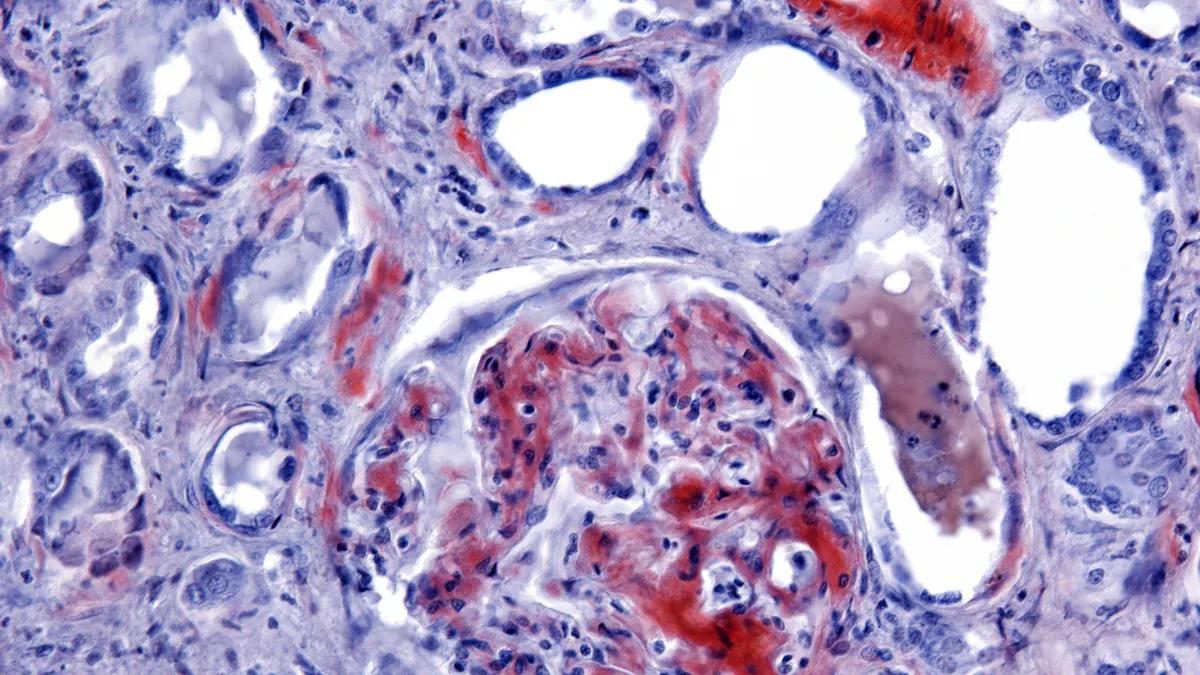
In AL amyloidosis, plasma cells errantly make abnormal antibody parts known as “light chains,” which then misfold, clump up in tissues and damage organs. While there are certain options available, like a stem cell transplant, or a cocktail of cancer chemotherapies and the drug Darzalex, they each have limitations.
Bringing new prospects to market has proven frustrating for some of Protego’s peers, however. In May, disappointing study results led Prothena to shelve a therapy it had long been working on. Two months later, AstraZeneca said a drug it had acquired in a 2021 buyout fell short in a late-stage study, too.

Both of those drugs are designed to clear toxic deposits of amyloid from the body. Protego believes it’ll have better luck by intervening beforehand and preventing them from accumulating in the first place. Those failures “give us a lot of conviction on our approach,” said CEO Brent Warner.
“There is very clear data,” he added, that “toxic light chain is really what's driving a lot of the mortality in this disease.”
Protego’s work is built on the research of Jeffery Kelly, one of Protego’s co-founders and a Scripps Research professor. Kelly, an expert in protein misfolding, was a cofounder of FoldRx, which discovered the protein stabilizing drug now known as Vyndamax. That treatment was the first medicine in the U.S. approved for a form of the protein misfolding disease transthyretin amyloidosis that affects the heart. It’s now owned by Pfizer and generates billions of dollars in sales each year.
Protego hopes PROT-001 can prove to be a similar leap forward. The goal of the commonly used Darzalex regimen is to essentially wipe out the plasma cells making misfolded proteins. Patients relapse, though, because some of those cells return. Adding a protein stabilizer to the mix could prompt a “very drastic, fast and deeper response,” Warner said.
“In a disease like this, you may not necessarily need a sledgehammer, you just may need a sharper knife to cut it,” Warner said.