The Food and Drug Administration approved Friday Viridian Therapeutics’ treatment Lumvoa for thyroid eye disease, setting up a showdown between Amgen’s blockbuster medicine Tepezza and the drug analysts believe has a multibillion-dollar market opportunity.
Lumvoa will be used to treat people with the autoimmune condition, which causes inflammation of tissue surrounding the eye, and can lead to pain, eye bulging and vision impairment.
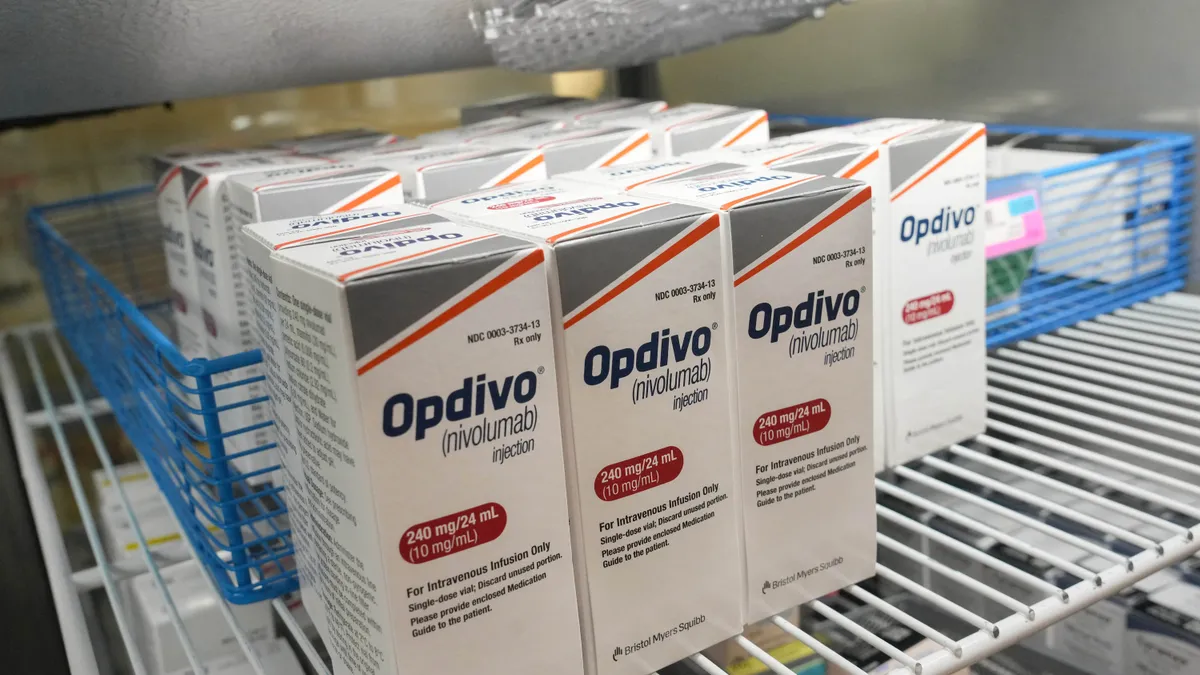
Thyroid eye disease, a condition often linked to Graves’ disease, has for years been dominated by one treatment: Amgen’s intravenous drug Tepezza. But Lumvoa may have a “competitive advantage” against that drug, Leerink Partners analyst Thomas Smith wrote in a Tuesday note to clients.
Like Tepezza, Viridian’s therapeutic targets the key inflammation driver known as IGF-1R. But Tepezza is delivered intravenously over eight infusions, once every three weeks, and can take up to 90 minutes. Lumvoa, on the other hand, spans five infusions, once every three weeks, and lasts 30 to 40 minutes.
Lumvoa also has a shot at a bigger market, given that its label includes treatment of active and chronic thyroid eye disease, which is a “key point of differentiation” from Tepezza, Smith wrote.
The dosing schedule, along with the expansive label and strong clinical profile “could support physician adoption and potentially expand the treated TED market,” he added.
Viridian, which for years has been a forerunner in that race, said it would launch the drug immediately. Lumvoa is the company’s first marketed product.
Jefferies analyst Faisal Khurshid said the drug’s pricing is on par with Tepezza, at about $450,000, and could support patient access, he said in a note to clients Tuesday. However, Khurshid added that revenue for Lumvoa “will take time to build.”
Smith projects Lumvoa revenues of about $738 million by 2035, and expects early launch metrics “to focus less on near-term revenue and more on execution.”
Still, Viridian is taking aim at a bigger share of the market with its other program, elegrobart. The company presented promising late-stage data in patients with a “chronic” version of thyroid eye disease in May, and plans to submit its application for the subcutaneous treatment to regulatory authorities in the first quarter of 2027.