Today, a brief rundown of news from The Centers for Medicare and Medicaid Services and Shionogi, as well as updates from AstraZeneca, CRISPR Therapeutics and Boehringer Ingelheim that you may have missed.
The Trump administration has proposed a pair of new Medicare pilot programs meant to lower U.S. drug prices by tying rebates and costs in the U.S. to what's paid in comparable countries. Called "Globe" and "Guard," both payment models would force drug companies to offer rebates that cover the difference in prices paid in the U.S. and a group of comparable countries. If advanced by the administration, the program applying to "Part B" drugs administered in physicians offices will start on Oct. 1, 2026, with the "Part D" pilot for retail medications following a year later. They'd run for five years in areas of the U.S. that altogether contain about 25% of Medicare beneficiaries and are forecast to save some $27 billion combined. — Ben Fidler
Tanabe Pharma, the Japanese pharmaceutical firm bought by Bain Capital earlier this year, plans to sell global rights to its top-seller Radicava. The deal, announced Monday, would transfer Tanabe Pharma’s Radicava business to Shionogi, allowing it to sell the ALS medicine in places like Japan, Canada and the U.S. In exchange, Shionogi will pay a lump sum of $2.5 billion. Tanabe’s former owner, Mitsubishi Chemical Group, recorded 100.3 billion yen, or roughly $660 million, worth of Radicava revenue during the company’s 2024 fiscal year, which ended March 31. — Jacob Bell
AstraZeneca said Monday that a regimen involving its experimental cancer drug ceralasertib failed a Phase 3 trial in people with non-small cell lung tumors. AstraZeneca had been hoping that pairing ceralasertib — a medicine designed to suppress a way tumors repair themselves — with the immunotherapy Imfinzi might help people whose lung cancers stopped responding to other medications. The regimen didn’t extend survival when compared to the chemotherapy docetaxel, however. AstraZeneca will present study details at a future medical meeting. — Ben Fidler
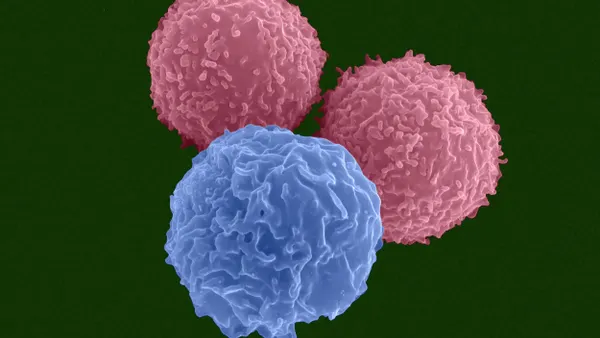
CRISPR Therapeutics revealed early data for an "off-she-shelf" cell therapy it's developing for inflammatory diseases and cancer. CRISPR said the therapy, zugo-cel, drove responses in nine of 10 patients with relapsed or refractory large B-cell lymphomas, and meaningfully depleted B cell levels in four patients with certain autoimmune conditions. The early lymphoma data are "best-in-class," but the study's slow recruitment pace in autoimmune disease suggests "increased competition for patients is impacting execution," wrote William Blair analyst Sami Corwin. CRISPR shares ticked up about 4% on Monday. — Ben Fidler
Neurocrine Biosciences on Monday reported the failure of a late-stage study testing valbenazine, the active ingredient in its marketed medicine Ingrezza, in people with a type of cerebral palsy that causes uncontrolled muscle movements. The San Diego-based developer didn’t release any data, but said full results will be presented at an upcoming scientific meeting. Neither the trial’s main goal, which focused on improvement in chorea, nor “key secondary” objectives were met. Sanjay Keswani, Neurocrine’s chief medical officer, described the results as disappointing, especially since there are no approved treatments for dyskinetic cerebral palsy. Valbenazine is already cleared in the U.S. to treat tardive dyskinesia and the chorea associated with Huntington’s disease. Net product sales of Ingrezza in over the first nine months of this year totaled almost $1.9 billion. — Jacob Bell
The Food and Drug Administration has expanded use of Boehringer Ingelheim’s Jascayd, clearing it on Friday for use treating adults with progressive pulmonary fibrosis, or PPF. The approval was based on results from a Phase 3 trial that Boehringer claimed to be the largest of its kind in PPF, and that showed Jascayd was able to slow the decline of lung function compared to placebo. PPF affects up to 100,000 people in the U.S., some 5.6 million worldwide, and is linked to a condition known as interstitial lung disease, according to Boehringer. It’s now the second approved indication for Jascayd, which in October became the first new treatment in over a decade for idiopathic pulmonary fibrosis.— Delilah Alvarado