
When AlphaFold3 revolutionized biomolecular structure prediction in 2024, Google DeepMind launched it without releasing its code or weights. The code was made available later that year under a noncommercial license, with weights available only to academic researchers upon request. Since then, open models licensed for commercial use have matched AlphaFold3’s capabilities for many tasks and surpassed them for some. Boltz-2, released by MIT and Recursion under an MIT license, predicts protein binding affinity along with structure. Its accuracy approaches that of physics-based free energy perturbation methods at more than 1,000 times the speed. In March 2026, the OpenFold Consortium released updated OpenFold3 weights and code along with its training data, reporting performance similar to AlphaFold3’s on most evaluated tasks.
Because these are open-source models, drug developers can fine-tune them on proprietary data within their own environment and keep the resulting weights. This enables sponsors to retain control over the source of their most durable competitive advantage: the experimental data they’ve generated over decades for their target classes and therapeutic areas.
Five of the top 20 pharmaceutical companies, including AbbVie, Bristol Myers Squibb and Johnson & Johnson, fine-tuned OpenFold3 on more than 20,000 proprietary protein-small molecule structures in a federated initiative that kept each company’s proprietary data in-house. The resulting model outperformed every publicly available model it was tested against.
“Open-source models are gaining ground in part because drug developers don’t want to have to pay per token to use a generic model through an API,” says Ilya Burkov, global head of scientific AI at Nebius. “At the same time, the sophistication of open models is rapidly increasing. A growing number of highly specialized models — for protein structure prediction and docking, molecular dynamics, protein design and other very specific modalities — are becoming available.”
But along with greater control over proprietary data, open model adoption brings new responsibilities. Teams that run open models must manage compute, orchestration and security, and validate models — work an API provider would otherwise handle — at a time when demand for GPUs is high and the leading models are updated every few months. They’ll need access to infrastructure that can meet the demands of this fast-changing technology, along with expertise in fine-tuning and pre-training scientific AI models.
Where Proprietary Models Still Have an Edge
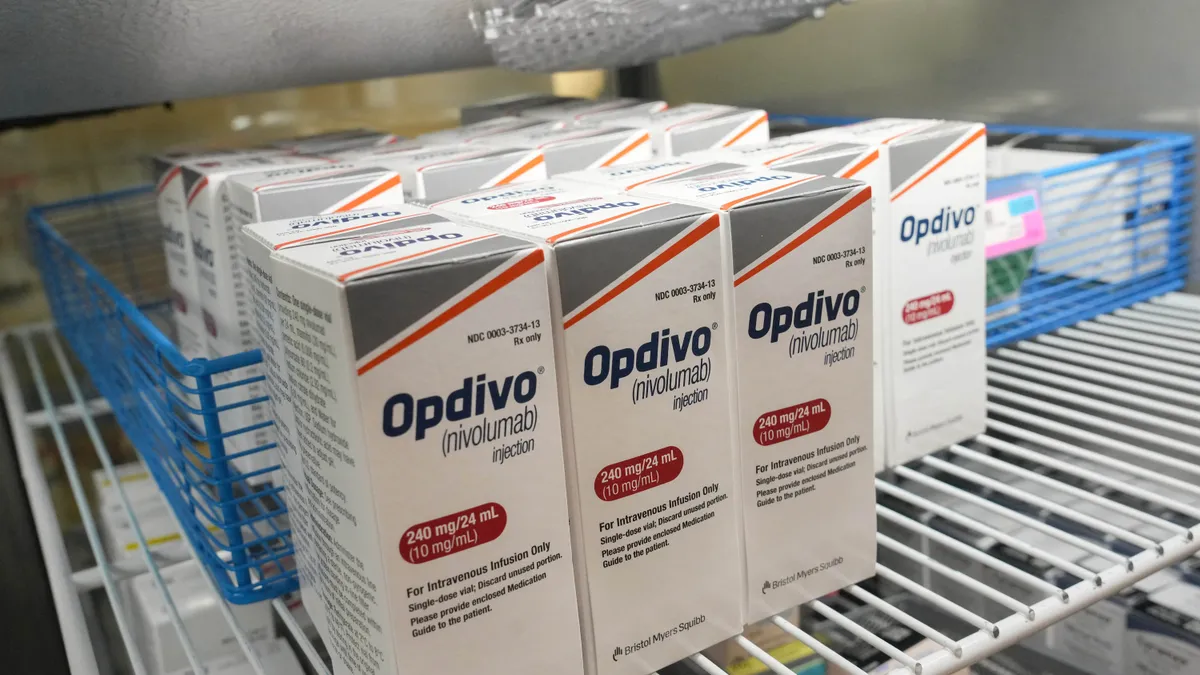
Proprietary models remain the best choice in certain situations. Biotechs without their own large-scale datasets can turn to Lilly’s TuneLab, which provides access to antibody and small-molecule models trained on more than $1 billion worth of Lilly’s research data. Chai Discovery’s closed Chai-2 was the first zero-shot antibody design platform to achieve double-digit success rates, prompting Lilly to commission a custom version of the model trained on its own data.
“Open models won’t fully replace proprietary ones,” Burkov says. “Closed models retain an edge in out-of-distribution problems such as antibody-antigen prediction, for instance. But the organizations running these specific workflows are few and far between.”
For most drug developers, the advantages of open models — cost, control over proprietary data, transparency and reproducibility, and lack of vendor lock-in — outweigh those of proprietary models. The caveat, says Burkov, is that “they have to know what they’re doing.”
Right Sizing Fine-Tuning Effort
First of all, users of open models need to understand how much data and compute are required to fine-tune their models. Tuning a model for a single target is relatively simple and inexpensive, Burkov says. Companies have fine-tuned OpenFold3 on a single GPU in about one day and then evaluated the results and corrected systematic errors.
Program-level tuning — across an entire chemical series or family of targets — is a larger undertaking. It can require hundreds to thousands of high-quality structures as input, and retraining a model’s affinity prediction can take days, running on multi-GPU nodes.
Pre-training a model from scratch is harder still. The process demands extensive scientific and computational expertise, as well as access to large-scale GPU clusters.
Running Open Models in Production
Teams running open models can inspect, version-pin and audit those models themselves, but with that control comes the obligation to validate their own models. NVIDIA’s model card for OpenFold3 notes that integrating fine-tuned models into AI systems requires additional testing with use-case-specific data.
The future infrastructure demands of open models can be challenging to forecast, given how quickly this field is advancing and the models are changing. “You can’t predict which models you’ll be running next year, so stop trying,” says Burkov. “But you can predict the general shape of your workloads.” He recommends planning for four to five times as much compute as teams initially expect to need, and reserving capacity well before projects require it.
Decision-makers should ask:
- Will we primarily be training models or running inference?
- Will we mostly use biology-specific models or general-purpose large language models (LLMs)?
- Will we tune models for single targets or for entire target families or chemical series? Or will we pre-train our own models?
- Which workloads can run as on-demand jobs and which require reserved, dedicated capacity?
Access a Scalable, End-to-End AI Platform and Dedicated Life Sciences Expertise
Partnering with an AI cloud provider whose infrastructure was purpose-built for healthcare and life sciences workloads can remove many of the obstacles to running and training open-source models.
Nebius gives its customers access to both the infrastructure and the expertise needed for tuning and inference at scale. On its scientific AI cloud, drug developers can run jobs on demand in preemptible serverless environments or choose to reserve GPU time in advance. Either way, Nebius manages the GPUs, networking and orchestration. Teams can host models they’ve trained, license them to others or test an existing model in a sandbox environment. Nebius is collaborating with NVIDIA to support model validation as well. The Nebius AI Cloud hosts BioNeMo NIM microservices with the NVIDIA Enterprise license built in, and Nebius is among the AI clouds building on NVIDIA’s BioNeMo Agent Toolkit.
Numerous protein design, structure prediction and genomics models are available on the Nebius Scientific AI Platform, including AlphaFold2, Boltz-2, RFdiffusion and many others. In collaboration with NVIDIA, Nebius offers an infrastructure where that validation work can be performed:
Nebius’ customers also gain access to a dedicated scientific AI team including solution architects and life sciences Ph.Ds. Team members are available to guide customers through the model fine-tuning and pre-training processes.
“Our customers usually feel confident doing whatever they want to do at scale using open-source models,” adds Burkov. “That’s because they get so much guidance from us.”
Run open biomolecular models at scale, with experts who’ve done it before. Explore Nebius and NVIDIA for healthcare and life sciences.