The stock market, while broadly enthusiastic about artificial intelligence, hasn’t been as bullish on drug companies built around the technology.
Several of the AI-focused drug developers to go public so far have lost much of their market value. Shares of Exscientia, for example, had fallen roughly 80% from their debut price by the time the company agreed to sell to rival Recursion Pharmaceuticals in 2024. Recursion, too, has plummeted since initially listing shares at $18 apiece. Its stock price currently sits just under $4.
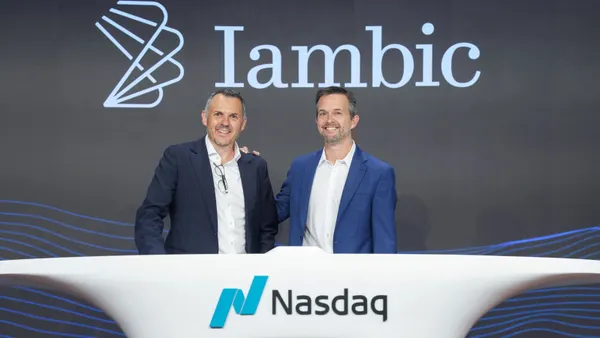
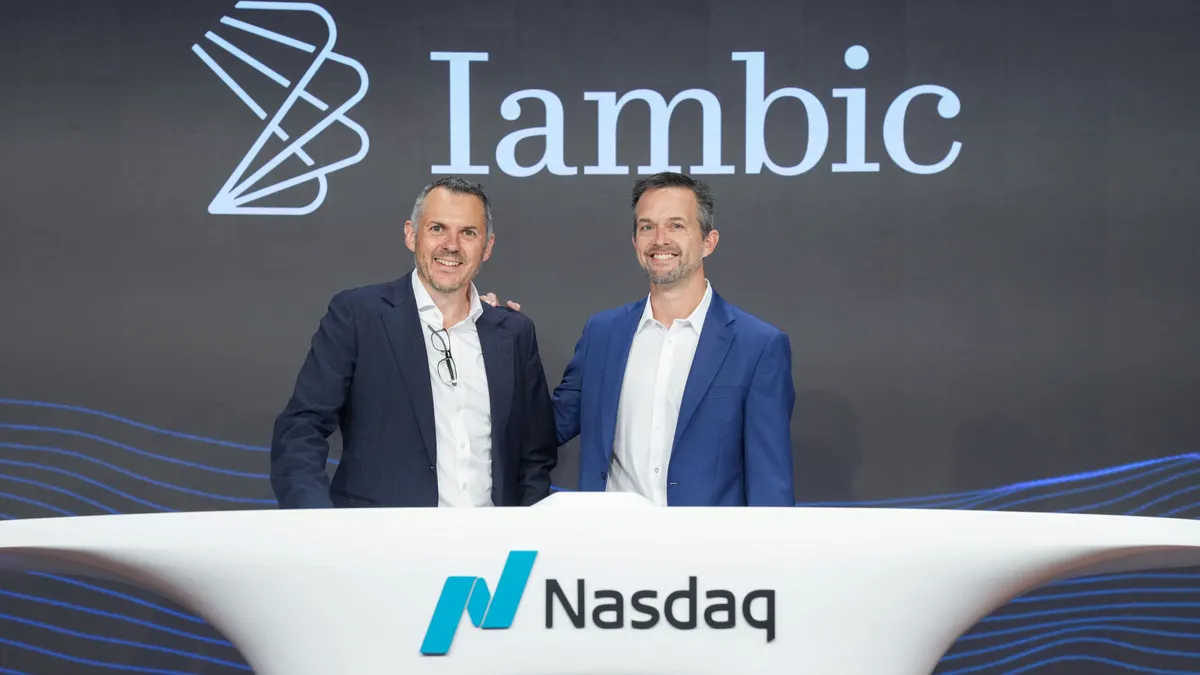
Iambic Therapeutics believes it will chart a different course. After launching in 2019, the AI specialist attracted close to half a billion dollars in funding from a list of prolific life sciences investors like Nexus, Abingworth and Catalio Capital Management. Iambic added to its cash pile earlier this week by raising $150 million through an IPO.
Iambic’s share price hovered around $24.50 by mid-Friday, up more than 50% from Wednesday. Whether this warmer embrace continues isn’t clear. Iambic's haul was well below what many of its biotech peers have drawn in from IPOs this year. It's also far less than some of the massive megarounds other AI-focused drugmakers have secured in the private markets.
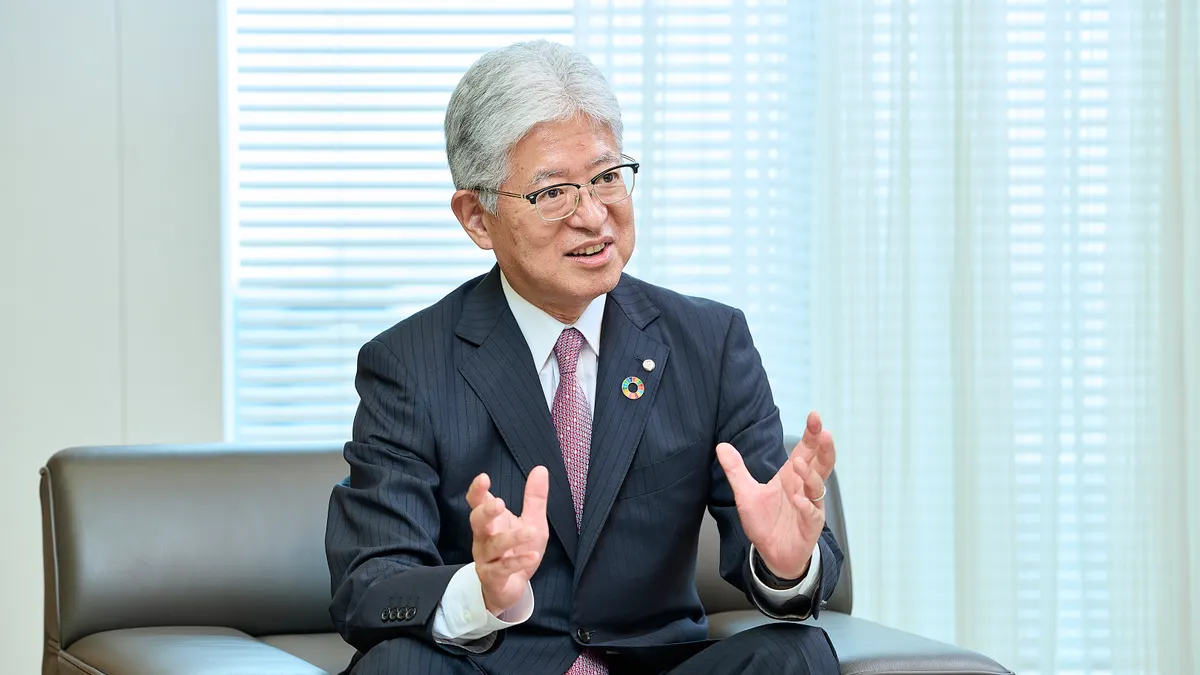
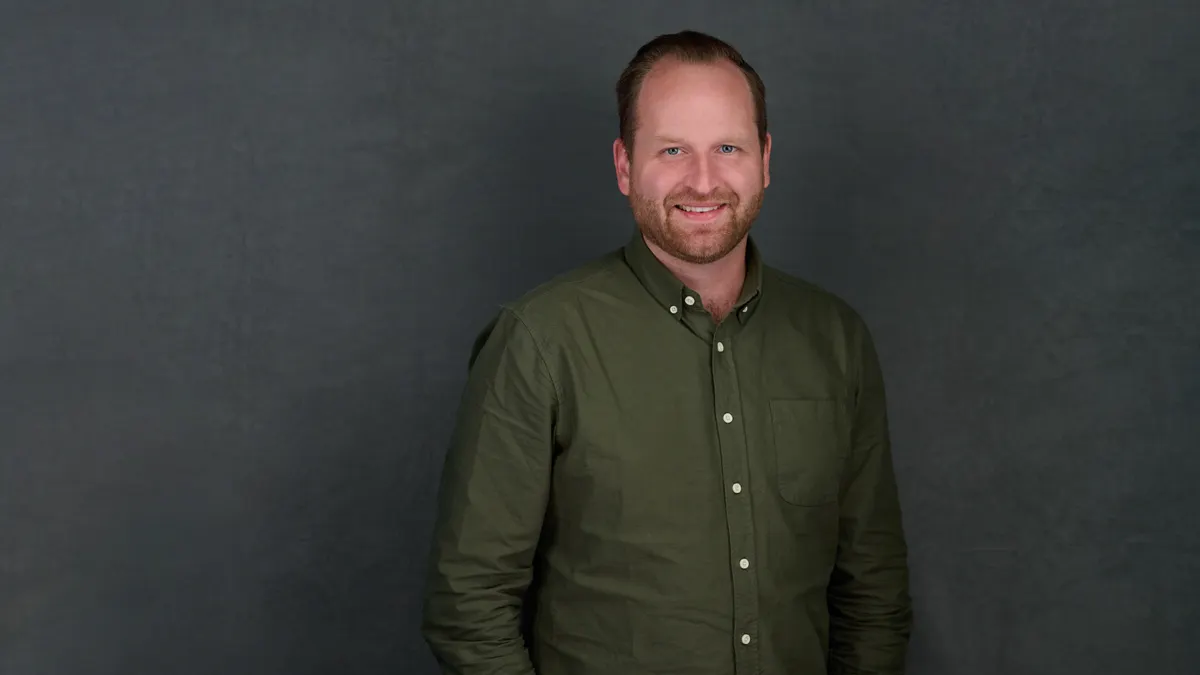
Tom Miller, Iambic’s co-founder and CEO, spoke to BioPharma Dive about his company’s IPO roadshow and what he sees as AI’s role in the future of drug development. The following conversation has been edited and condensed for clarity.
BIOPHARMA DIVE: How would you assess the track record of AI in drug discovery and development so far? What are its successes and what are the main challenges companies using it are facing?
MILLER: Iambic, since its founding, has really focused on bringing new molecules to and through clinical trials as our measure of success. When I think about execution in the AI space, I think about IAM1363 getting to the clinic in less than two years. I think about the fact that we're now poised to initiate registrational trials in 2027 because we have 100-plus patients worth of data that supports an aggressive and broad development plan.
That's what every tech bio should be held up to. Technology is great. We should be asking: Are you converting it to medicines?
That echoes some of the comments you made when Iambic announced its partnership with Takeda.
MILLER: That remains as true today as it was then. We're happy to stack up.
The point of all of this technology, the point of any platform, is to execute on what comes off of it. Takeda gained a lot of conviction around our ability to do that. You see that more recently with the AbbVie deal as well [as] the Bayer deal. Pharma recognizes Iambic is a partner that can execute in that way.
Thus far there’ve been a few high profile companies — Recursion and Exiscentia come to mind — built around AI drug discovery that have struggled in the public markets. What lessons can you take from those experiences and what gives you confidence that your experience will be different?
MILLER: I'll just speak to what we have done at Iambic, and that is to make sure that by the time we reached the public markets, we had demonstrated compelling clinical data; we had multiple programs either in the clinic or [nearing human testing]; we had good and repeated demonstration of the underlying platform; but we also had enough tangible clinical data for people who aren't platform-forward to actually wrap their head around, to actually get conviction in.
If you have a pure life science thesis, this is a company that excites you because of the medicines. If you have a pure tech thesis, this is a company that excites you because of the underlying technologies. And I think making sure that we build a company that can connect those dots and bring in that broader set of investors is an important part of our journey.
What did you see from investors on your roadshow? Was there considerable skepticism? Many biotech IPOs this year have been bigger than this.
MILLER: Iambic came to the IPO with a very strong cash position on the basis of all of our partnerships. We announced at the end of the last quarter over $270 million of cash on hand — and that was prior to the AbbVie deal.
We sized the IPO and priced it with an eye towards bringing in a broad syndicate of investors who not only have understanding of what it takes to build great technology, but also have deep understanding on the life science side of what it takes to build great medicines. That sizing of the IPO has definitely been influenced by the cash efficiency of the company and the strong cash position of the company — the fact that we have more than we feel we need, to do what we need, in terms of reaching near-term inflection points.
Axios had a story earlier this week about a disconnect between how investors are looking at a company like yours versus others in the space. Isomorphic, according to a report, is in early talks to raise new funds at a valuation of at least $40 billion. Elsewhere, Chai Discovery recently secured $400 million in funding. Do you think investors are viewing the Iambic story differently than other AI drug developers?
MILLER: Iambic has been building a company that connects the thesis of better technologies making better medicines. We don't take a backseat on technology to anybody.
What you see in terms of these partnership deals: we're happy to go AI model to AI model, we're happy to go partner to partner, with any company that you've mentioned or any other company that's out there. But we're also happy to go molecule to molecule in terms of real-world clinical development.
If we're going to build a generational company that can operate with the innovation urgency of a tech company, but also with the execution maturity of a biotech, this is the approach that makes the most sense.
There's been concerns that AI lends itself to hyperbolic statements. The CEO of Anthropic recently said the technology could cure all diseases within the next decade. What is your view of AI's eventual role? And, now that you’re public, do you anticipate having to change how you steer or position the company?
MILLER: If we keep our eye on the patient, if we keep our eye on the development of better medicines that have a genuine and urgent unmet need, then I think we are going to keep our eye on what really matters.
But Iambic’s focus has always been on the molecule being the important thing by which we're going to measure our success. That remains as true today as it ever was.
Biotech investors, while maybe more optimistic than they were a few years ago, are also hyper-fixated on how companies are deploying their resources. How will you use this new IPO cash in a way that resonates with investors?
MILLER: I would just reiterate that Iambic has had roughly eight partnerships in the last roughly eight quarters. We've had a strong drumbeat of partnership activity. That has sustained us … and provides us with a very strong runway [to get to] clinical inflection points.
Your pipeline is currently composed of three cancer drugs. How do you evaluate whether to go deeper into oncology or diversify into other therapeutic areas?
MILLER: You see in terms of our partnership announcements that Iambic is actively working in areas of neurology, in areas of inflammation and immunology, as well as in other therapeutic areas. We have a platform that is highly flexible across target class, across drug development modality and across therapeutic areas.
Partnerships have given us a strong way to apply and validate our technology into more broad areas of drug development. To answer your question, this is allowing us to then feed back into our own wholly owned pipeline, [which], if you look deeper … extends beyond oncology. It includes metabolic disease. It includes endocrinology. Iambic is actively moving beyond oncology, despite the fact that we have a highly synergistic and focused trio of lead assets.
How important do you think collaborations are for a company like yours moving forward, and maybe even the broader AI drug field? Is validation still one of the key benefits from a big pharma nod, or are we moving past that?
MILLER: Iambic has never done it just for the logos on the slide.
We had already validated that we could deliver our own molecules to the clinic. Any investor could just look at what we'd created and know that Iambic was for real in terms of drug development. We do these things because we think those partnerships make us stronger at our ability to develop our own wholly owned pipeline assets.
We bring in additional staff onto our side that has expertise on those programs through the course of the partnerships. It makes us stronger in a lot of ways. It benefits the partner and it benefits us.
That's really what we're building.