The Food and Drug Administration on Monday approved a new kind of blood thinner meant to lower the risk of stroke in certain adults, marking a major milestone for cardiovascular research as well as the medicine’s developer, Bayer.
The pill, which will be sold under the brand name Sunharbo, doesn’t work like established stroke prevention drugs. It inhibits a blood-clotting protein called Factor XIa. While this protein plays a minor role in sealing up blood vessels after an injury, it also amplifies a coagulation “cascade” that helps clots grow and makes them harder to break down, increasing the risk of strokes or heart attacks.
Sunharbo is designed to strike a balance between preventing harmful clots and preserving the body’s ability to stop dangerous bleeding — a hazard associated with many existing treatments. The large study that led to its approval enrolled more than 12,000 adults who previously had either a “warning stroke” or a stroke caused by a blood clot that originated outside of the heart. About half of the participants got a placebo, the other half once-daily Sunharbo, and all received antiplatelet therapy. Results showed Bayer’s drug reduced the risk of the most common, “ischemic” form of stroke by 26% compared to the control arm.
The study also found that the number of major bleeding cases was similar across the two groups. The most frequently reported adverse reaction among Sunharbo-treated patients was diarrhea.
The FDA has now cleared Sunharbo, which is known scientifically as asundexian, for secondary stroke prevention in this patient population, to be used alongside antiplatelet therapy. Health authorities estimate more than 795,000 people in the U.S. have a stroke each year, with about a quarter having experienced one previously.
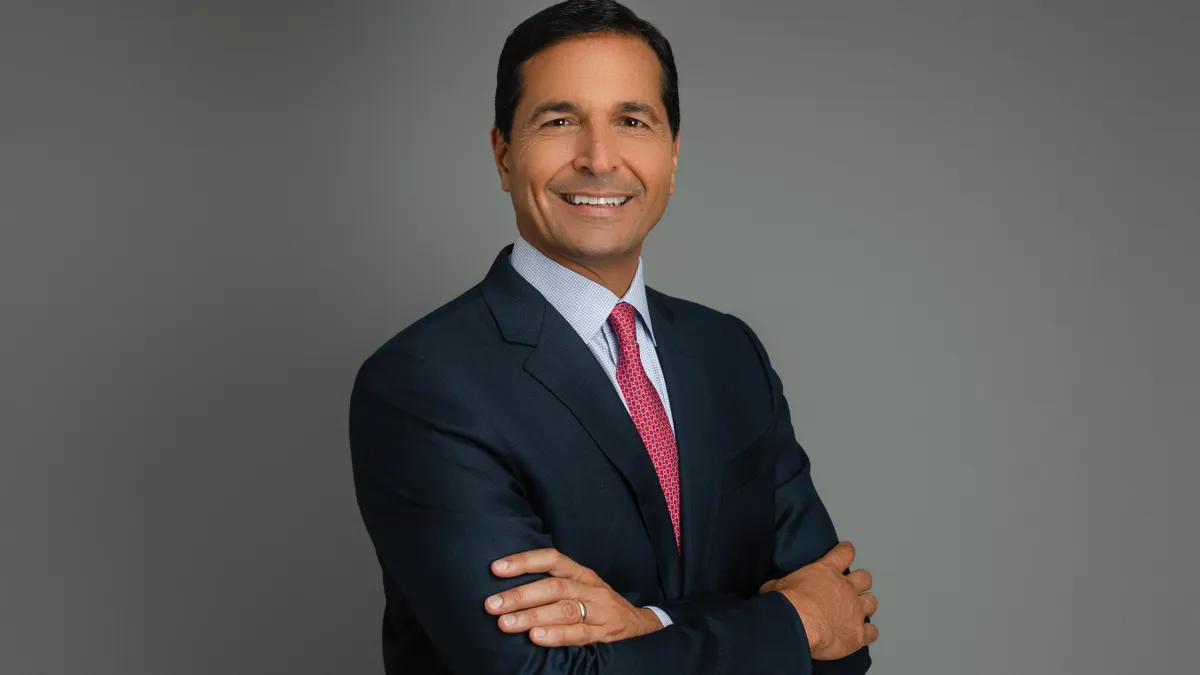
“When you spend time with physicians in this space, they will tell you that they see asundexian [as] practice-changing,” said Sebastian Guth, chief operating officer of Bayer Pharmaceuticals and president of Bayer U.S. It has “very significant utility for the patients they serve.”
The head of Bayer’s pharmaceuticals division, Stefan Oelrich, said during an earnings call in August that his team expects doctors, especially in the acute treatment setting, to “broadly welcome” Sunharbo. And if the launch has one “limiting factor,” it will be access.
According to Guth, stroke neurologists will be a “very important part” of the drug’s early rollout, as they are often the first in line to treat these patients. Over time, primary care physicians will be a greater focus. While the company hasn’t disclosed what or how many treatment centers it plans to initially target, Guth said it has set up a “very robust” patient support program.
Payers, he added, already recognize the merits of a drug like Sunharbo. Heart disease and stroke killed more than 850,000 people in the U.S. in 2024, according to the Centers for Disease Control and Prevention. The agency anticipates that costs from cardiovascular diseases are on track to reach roughly $2 trillion by 2050.
“It requires innovation to first and foremost benefit patients, but also to bend the curve [on] the economic burden of stroke and heart disease,” Guth said. “That's what we're into. That's what we're focused on, and that does resonate with payers.”
A 30-day supply of Sunharbo will have a list price of $748.50, according to a Bayer spokesperson.
Bayer has experience in this arena, having for years sold the blockbuster blood thinner Xarelto outside the U.S. Xarelto inhibits a different clotting protein, “Factor Xa,” and has experienced a sales decline due to generic competition. Bayer recorded 738 million euros, or around $860 million, from Xarelto over the first six months of 2026 — an almost 43% drop from the same period a year prior.
If analyst forecasts are any indication, the new class of drugs that includes Sunharbo could become multibillion-dollar products. Bristol Myers Squibb and Johnson & Johnson are jointly developing one, milvexian, that has suffered multiple setbacks in clinical testing. Yet Leerink Partners analysts earlier this month still modeled $2.5 billion in risk-adjusted sales of milvexian in 2032, while acknowledging that the drug could disappoint in two large, ongoing trials evaluating it against stroke and atrial fibrillation. (Sunharbo, too, stumbled in a key atrial fibrillation experiment.)
Elsewhere, rival developers are taking aim at Factor XIa in different ways. Novartis has continued work on an injectable antibody therapy acquired through its $925 million purchase of Anthos Therapeutics in 2025. City Therapeutics, which just went public, also has an RNA-based medicine that's in early-stage testing.