Dive Brief:
- A regimen combining Bristol Myers Squibb’s experimental mutliple myeloma drug mezigdomide with standard therapies delayed disease progression or death about 10 months longer than typical care alone, according to Phase 3 data unveiled Friday at the American Society of Clinical Oncology meeting.
- Trial enrollees who got mezigdomide along with Amgen’s Kyprolis and a steroid were 52% less likely to have progressed or died during the trial period compared with people receiving only those two other therapies. Study recruits in the “SUCCESSOR-2” trial had already seen their disease advance after at least one treatment line. Many had previously received two or more therapies.
- Mezigdomide is one of two protein-degrading drugs Bristol Myers has already submitted to U.S. regulators and hopes to position as successors to its popular multiple myeloma therapies Revlimid and Pomalyst. The treatment lanscape has become more competitive, though, with the emergence in recent years of cell therapies and bispecific antibodies that are becoming part of early-stage treatment.
Dive Insight:
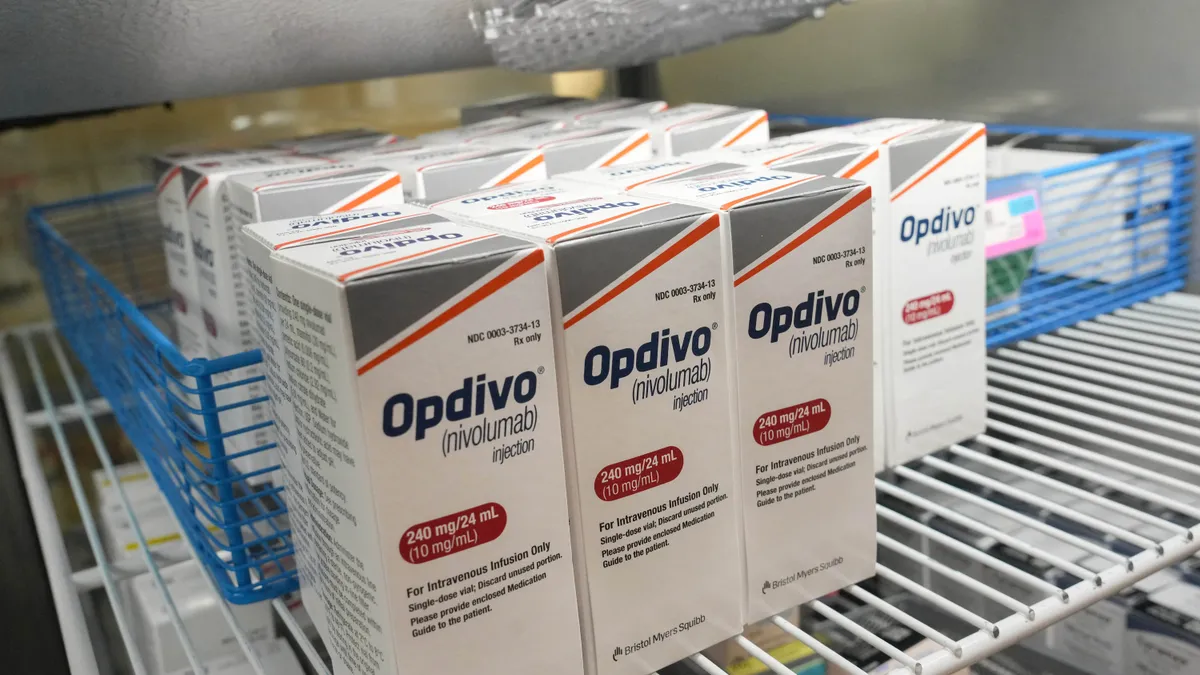
Revlimid and Pomalyst have been mainstays of multiple myeloma care for many years. Bristol Myers acquired both last decade through its $74 billion buyout of Celgene, which had cut a series of deals to slow the arrival of generic competitors and, for a time, restrict the amount of drugs they could sell.
Those limitations were finally lifted earlier this year. But in the meantime, Bristol Myers has been advancing newer agents that might replace its lost revenue. Those drugs are known as “CELMoDs,” and originated from research Celgene already had underway at the time of its acquisition. Bristol Myers has been aiming to show they’re more potent than their predecessors and might overcome drug resistance as well.
SUCCESSOR-2 is the first Phase 3 readout for mezigdomide — a positive finding the company previewed in March — and suggests it could play a role in multiple myeloma care. The combination that included mezigdomide delayed progression or death by 18 months, versus 8.3 months for the comparator group.
Some 80% of patients given the mezigdomide regimen responded to treatment, versus 53% of those in the control arm. Additionally, 27% of recipients had no trace of disease, compared to 9% of people getting only the other two medications. Severe adverse events were more frequent in patients who got the mezigdomide combination, though. The most common were low levels of pathogen-fighting white blood cells (61%) and infections (34%).
“Maintaining durable disease control becomes an increasing challenge with each line of therapy for patients with relapsed or refractory disease and increasing resistance to therapy, so achieving extended progression-free survival of a year and a half is especially meaningful,” said Paul Richardson, director of clinical research and clinical program leader at Dana-Farber Cancer Institute’s multiple myeloma center, in a statement provided by Bristol Myers.
The company is also testing mezigdomide alongside a steroid and another myeloma treatment, Velcade, in a late-stage study called SUCCESSOR-1.