Dive Brief:
- The two biggest players in the obesity and diabetes treatment market saw opposite reactions to their earnings reports this week, as Eli Lilly’s shares climbed and Novo Nordisk’s dropped.
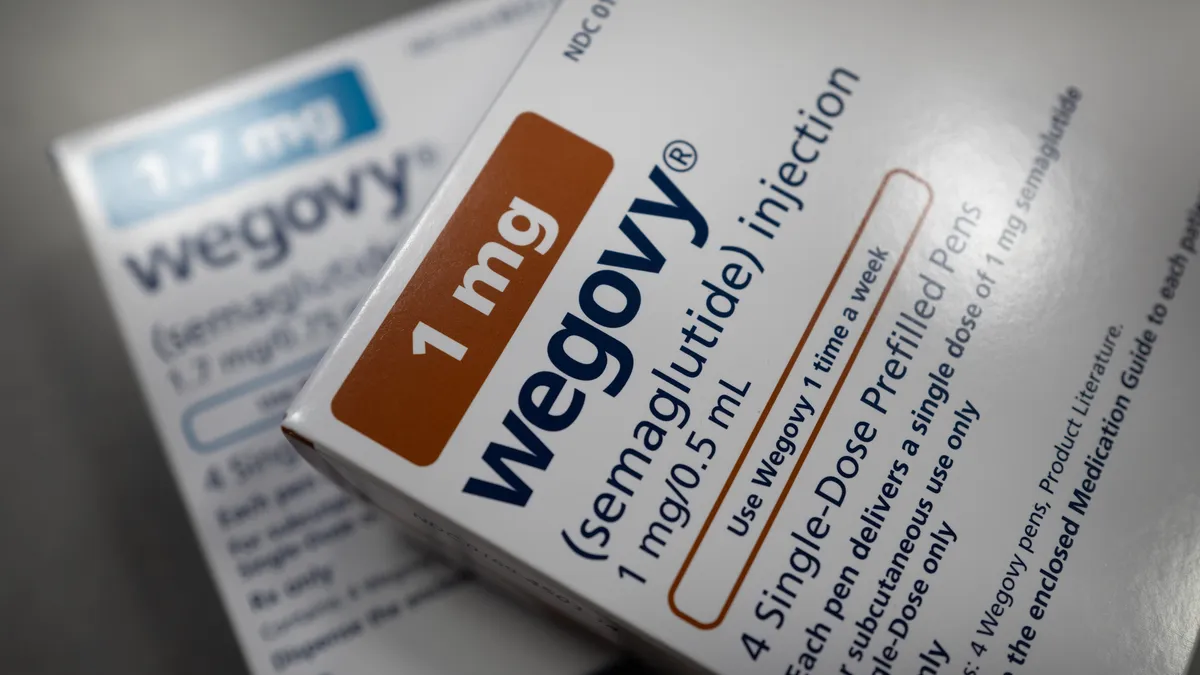
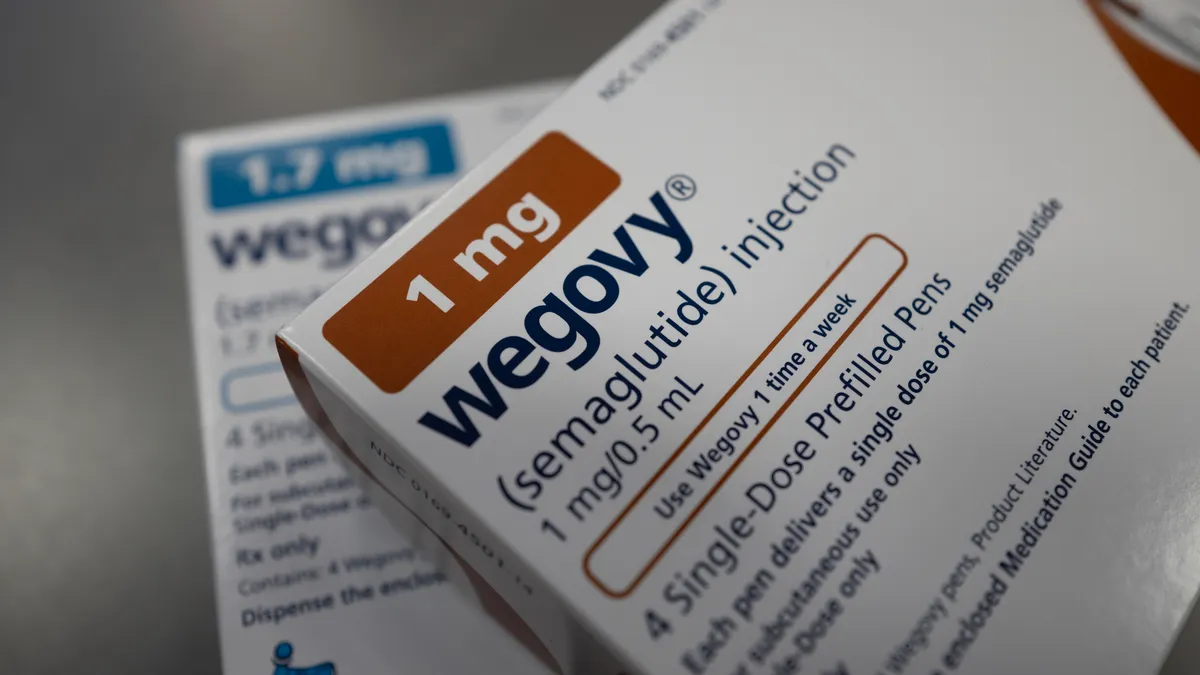
- Novo’s report Tuesday disappointed investors on two fronts. Its experimental CagriSema medicine failed to control blood sugar as well as Lilly’s tirzepatide in a head-to-head trial of patients with Type 2 diabetes. And Novo’s Wegovy pill, which has been a bright spot for the company, fell just short of analyst estimates for the second quarter.
- Lilly, meanwhile, crushed Wall Street expectations with its results on Wednesday, RBC Capital Markets analyst Trung Huynh wrote in a note to clients. Second-quarter revenue jumped 48% to almost $23 billion, beating a consensus estimate of $20.6 billion. Lilly credited the continued growth of tirzepatide, the world’s best-selling drug, which is marketed as Mounjaro for diabetes and Zepbound for obesity.
Dive Insight:
Novo’s Ozempic, sold as Wegovy for obesity, was the first in the GLP-1 class of drugs to become a household name. But the company has steadily lost market share to Lilly, whose stock value has soared past the trillion-dollar mark.
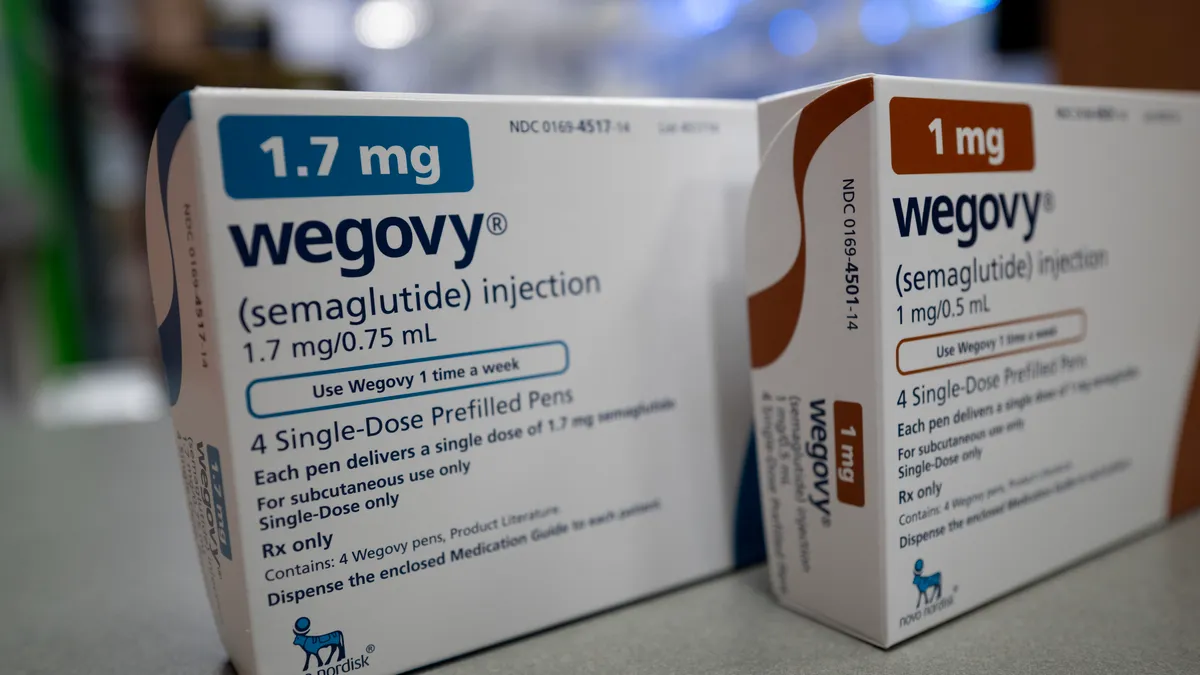
The Danish drugmaker is trying to regain its footing with a new, higher-dose version of Wegovy and the oral formulation of the medicine. It has also touted the potential for CagriSema, a next-generation weekly injectable currently under Food and Drug Administration review. But CagriSema has delivered mixed results in studies, including the setback in the so-called Reimagine 4 trial announced Tuesday.
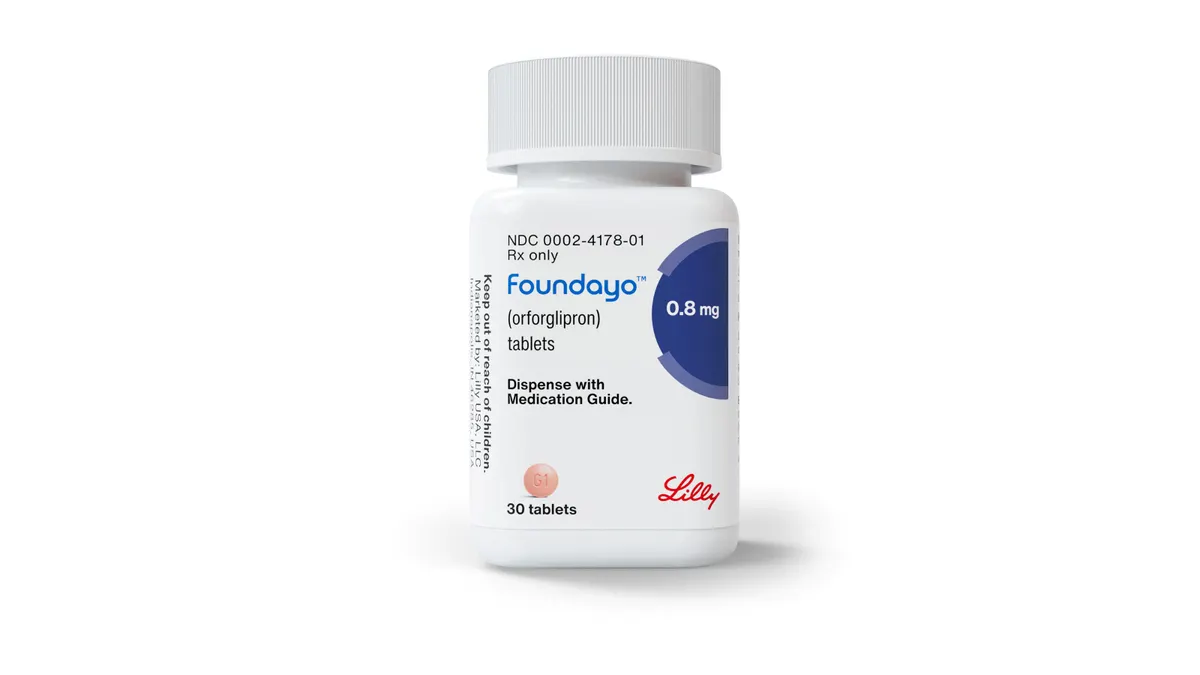
Meanwhile, Novo disappointed investors in the one area where it’s shown an edge in the obesity drug market, with its Wegovy pill. The drug got a head start on Lilly’s oral offering, Foundayo, and has had a faster launch. In the second quarter, the Wegovy pill had sales of 3.2 billion Danish kroner, or about $494 million, less than the 3.6 billion kroner expected by analysts. Novo’s shares fell 6% Tuesday before recovering some of their losses Wednesday.
Foundayo sales also fell short of Wall Street expectations in the quarter, coming in at $98 million versus a consensus estimate of $104 million, per RBC’s Huynh. But Lilly may be benefiting from lower expectations that are built in at this point for its pill. Certainly, investors were unperturbed by the report Wednesday, sending shares of the Indianapolis-based drugmaker 2% higher in early trading.
Both Novo and Lilly raised their revenue estimates for the year, with Novo saying its adjusted sales at constant currency exchange rates will either stay flat or drop as much as 6% this year. Previously, the company had estimated a decline of between 4% and 12%. Lilly said its revenue should reach between $85 billion and $87 billion for the year, up from an estimate of $82 billion to $85 billion.