Dive Brief:
- Cytokinetics said Tuesday that its drug Myqorzo succeeded in a Phase 3 trial in people with a progressive heart condition, opening up a sizable market opportunity and separating the treatment from a rival therapy marketed by Bristol Myers Squibb.
- According to Cytokinetics, Myqorzo met the dual main goals of a study in people with the “non-obstructive” form of hypertrophic cardiomyopathy, or HCM. When compared to a placebo, people receiving Myqorzo had a statistically significant improvement in peak oxygen consumption as well as scores on an assessment of heart health after 36 weeks. The drug also hit on key secondary measures, among them a commonly used evaluation of heart symptoms.
- Cytokinetics said no new safety signals were identified in the trial and that the percentage of patients completing treatment was similar between those getting Myqorzo or a placebo. Drops of over 50% in left ventricular “ejection fraction”— or the amount of blood pumped into the arteries, a known risk of drugs like Myqorzo — occurred in 27 treatment recipients, versus one in the placebo group. That side effect was associated with two cases of heart failure and led 3% of participants to interrupt treatment.
Dive Insight:
Wall Street analysts have been keeping a close eye on this readout. Positive results would vault Cytokinetics’ market value and threaten an important business for Bristol Myers. A setback, meanwhile, would have ripple effects for not only Cytokinetics, but several other developers.
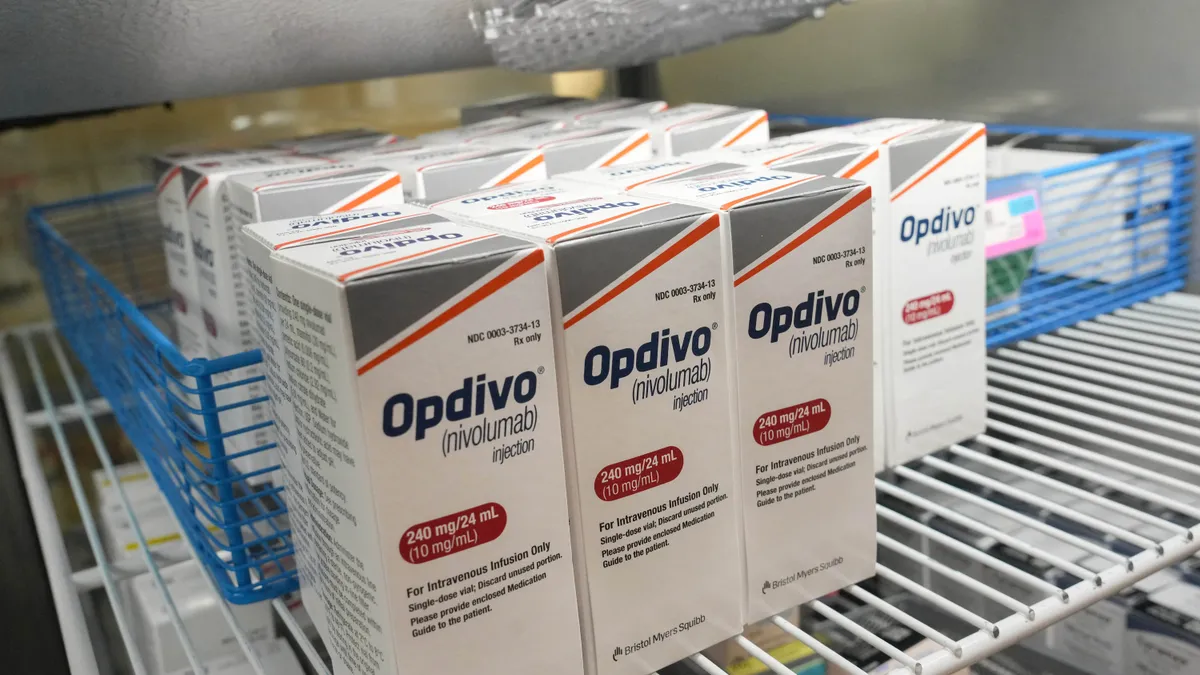
Myqorzo is one of two drugs, along with Bristol Myers’ Camzyos, available for HCM, a chronic condition characterized by a deadly stiffening of the heart muscle. Both work by blocking a specialized motor protein, effectively making the heart’s contractions less forceful. They’re now dueling for market share among patients with the “obstructive” and more common form of the condition. Camzyos sales topped $1 billion in 2025.
Last year, though, Camzyos failed a study testing it in the roughly one-third of HCM patients with the disease’s “non-obstructive” form of HCM. That version doesn’t impede blood flow to the heart, but can still put people at risk of poor health outcomes. The setback sparked debate that other drugs like it — among them Myqorzo — would similarly struggle. A study investigator at the time argued that Camzyos’ failure suggested obstructive and non-obstructive HCM are “two unique diseases.”
Still, multiple analysts were optimistic Myqorzo might fare better. The drug has some different characteristics and a wider potential range of safe and effective doses than Camzyos, which requires individualized dosing adjustments. Camzyos “isn’t the right tool for the job,” wrote Stifel’s James Condulis in a note last year.
The results disclosed Tuesday bear that out. On one of the study’s two main measures, treatment was associated with a roughly 11-point improvement on what’s known as a KCCQ Clinical Summary Score, a patient-reported test that measures symptoms as well as physical limitations. Scores for placebo recipients climbed about 8 points higher, by comparison, over the 36-week evaluation period.
For those who got Myqorzo, peak oxygen consumption — a crucial test of heart fitness — increased by 0.64 milliliters of oxygen per kilogram of body weight per minute. That figure declined by 0.03 ml/kg/min in the placebo group.
Both results fall short of thresholds Leerink Partners analyst Roanna Ruiz described in March as a “home run scenario” for Cytokinetics, though experts she spoke with noted that “almost any” statistically significant improvement on those two endpoints would likely generate an “enormous amount of enthusiasm” given the longstanding need for new treatments.
Approvals in both obstructive and non-obstructive disease could yield peak global sales of more than $5 billion annually, she estimated.
In a Tuesday note to clients, Mizuho Securities analyst Salim Syed described the findings as positive overall and, importantly, "very consistent" across the study's different efficacy measures. That steadiness is "key," he wrote.
“There will be debate on the headline effect sizes,” but “we think the big picture is favorable,” added Stifel’s Condulis, in a separate note on Tuesday.
Cytokinetics intends to discuss the study results with regulators and present them at an upcoming medical meeting. Company shares surged by more than 17% in early trading Tuesday.