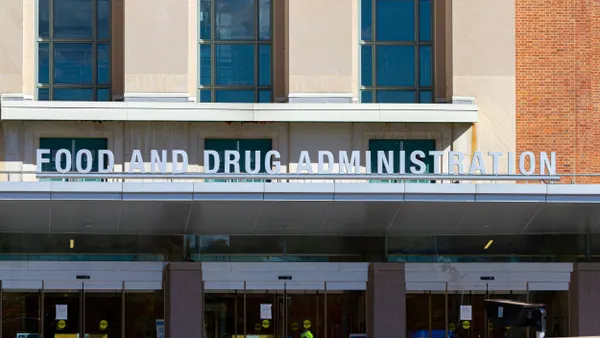
Drugmakers may no longer have to test certain experimental antibody drugs on monkeys and other primates to assess their safety, according to draft guidelines the Food and Drug Administration published Tuesday.
The new framework calls on drugmakers to conduct a “weight-of-evidence” risk assessment before deciding how to test for side effects associated with experimental monoclonal antibodies ahead of first-in-human clinical trials. That risk evaluation can include a review of adverse events in experimental or marketed drugs with the same target, laboratory tests to detect “off-tissue” binding, or an assessment of toxicity and biological activity in shorter non-primate studies.
The agency is also embracing use of “human-relevant” models, such as organoid systems, in lieu of animal tests.
Regulators are pressing to lower the amount of animal toxicology testing — which typically involves 100 macaque monkeys, lasts three months or more, and costs around $50,000 per animal — without compromising the safety of human subjects. By reducing the reliance on animal testing, the FDA hopes to speed early development and, ultimately, cut the time it takes for certain medicines to get to market.
“Modern science has given us far more effective and humane ways of evaluating drug safety than animal testing,” said Commissioner Martin Makary, in a statement.
The change in animal testing guidelines, which the agency had signaled earlier this year, is one of a series of initiatives instituted under Makary to help streamline development and lower drugmaker costs. It comes as China’s biotech sector, which has fewer regulatory burdens and strong government support, has eroded the U.S.’ once-decisive advantage and helped fill more and more of the world’s pharmaceutical pipeline.
This year, the FDA has rolled out an artificial intelligence tool to assist in drug reviews and this week announced an expanded initiative involving the use of AI among its workforce. It’s also started a new type of voucher program aimed at drastically speeding drug evaluations and, so far, awarded fast passes to 15 applications.
The agency has also outlined a less-burdensome regulatory pathway for ultra-rare disease drugs that can’t feasibly be tested in a randomized trial.