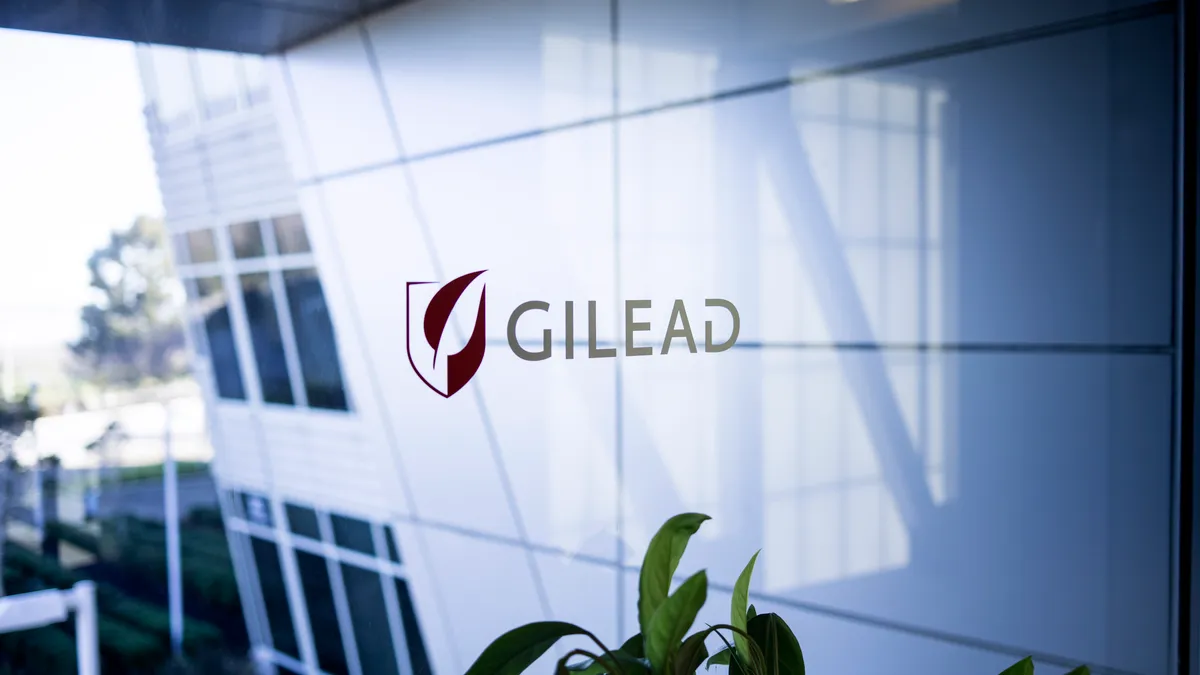
Shares of Gilead Sciences slid after the stock market closed Tuesday in spite of fresh earnings report in which the company’s top products beat Wall Street forecasts.
Gilead recorded $7.9 billion in product sales over the final three months of 2025, a 5% increase from the same period a year prior. Brian Abrahams, an analyst at RBC Capital Markets, called it a “strong commercial quarter” with “major beats” in Gilead’s HIV business, which was up 6% year-over-year.
Biktarvy, a three-in-one pill for HIV treatment, and Descovy, a daily tablet often used to stave off infections from the virus, respectively brought in $4 billion and $819 million during the quarter. That’s higher than the roughly $3.84 billion and $720 million the average analyst had penciled in, according to Abrahams.
For this year, Gilead expects product sales between $29.6 billion to $30 billion and non-GAAP diluted earnings per share in the range of $8.45 to $8.85. Those figures bracket analyst estimates, Abrahams noted, and come despite “policy headwinds” like the “most-favored-nation” pricing agreements that Gilead and others struck with the Trump Administration. The company previously said the financial impact from such agreements should be “manageable in 2026 and beyond.”
Yet, shortly after the earnings release, Gilead’s share price fell as much as 6% before clawing back some of those losses.
Abrahams guessed the dip may be related to “high hopes” for Yeztugo, a recently launched drug for HIV prevention that notched $96 million in the fourth quarter. In a note to clients, Abrahams wrote how analysts generally had thought sales would be closer to $106 million. Gilead said it’s now also predicting around $800 million in Yeztugo sales for 2026 — which the RBC team believes “fell short of the ‘whisper’ investor expectation” of $1 billion.
Still, Abrahams suspects Gilead executives “likely left themselves room to beat” expectations, a sentiment echoed by Salim Syed of Mizuho Securities.
The company is “probably being conservative here ... though some may have wanted a higher number,” Salim wrote in his own note to clients.
Elsewhere, Gilead reported that fourth quarter sales from its cell therapy portfolio had decreased 6%, to $458 million, “reflecting ongoing competitive headwinds.” The portfolio’s two flagship products, Yescarta and Tecartus, were down by the mid- to high-single digits.
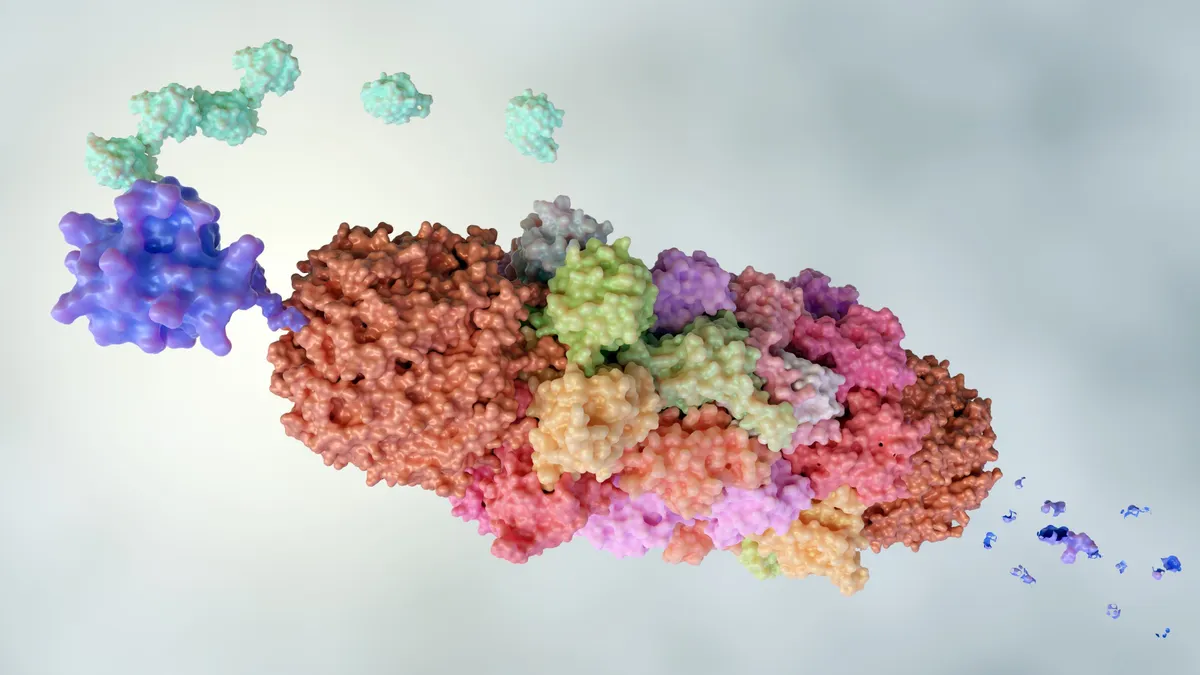
That performance comes at a time of divergent investment in the cell therapy field. Novo Nordisk, Takeda Pharmaceutical and Galapagos each decided to exit the space in the back half of last year, whereas others have recently made multibillion-dollar bets. Of late, companies have shown a particular interest in a type of cell therapy, “in vivo,” that’s viewed as far easier for manufacturers to produce and patients to tolerate. The treatments sold by Gilead, in contrast, are engineered outside the body, or “ex vivo.”
Just last week, Eli Lilly agreed to pay as much as $2.4 billion to buy the in vivo cell therapy specialist Orna Therapeutics. That acquisition follows similar deals from AbbVie and Bristol Myers Squibb.
For its part, Gilead has maintained that it remains committed to cell therapy research. The company is developing a multiple myeloma treatment through a collaboration with Arcellx, and recently bought into “in vivo” therapies by acquiring startup Interius BioTherapeutics.
“[W]e believe that cell therapy, as an innovative, state-of-the-art technology, has tremendous potential that's just starting to show itself — certainly in cancer, but in other diseases as well,” CEO Daniel O’Day told reporters last month at the J.P Morgan Healthcare Conference.