Dive Brief:
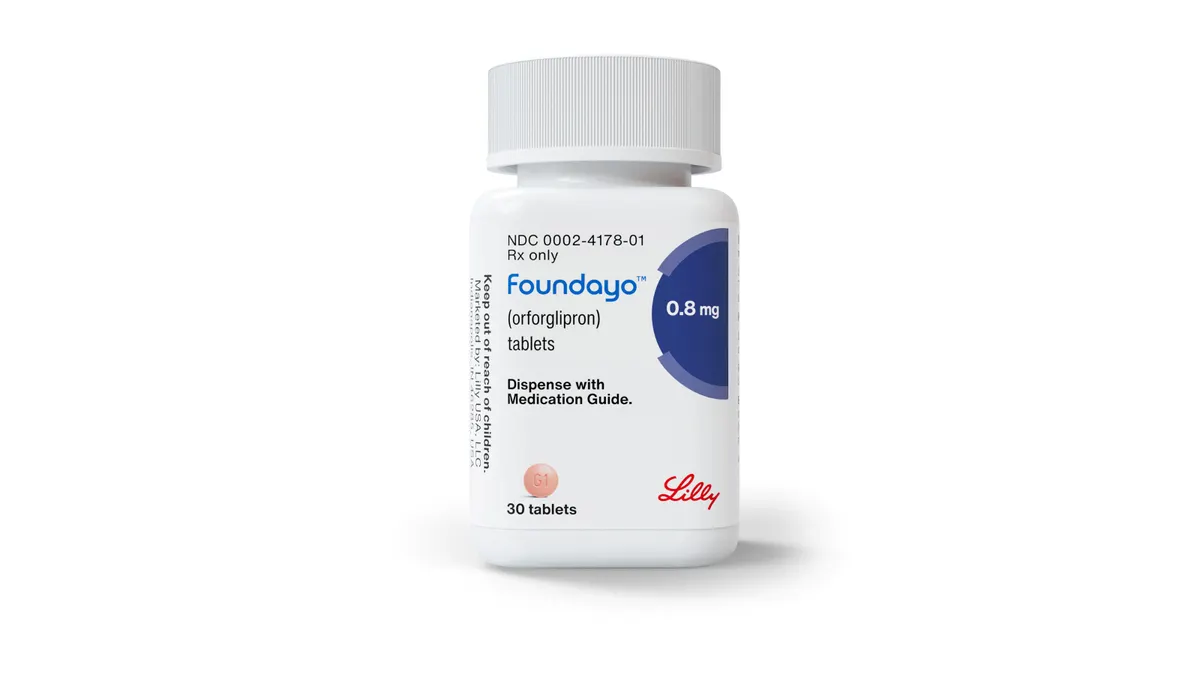
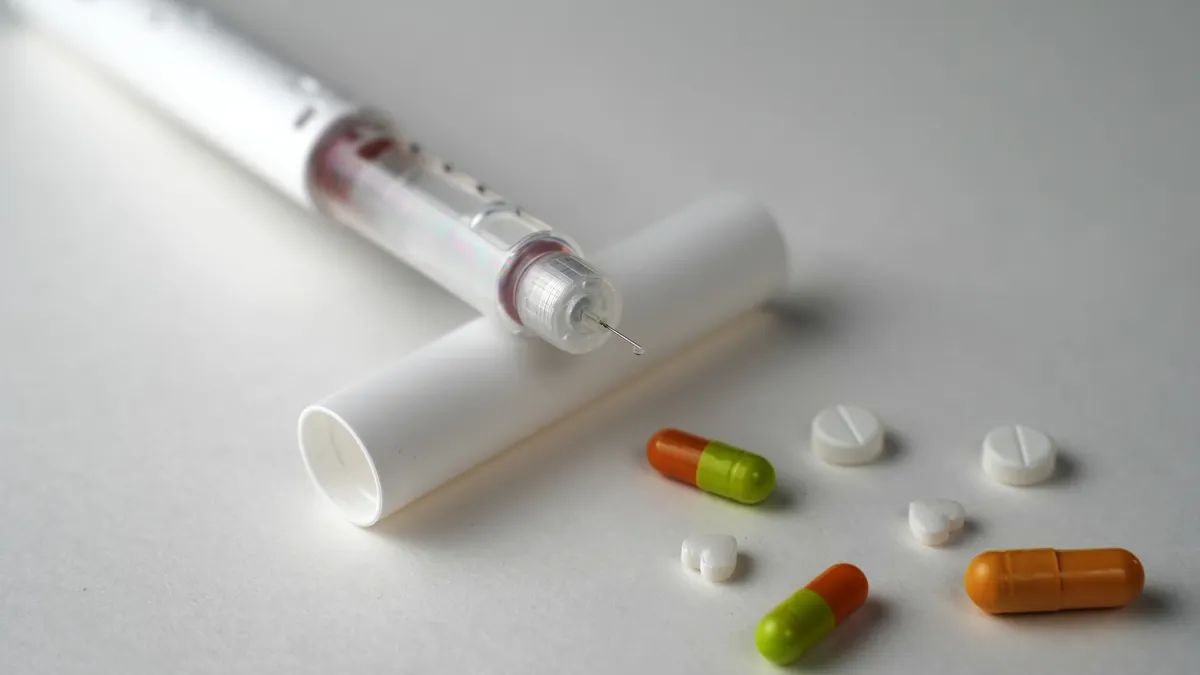
- Compounding pharmacy Apothecary Pharma has issued a voluntary recall of its copycat version of Eli Lilly’s obesity drug Zepbound, stating in a notice that it couldn’t definitively guarantee the medication’s safety.
- The recall, of which Apothecary notified the Food and Drug Administration in September, covers 22 lots of compounded tirzepatide, the active ingredient in Lilly’s medicine. Those lots have beyond-use dates ranging from Oct. 8 to Nov. 26.
- Apothecary’s recall comes as Lilly and Novo, the only makers of FDA-licensed GLP-1 obesity medications, have sought to stop companies from selling compounded counterparts. The recall could help bolster Lilly and Novo’s claims that the knockoff versions don’t have the same quality, safety or efficacy as the FDA-approved ones.
Dive Insight:
The recall was classified as “Class II,” meaning use of this compounded tirzepatide “may cause temporary or medically reversible adverse health consequences or where the probability of serious adverse health consequences is remote,” under FDA rules.
Compounded forms of Zepbound and Novo’s Wegovy surged in popularity over the last few years. Many telehealth firms began making lower-cost, compounded versions of these medicines when demand outstripped supply. Those shortages have since ended. But despite continued warnings from the FDA and lawsuits from Lilly and Novo, many firms proceeded to sell copycat GLP-1s by personalizing treatment regimens, a practice permitted under federal laws. A recent Gallup survey found that about 20% of Americans taking those medicines are using compounded forms.
Lilly and Novo have cranked up legal pressure to try to shut down this nebulous market, which has more recently expanded to include Lilly’s still-experimental retatrutide medicine. Both have emphasized that the quality and safety of those versions can’t be guaranteed. The FDA has even restricted a key supply channel for compounders.
Still, compounded peptide medicines have been gaining traction. In July, an FDA advisory panel endorsed broader use of six peptides for various ailments, even without substantial evidence of their safety and effectiveness. The federal government has reportedly since advanced plans to allow specialty pharmacies to produce them.