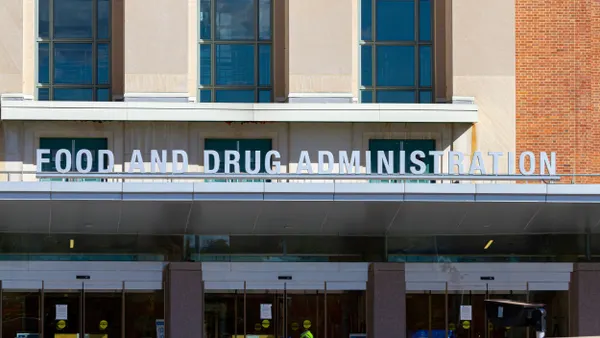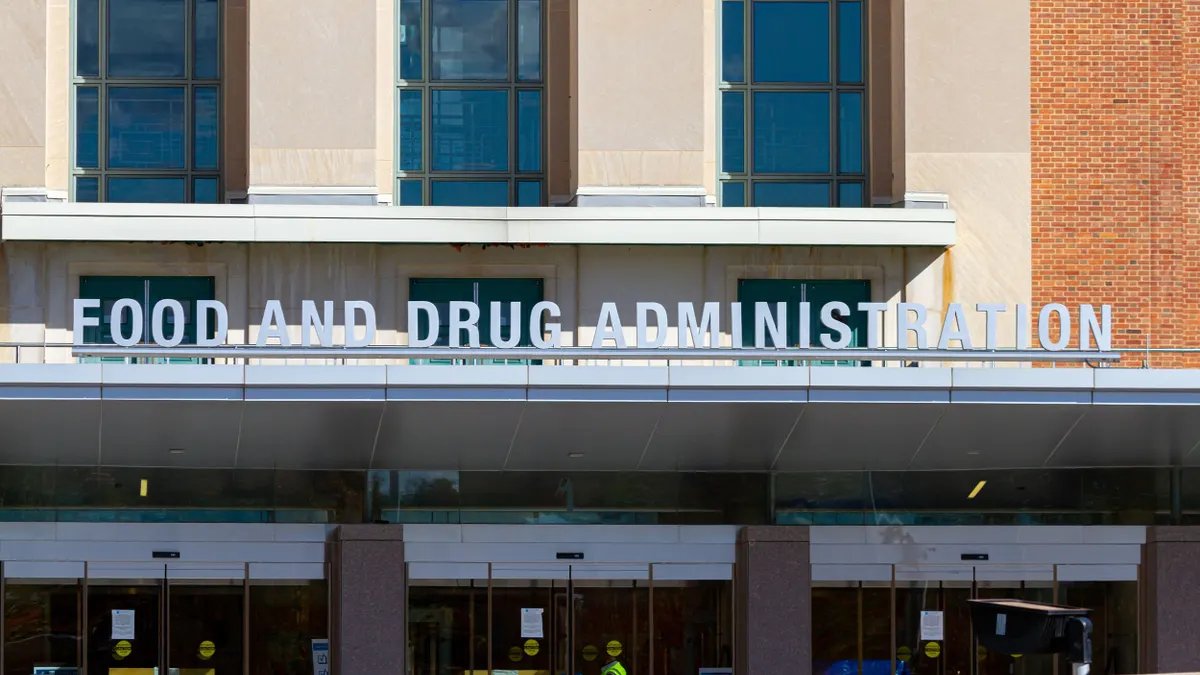
The Food and Drug Administration has approved a first-of-its-kind medicine from GSK and Ionis Pharmaceuticals that’s been hailed as a possible “functional cure” for persistent hepatitis B infections.
U.S. regulators cleared that therapy, known as Hibsago, on Tuesday for use alongside standard antiviral therapies in certain adults who have chronic hepatitis B infections but haven’t developed cirrhosis. Use is recommended specifically for people who’ve been on antivirals for at least six months, have suppressed levels of hepatitis B virus in their blood and low counts of a protein indicating they have an active infection. Treatment is given via periodic injections over the course of six months. All but the first can be self-administered, according to GSK.
GSK didn’t disclose the drug’s list price. It’ll be revealed following the “completion of pricing and reimbursement discussions with payers,” a company spokesperson wrote in an email to BioPharma Dive.
The hepatitis B virus is commonly transmitted from mother to child during birth. Infections can be prevented by vaccination, but when they aren’t, they can become chronic and eventually cause major health problems such as cirrhosis and liver cancer. GSK estimates these festering infections affect 1.7 million people in the U.S. and 240 million worldwide.
Patients with chronic hepatitis B typically rely on lifelong antiviral therapy to suppress the virus. Hibsago, though, works differently. It’s an RNA-based medicine that both stops the virus’ ability to replicate and spurs an immune response. That mechanism is supposed to help the therapy more effectively clear infections, providing patients with the chance at a “functional cure,” or undetectable levels of the virus and its related proteins for at least 24 weeks.
In the two late-stage studies supporting the drug’s approval, a combination of Hibsago and antivirals effectively wiped out the virus in about a fifth of recipients, compared to none who received placebo with antivirals. The results were published in the New England Journal of Medicine and hailed by analysts as a “landmark moment” in care for the condition.
“Despite current therapies, many people living with chronic hepatitis B remain on treatment indefinitely and continue to face the risk of serious liver complications. For the first time, U.S. patients have the potential to achieve functional cure after a six-month treatment course,” Tony Wood, GSK’s chief scientific officer, said in a statement.
In a note to clients Wednesday, Jefferies analyst Michael Leuchten wrote that the FDA’s prescribing information supports his firm’s expectations of around $3 billion in peak annual sales.
The FDA’s labeling did, however, come with a safety warning for sudden spikes in liver inflammation or enzyme levels as well as low platelet counts. The agency recommended that patients get weekly or bi-weekly lab tests to check for those side effects, requirements that might “work against the commercial uptake” and slow adoption outside of specialty centers, Leuchten wrote.
Still, the approval could bring GSK closer to achieving its goal of reaching £40 billion in annual revenues by 2031. Hibsago is one of many drugs featured in the drugmaker’s “accelerate growth” plan to offset key patent expirations.
Hibsago has already been approved in Japan and is under regulatory reviews in China and Europe.