Positive results are rare in psychiatric drug development. So when MapLight Therapeutics revealed earlier this week that one of its experimental medicines had succeeded in a schizophrenia study, company leadership hoped investors would find the data as exciting as they did.
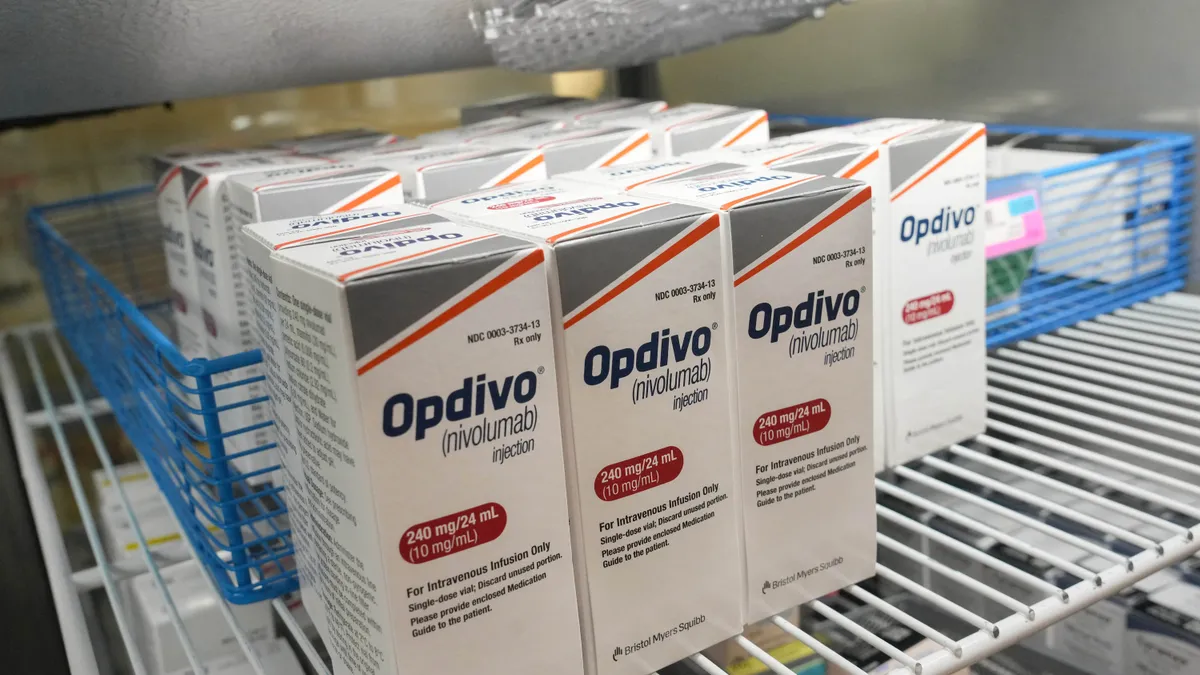
Instead, the Boston-area biotechnology firm lost two-thirds of its market value. Shareholders appeared concerned that, at a high level, MapLight’s medicine didn’t appear as potent as a rival pill from Bristol Myers Squibb.
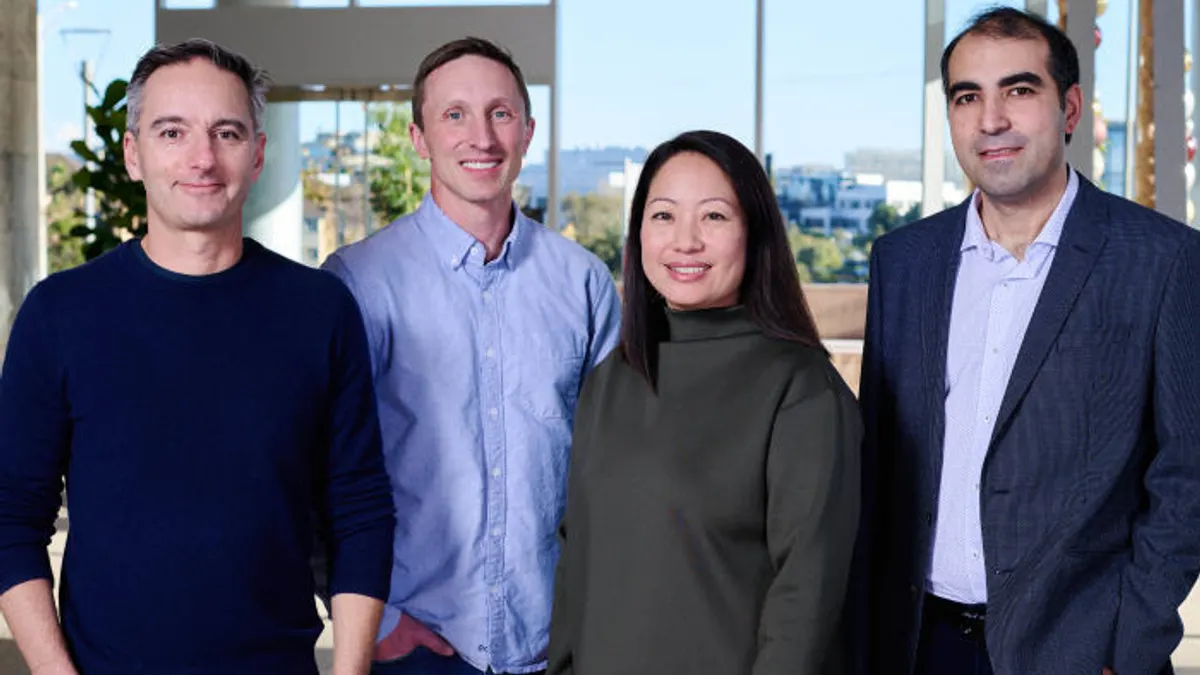
“I was surprised at their reaction; that’s an understatement,” said MapLight CEO Christopher Kroeger.
Specifically, the “ZEPHYR” study found patients taking a twice-daily dose of MapLight’s drug for five weeks experienced an average improvement of 4.5 points on “PANSS,” a well-known scoring system for schizophrenia symptoms. That figure is lower than the 8.4-point and 9.6-point reductions seen in the key experiments that led to the approval of Bristol Myers’ Cobenfy.
Analysts see that comparison as too simplistic, and argue the fresh data suggest MapLight’s drug may be viable not only as a treatment for schizophrenia, but other conditions like the psychosis that often accompanies Alzheimer’s disease. MapLight “has a case for an important drug,” wrote Paul Matteis, from the investment bank Stifel, in a note to clients.
Kroeger agrees. Speaking to BioPharma Dive, the top executive unpacked why these new efficacy — and, just as importantly, safety — results have strengthened MapLight’s confidence in its drug. The following conversation has been edited and condensed for clarity.
BIOPHARMA DIVE: There’s debate as to whether the PANSS score seen in your study is competitive. Why do you think it is?
KROEGER: Cross-trial comparisons are difficult to do. They’re different studies, run at different points in time, so it’s fraught with caveats. But I know every investor wants to do that, to truly establish whether a drug has comparable efficacy.
If you’re going to do those comparisons, it’s hard to do it with PANSS. You really need to do it with effect size. So it’s really the effect size of 0.37 versus the effect size of 0.54 for Cobenfy. Our argument is those are in the same range with one another, given that they are different studies.
The other metric you can look at is the CGI-S, or the Clinical Global Impression of Severity. That’s what the clinician sees in the patient. The effect size there was right in range with Cobenfy’s.
And then further than that, what’s the clinically meaningful impact we're seeing? The pre-specified endpoint of a 30% change in PANSS score — which is considered a meaningful effect, that’s kind of the standard bar — our odds ratio for that was 2.42. Cobenfy’s odds ratio for that was 3.1. So, very close. We’re not asserting we’re better than Cobenfy. But in terms of things that really measure an impact on the patient’s well-being, I think those are much better than looking at a PANSS delta.
The other thing which we have that wasn’t measured in any of Cobenfy’s studies was the readiness for discharge. The odds ratio for the readiness for discharge was 2.8 — so if you’re on the drug, you’re almost three times as likely to be ready for discharge at week five than if you're on placebo. That is not small; over 50% of the patients were ready for discharge.
Taken in totality, [the findings] give us a lot of confidence the drug is having a robust and meaningful impact.
You noted the cognitive signals seen in this trial. In plain terms, what does a 0.44-point separation on a cognitive composite score mean for patients?
KROEGER: The cognitive composite score is looking at a bunch of different elements — really at reasoning and memory abilities. It’s hard to put that exactly into what that score means in terms of improvement in cognition. What I can say is, if you look at effect sizes, a 0.5 effect size is a robust change in that metric. It’s an important translation for real-world experience, because cognition is one of the most important schizophrenia symptoms.
The other important thing for investors to understand is that the totality of efficacy is the combination of what's reflected in the PANSS score and cognition. The PANSS does not have many elements that read on cognition.
Does having that signal make you place any additional weight or expectations on this drug’s success being tied to Alzheimer’s psychosis or similar conditions?
KROEGER: For sure. We’ve got a study in Alzheimer’s disease psychosis that’s sized and designed to be registrational. What are the read-throughs from what we saw here to that study? I think they’re very positive.

The fact that we saw a strong cognition signal bodes really well for the ADP study. While the endpoint in that study is not cognition, it certainly will be helpful in overall improvement.
The scales are a little bit different in the two studies. The PANSS, which is what we use for schizophrenia, has a whole bunch of different elements. It’s got a little bit of negative symptoms; it’s got a bunch of psychopathy; and then it’s got a bunch of positive symptoms [like] hallucinations, delusions and associated symptoms, and that’s where we actually hit the strongest. On the PANSS positive subscore, our effect size was actually right in line with Cobenfy.
So it’s those specific elements with the strongest effects in ZEPHYR that are being assessed in the ADP population. And the fact that the drug was so well tolerated that everybody was able to get a target dose in ZEPHYR gives us confidence the ADP study is going to work well.
On tolerability, analysts noted that while your drug did look quite safe, adverse events of nausea and abdominal pain appeared higher than what was seen in the Cobenfy program. Are you at all worried those results might hold MapLight’s drug back?
KROEGER: People are very focused on nausea and vomiting for a couple of reasons. It was highly prevalent in the Cobenfy studies. And, importantly, that has been a big challenge in real-world use with the drug. Nausea and vomiting are repeatedly cited by prescribers as a challenge; they can’t get patients on Cobenfy off the titration dose. BMS even published a poster on this. Really, less than a quarter of the patients reach the target dose in real-world use.
If we look at adverse events, there are three really important elements to look at. One is all-cause discontinuation. Our rates of all-cause discontinuation were meaningfully lower.
The second thing is not all adverse events, but moderate or worse adverse events, because those are the ones that really have clinical and real-world impact. If you look at the moderate or worse adverse events, we are much better than they are. We have no [drug-related] severe adverse events and no serious adverse events.
And then the third key element is whether patients can get to the target dose. We saw with Cobenfy in EMERGENT-2 and -3 about 20% of patients not get to the target dose. We had essentially 100% of the patients get to the target dose … and people tolerate that dose very differently than what was seen in the Cobenfy studies.
For whatever reason — we don't have the full explanation — everything is much worse in the real world for Cobenfy than what they saw in clinical testing. We think that has to do with the fasting requirement and the titration.
Ultimately, we don’t have either of those problems. Those are two meaningfully different aspects of our drug that will really allow for a more smooth transition from what we see in the clinic [to a] real-world experience.
MapLight is still analyzing results to see if there’s a path forward for a once-daily regimen. How confident are you there is one?
KROEGER: If you look at the total efficacy picture for the once-a-day drug, it obviously didn’t hit on PANSS. But it did hit on several of the secondaries, including the CGIS. So it wasn’t that the drug had no effect; it just wasn’t strong enough to move the needle far enough to show statistically significant separation.
We feel like there’s something there. It missed, but it didn’t miss by a ton, and that gives us some hope we can move the needle and change things. We really need to get the full exposure response dataset to be able to speak credibly on whether there’s a path forward.
We always saw once-a-day as a meaningful upside opportunity. It was never in the base case, but clearly better than twice-a-day if everything else is the same. We definitely want to be able to continue to pursue that, we just need more data to know how viable that is.
What, if anything, do you think investors are missing as they interpret this data?
KROEGER: What investors are missing is that PANSS doesn't tell the whole story. I think the [reaction] was really like, “Let’s look at the PANSS difference, and if it's ‘X,’ then I'm in, and if it’s not ‘X,’ then I’m out. This requires a little bit of a more nuanced perspective and a little bit of a deeper understanding of both the broader space and the specific endpoints that were employed in the study.
The efficacy picture is more comprehensive. At its simplest level, at the very least, it’s PANSS plus cognition, because those are different domains. You [should] look at all the other very clinically meaningful elements where we did hit, and the fact that everything moved in the right direction.
The other element that really is part of efficacy is whether you can take the drug. I could have an effect size of 1.5, but if I don’t take the drug, it has no effect. It's a little bit odd to think about it that way, but safety and tolerability is part of efficacy. We have what we think is a very differentiated safety and tolerability profile that will translate into real-world use.