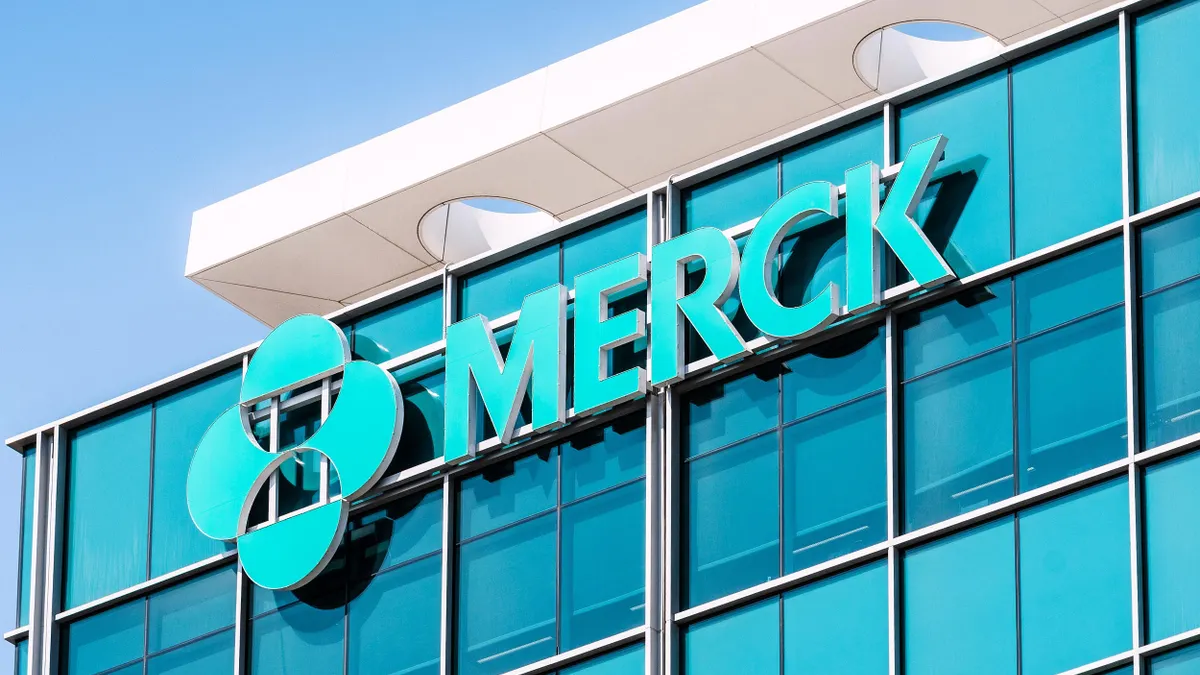
Terns Pharmaceuticals accepted a buyout from Merck & Co. last month that was worth 15% lower than a previous proposal, as updated study results led bidders to rework their offers, according to securities filings disclosed Tuesday.
Four companies were in active talks about a potential deal, among them Merck and an unnamed “Party C,” those filings show. Yet Merck ultimately won out with a deal to buy the company for $53 a share, or $6.7 billion overall — a relatively low purchase premium fueling debate that another bidder could yet emerge.
Tuesday’s filings shed some light on why that might not have happened yet.
Weeks earlier, Party C bid $58 a share and then boosted its offer to $61 per share. That offer also included the possibility of another $9-per-share payout if Terns’ lead drug, called TERN-701, gained Food and Drug Administration approval in chronic myeloid leukemia within seven years. Merck answered with a $61 per share proposal a few weeks later, but without the added payout, known as a “contingent value right.”
Big pharma’s interest in Terns surged following the release of study data for TERN-701 at the American Society of Hematology meeting in December. Those findings have suggested TERN-701 might be superior to Novartis’ popular leukemia drug Scemblix.
At the meeting, Terns executives met with two other drugmakers filings referred to as “Party A” and “Party B.” The $58-per-share proposal from Party C came weeks later, even though that firm hadn’t discussed a potential deal with Terns beforehand. Terns’ board thought the offer was too low.
Terns then met with several drugmakers, including Merck, at the J.P. Morgan Healthcare Conference in January. Party C’s top bid came about a week later, and CEO Amy Burroughs informed all previously interested competitors that the company was considering a bid.
Parties A and B dropped out in early February, arguing that they didn’t believe TERN-701 was worth paying a premium over the company’s high share price at that time. Two others, Parties “D” and “E,” didn’t participate in any detailed discussions.
Merck made its $61 offer afterwards, and then along with Party C were given access to additional clinical data. That due diligence included updated TERN-701 results showing a lower response rate among treated patients than Terns had presented earlier.
In mid-February, Party C dropped out, claiming that TERN-701’s results were “more nuanced than ... previously understood” and that it no longer viewed the drug as “sufficiently differentiated” or “de-risked.” A committee of Terns’ board members also took the view that the drug’s potential had dimmed somewhat and lowered their potential peak sales forecasts by 8%.
Merck responded with a lower, $50 a share in mid-March after seeing the data. Burroughs then warned Terns’ board that shares would likely fall if a deal didn’t come together.
Terns made a counterproposal at $56 per share before accepting the bid that was announced publicly on March 25.
Given the new information, "we now believe" the deal will be completed this quarter "and that emergence of higher bidder is unlikely," wrote William Blair analyst Andy Hsieh, in a Tuesday client note.