Dive Brief:
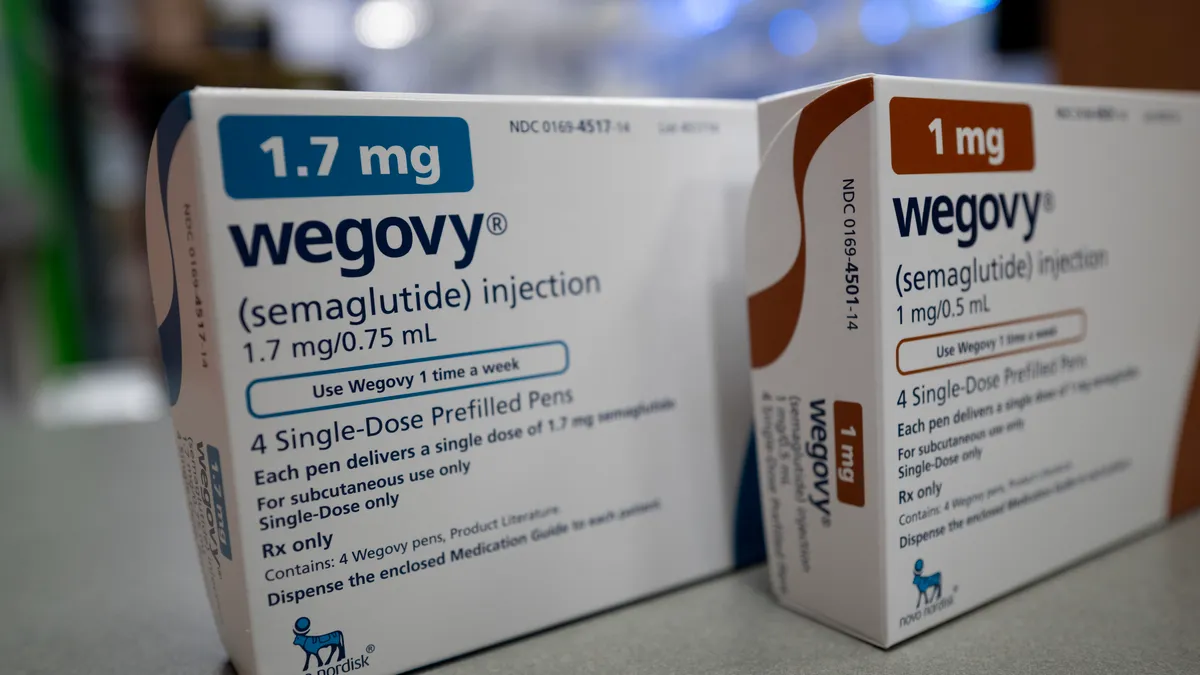
- Novo Nordisk’s experimental combination shot CagriSema helped people with diabetes and obesity lower their blood sugar and lose more weight than the blockbuster drug Wegovy in a Phase 3 trial, the company said Monday, building the case for regulatory approval.
- The results come from one of several studies Novo has underway in obesity and diabetes for CagriSema, which adds a second metabolic drug to the active ingredient from Wegovy in a fixed-dose injection. The Denmark-based drugmaker has already asked the Food and Drug Administration to approve the shot in obesity.
- The data could sharpen Novo’s rivalry with Eli Lilly and its obesity drug Zepbound, which has overtaken Wegovy to become the biggest-selling obesity treatment in the world. Looking at all participants enrolled in the trial, CagriSema’s weight loss and blood-sugar reductions fall numerically short of Zepbound’s, but a head-to-head trial comparing the two hasn’t been completed yet.
Dive Insight:
CagriSema combines the GLP-1 drug semaglutide, used in both Wegovy and the diabetes shot Ozempic, with a second product called cagrilintide, which acts on another metabolic hormone called amylin.
Novo enrolled more than 2,700 people with diabetes who fell into body mass index categories of overweight or obese. They were randomized to receive a weekly CagriSema shot at two dose levels or weekly shots of Wegovy, cagrilintide or a placebo. The main objective of the trial, which also included secondary goals such as weight loss, was to see how well cagrisema lowered blood sugar compared with Wegovy.
Examining just the enrollees who completed the 68-week trial on an assigned treatment regimen, Novo said CagriSema reduced blood sugar 1.9 percentage points from a baseline average of 8.2%, and body weight 14% from a baseline of 101 kilograms. Wegovy reduced blood sugar by 1.8 percentage points and body weight 10%.
Factoring in all enrollees, including those who discontinued or modified their treatments, CagriSema’s blood sugar reduction was 1.8 percentage points and weight loss 13%, compared with 1.7 percentage points and 9% for Wegovy. This latter way of measuring trial results, known as the “treatment-regimen estimand,” is considered a closer yardstick to real-world effectiveness.
In a similar population and using a similar conservative yardstick, Zepbound reduced blood sugar by 2.1 percentage points and nearly 15% at the highest dose.
Novo said the drug had the typical side effects of GLP-1-based weight loss therapies, which include gastrointestinal problems like nausea and vomiting that diminish over time.
“The results strengthen our belief that CagriSema could be the first amylin-based combination therapy and a promising treatment option for individuals with Type 2 diabetes, who also have a focus on weight loss,” said Martin Holst Lange, Novo’s chief scientific officer, in a statement.
CagriSema previously fell short of the Novo’s own expectations in the first big Phase 3 trial that reported data just over a year ago. But the company has reworked its clinical program to try to eke out more efficacy, extending the length of new trials and re-escalating doses in people who initially reduce them following gastrointestinal side effects.
Meanwhile, a high-stakes head-to-head study of CagriSema against Zepbound in obesity is expected to generate data by the end of March. The experiment has incorporated some of the takeaways from that initial trial that came up short.