Dive Brief:
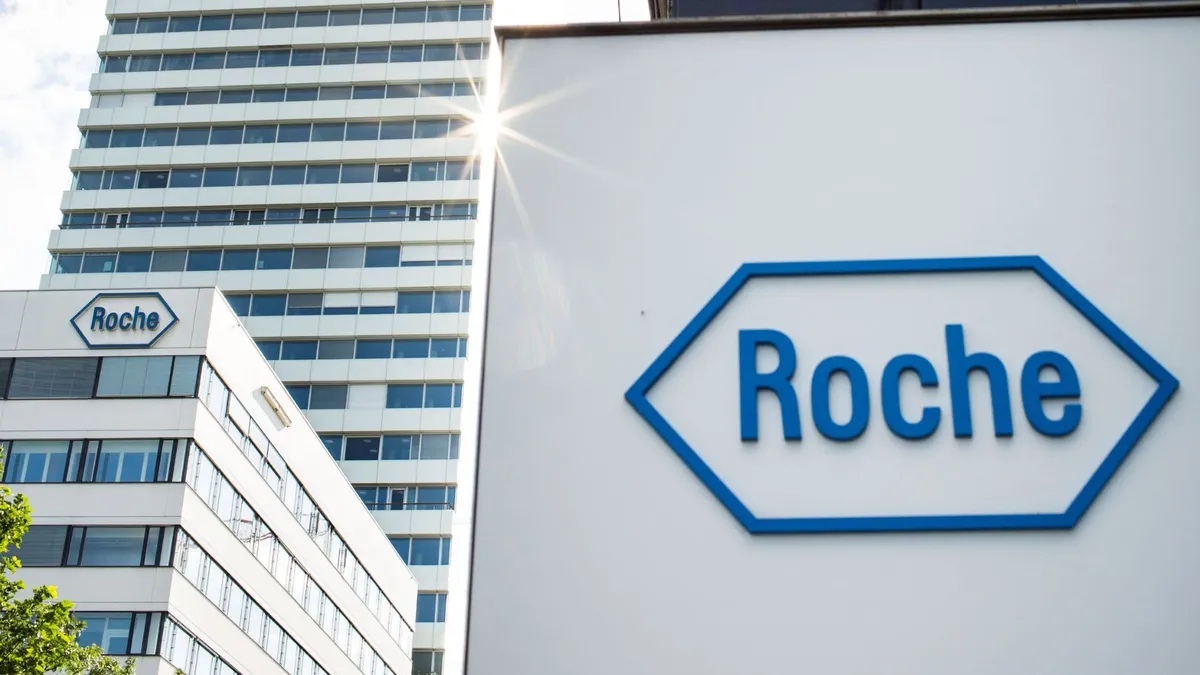
- Roche executives believe the Swiss drugmaker could record $9 billion in peak annual sales from an emerging breast cancer pill and four obesity drugs now entering mid- and late-stage development.
- The forecasts came as Roche on Thursday reported its first-quarter earnings, which dipped 5% because of the drop in the value of the U.S. dollar versus the Swiss franc. At constant exchange rates, sales climbed by 6% to 14.7 billion Swiss francs, or $18.8 billion. Roche also expects sales growth in the “mid single digit range” in 2026.
- Roche could face a sales decline of 6.7 billion Swiss francs, or 41%, between 2025 and 2030 as a total of eight cancer and immune disease drugs face biosimilar competition. The company is looking to a breast cancer drug called giredestrant and a portfolio of weight loss medicines it’s acquired or licensed to aid future growth, although many Wall Street analysts aren’t convinced of their prospects.
Dive Insight:
Giredestrant “could be our largest selling product,” said Roche Pharmaceuticals head Teresa Graham in a conference call with investors. The reason, she said, is the drug could help patients with ER-positive, HER2-negative tumors — a much bigger group than those eligible for its one-time blockbuster Herceptin.
Wall Street analysts and investors aren’t so sure, however. Multiple other, similar drugs are approved, and another could join them on the market shortly. Use of all, so far, has been limited to patients with a particular genetic mutation. A recent setback in a study testing giredestrant in the first-line setting has cast further doubt on its outlook. Analysts at the investment firm Jefferies are projecting just 1.2 billion Swiss francs in peak yearly sales.
Nonetheless, Roche remains optimistic. The drug is on track for an FDA approval decision by Dec. 18, in people whose ER-positive, HER2-negative breast cancer has progressed after earlier treatment. Roche also has a second submission lined up in the post-surgical “adjuvant” setting, and is using a priority review voucher to speed up the drug’s review. In an earnings presentation Thursday, the drug was one of a few Roche pegged as having yearly sales potential that can surpass $3 billion.
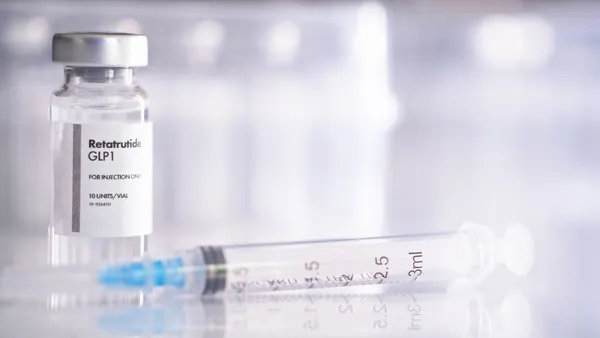
The analyst community also isn’t, as of yet, giving much credit to a pipeline of obesity medicines that could break into a market now dominated by Eli Lilly and Novo Nordisk. Roche executives are adamant that a drug called petrelintide, which the company licensed from Zealand Pharma, could surpass $3 billion in annual sales because it may be easier to take than available medications. Three other medicines acquired in a buyout of Carmot Therapeutics could also collectively earn $3 billion or more, the company said.
Petrelintide “serves a very different role in what we think is going to be a very heterogeneous obesity market,” Graham told analysts.
The drug’s side effect profile is “very different,” she added. “When you think about the 50% of the population globally that is going to be obese by 2030, 2035, there are a certain portion of them that are not going to tolerate any kind of adverse event.”