Dive Brief:
- Shares of Roche and partner Zealand Pharma both sold off following mid-stage study results for an experimental obesity drug that fell short of investors’ and analysts’ expectations.
- Called petrelintide and aimed at the gut hormone amylin, the treatment helped people who are overweight or have obesity achieve an average of 10.7% weight loss at 42 weeks, compared to 1.7% for placebo recipients. All five treatment arms had “statistically significant and clinically meaningful” decreases in body weight after 28 weeks, too, the companies said.
- Petrelintide also demonstrated a “favorable” safety profile, with study discontinuation rates comparable among those who got a placebo or received the “maximally effective” dose. The most frequently reported side effects were gastrointestinal, which the company didn’t detail but said were mostly mild. Still, the results appear “undifferentiated,” wrote Cantor Fitzgerald’s Prakhar Agrawal. Roche shares fell 6% Thursday, while Zealand’s market value plummeted by more than a third.
Dive Insight:
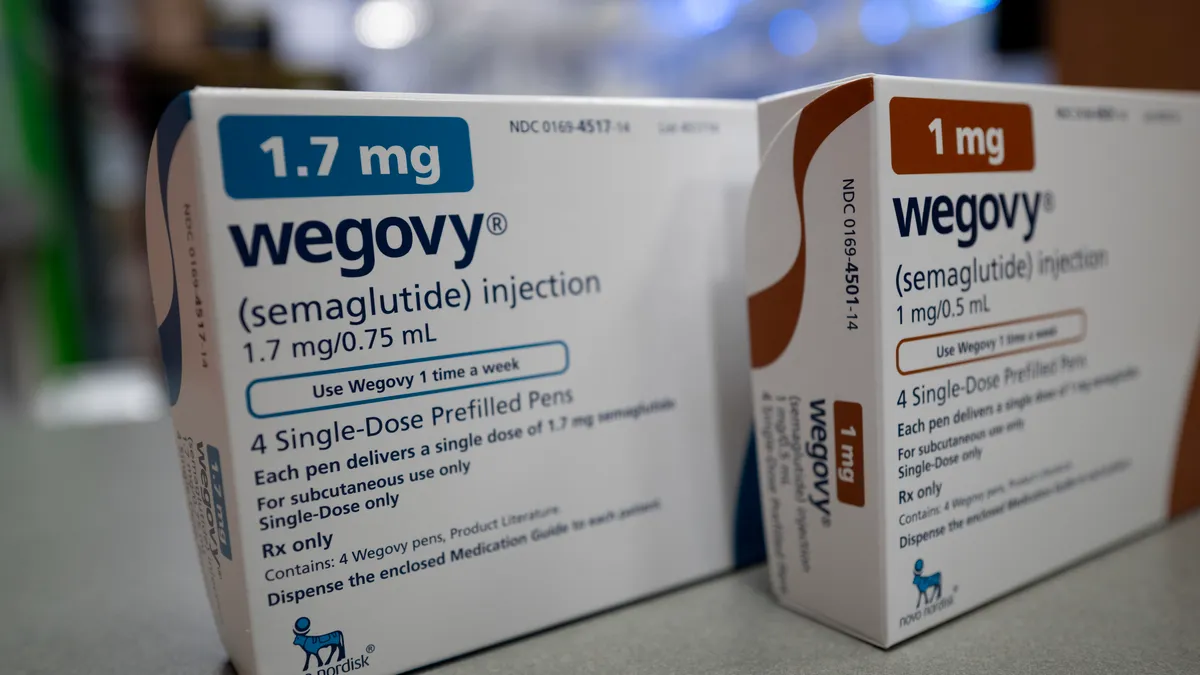
Roche entered the obesity drug competition late, after the GLP-1-targeting drugs Wegovy and Zepbound were already available.
Like many of its pharma peers, the company used dealmaking to obtain a competitive position. In 2023, the company agreed to acquire startup Carmot Therapeutics for $2.7 billion. Last year, it paid Zealand $1.65 billion upfront for partial rights to petrelintide. The two deals filled the company’s pipeline with different types of obesity drugs, a portfolio approach Roche has hoped might yield therapies that could compete with or improve upon Wegovy and Zepbound.
Those programs are now accelerating, but have unclear prospects. Early study results for a GLP-1 and GIP-stimulating drug obtained in the Carmot deal convinced Roche the drug had “best in class potential.” but mid-stage findings showcased in January failed to impress investors. One of two ongoing mid-stage studies of petrelintide is now complete, too, though those findings have raised doubts as well.
Petrelintide is among a class of obesity drugs targeting amylin. That approach has drawn the interest of other drugmakers in the field, and is seen as either a new monotherapy option for weight loss or a pairing partner for other medications.
One reason these therapies have gained attention is their potential tolerability advantages compared to GLP-1 therapies, something Roche and Zealand both highlighted in their respective announcements about petrelintide. But Cantor’s Agrawal noted that amylin-targeting drugs from Novo Nordisk and Eli Lilly have also displayed “placebo-like” tolerability in testing. “Thus, [petrelintide] has limited differentiation,” Agrawal wrote.
The weight loss associated with petrelintide also underwhelmed analysts. Though cross-trial comparisons can be error-prone, the teams at William Blair and Jefferies noted how petrelintide’s average weight loss fell numerically below the marks set in Phase 2 testing of Lilly’s amylin drug eloralintide. Lilly’s drug is now progressing to late-stage testing.
“Even though obesity is a very large market and there will be room for multiple drugs, competing against [Lilly] in obesity with an inferior profile will be an uphill battle,” Agrawal wrote.