Today, a brief rundown of news involving Sanofi and Apnimed, as well as updates from Bristol Myers Squibb, GSK and Pfizer that you may have missed.
New Sanofi CEO Belén Garijo told analysts Thursday that one of her key objectives is to repair the company’s relationship with longtime development partner Regeneron Pharmaceuticals and potentially expand their alliance. Garijo has completed her initial assessment since coming onboard and, since then, Sanofi has axed multiple programs including the once-prized immune drug prospects amlitelimab and itepekimab. Ahead of the looming patent cliff for top-selling drug Dupixent, Sanofi will “intensify” its business development and M&A activity, Garijo said during an earnings call. But she also wants to “rebuild trust” and be more “transparent” with Regeneron in the hopes of adding assets “from both sides” to the partnership. "Regeneron is of strategic importance to us," Garijo said. "And therefore, we will continue the already initiated conversations to be able to land what is best for both companies." — Ben Fidler
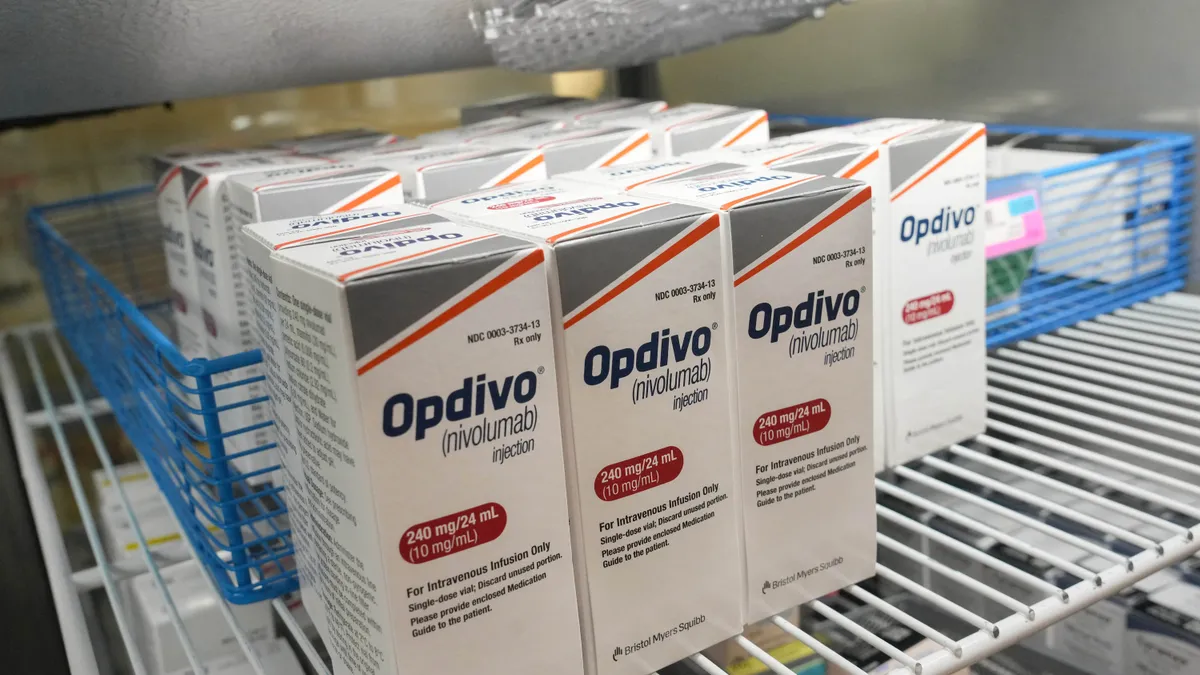
Bristol Myers Squibb shares oscillated a bit on Thursday even as the company issued an earnings report that surpassed analyst expectations. The pharmaceutical giant recorded $13 billion in revenue during the second quarter, which was 6% higher than the same period from a year prior and 11% above consensus estimates, according to RBC Capital Markets analyst Trung Huynh. While some of the beat stemmed from Bristol Myers’ “growth” portfolio of newer products — Reblozyl, Breyanzi and Camzyos were up 29%, 41% and 60%, respectively — it was also due in good part to the legacy blood thinner Eliquis, sales of which were up 22% to nearly $4.5 billion. Additionally, Bristol Myers disclosed slight delays to key studies of Cobenfy as well as an experimental blood thinner called milvexian. Though “largely anticipated,” those add “uncertainty around the pipeline” and temper “what was otherwise viewed as a strong quarter operationally,” Huynh wrote in a note to clients. During Thursday trading, Bristol Myers shares were at times down nearly 1.5% and up almost 4%, but ultimately closed at $64.86 apiece, up 2.8%. — Jacob Bell
Apnimed, a sleep drug developer backed by Shionogi, beat its projections to raise $192 million in an initial public offering Thursday. According to BioPharma Dive data, the IPO is the biopharmaceutical sector’s 15th so far this year, and most were “upsized” — meaning that high demand led companies to either sell more shares than expected or hike their price. Attovia Therapeutics, Braveheart Bio and Vogenx could follow Apnimed shortly. All three set terms for their coming offerings this week. — Ben Fidler
U.K.-based biotechnology startup Relation said Thursday it has partnered with GSK in a deal focused on using AI technology to better understand disease biology and uncover new therapeutic targets. Through the partnership, the companies will amass data on the way human cells respond to genetic and drug interventions, and use those insights to point the way to new medicines. Relation stands to receive up to $110 million in upfront as well as milestone payments in the deal. — Delilah Alvarado
Pfizer’s immune drug Litfulo hit both its main objectives in two late-stage studies in people with the skin condition vitiligo. Pfizer already sells the medication for alopecia areata, an autoimmune condition causing hair loss. But the company said Thursday that, when compared to a placebo in two Phase 3 trials in vitiligo, treatment was associated with “significant” improvements in the severity of depigmented patches on the face and skin after 52 weeks. Pfizer didn’t disclose specifics, but said it’ll share the results with regulatory authorities. Litfulo’s safety profile was consistent with what was seen in previous testing. — Delilah Alvarado