GSK has given away rights to the most advanced RNA editing medicine in clinical testing.
The drug’s developer, Wave Life Sciences, said Monday it reached a deal with GSK to reclaim global rights to “WVE-006,” which being evaluated against a rare liver and lung condition called alpha-1 antitrypsin deficiency. GSK has had those rights since signing a broad collaboration with Wave in 2022, and held onto them through initial study results. But Wave claims GSK handed them back following an agreement that the biotech is better able to quickly advance WVE-006 for a rare condition like AATD.
GSK’s respiratory portfolio, by comparison, is focused on “large-scale diseases,” Wave added.
Wave also said the deal was made before the next cut of data from its ongoing clinical trial were available. Those results are due by the end of March. In the meantime, the company is “accelerating” its submission plans for WVE-006 and plans to meet with U.S. regulators to discuss accelerated approval requirements. Feedback from that meeting is expected in the middle of the year.
“WVE-006 is well-suited to Wave’s strengths and ability to execute on a commercial strategy. We look forward to engaging with regulators on how to rapidly advance this potentially transformative, first-in-class therapy,” said CEO Paul Bolno, in a statement.
The announcement is the latest twist for a pioneering program that’s shown the promise of a new kind of drugmaking approach, but also raised questions about its potential.
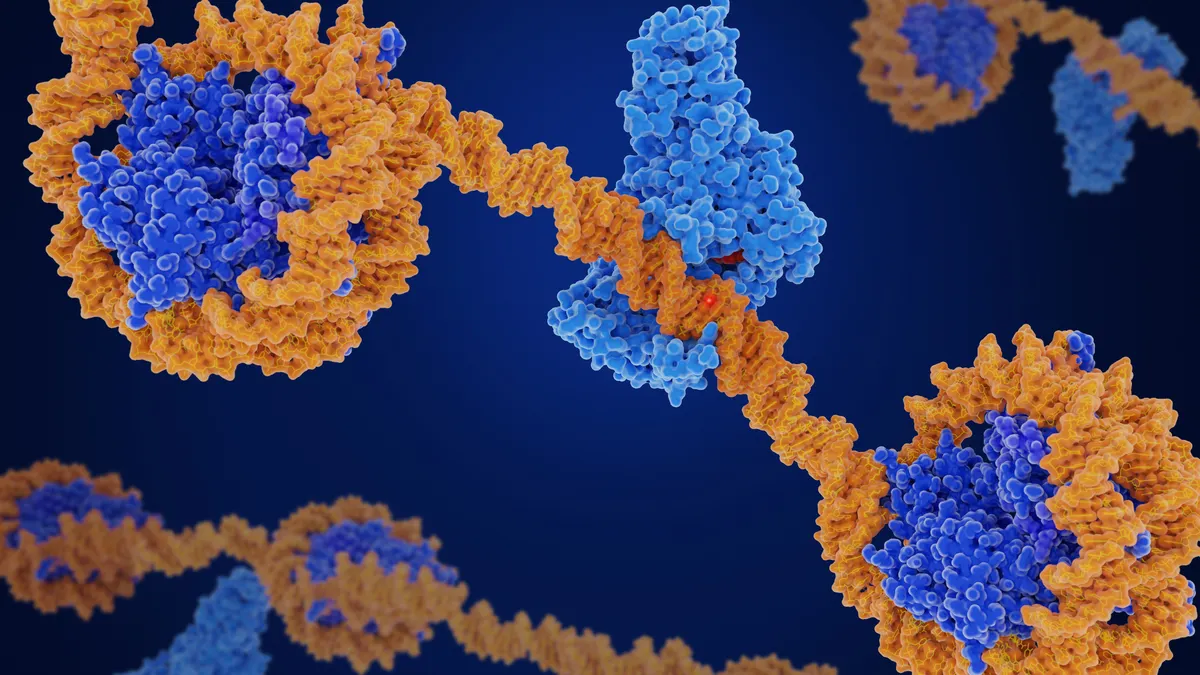
WVE-006 was the first treatment of its kind to reach human testing. It edits RNA, the messenger molecules that DNA uses to create proteins. That approach is seen as a potentially safer and more flexible alternative to DNA editing, and has drawn interest from many investors and drugmakers as a result. But RNA editing remains unproven, making Wave’s program an important barometer for the technology’s capabilities.
So far, Wave has reported results from two different dose levels as well as patients who’d been given more than one shot of its treatment. Those results have shown that WVE-006 can help people with AATD produce a protein their bodies can’t make. Wave has contended the results suggest WVE-006 could become a “functional cure” for the disease.
Investors, though, have been looking for more powerful effects, leading to some skepticism about the program. And a rival company, Korro Bio, scrapped an RNA editing therapy for the same disease after it wasn’t as potent as anticipated in early testing.
Wave, for its part, framed GSK’s decision to punt rights to WVE-006 as a way for the company to move forward more quickly. It’s been “eager to accelerate our registrational strategy,” Bolno said in a statement. GSK’s Chief Scientific Officer, Tony Wood, noted in that statement how the companies’ broader deal “continues with exciting opportunities ahead.”
Leerink Partners analyst Joseph Schwartz speculated that the move may be “at least partially informed” by a recent announcement from rival Beam Therapeutics. Beam, which is developing a gene editing treatment for AATD, said last month that it’s reached an alignment with regulators on a speedy approval pathway.
GSK also has a new leader, Luke Miels, “and this could just be a new CEO sharpening and re-directing strategy,” Schwartz added.
In January, the companies selected a fourth program to advance under their deal. GSK can move a total of eight forward, with Wave eligible to receive up to $2.8 billion.
Wave said it currently has enough cash to fund operations through the third quarter of 2028.
Editor’s note: This story has been updated with analyst commentary.