Dive Brief:
- Agios Pharmaceuticals has decided not to further develop one of its more closely watched medicines as a treatment for sickle cell disease due to disappointing results from a mid-stage clinical trial.
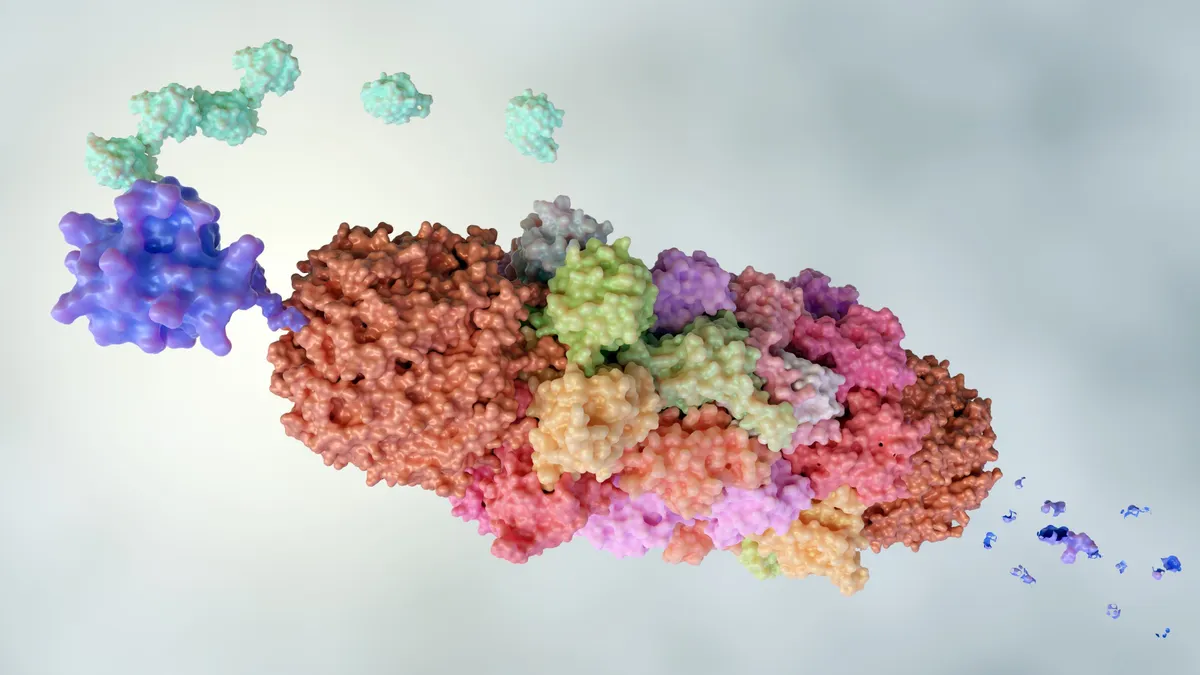
- The drug, called tebapivat, “did not demonstrate the level of differentiation required to support continued development,” Agios said in a statement. Tebapivat has been billed as a “next-generation” version of another Agios medicine, mitapivat, which is already approved for use in two blood disorders. These drugs work by activating the “pyruvate kinase” enzyme that’s essential for the health and survival of red blood cells.
- Shares of Agios were down 6.5%, to about $37.50 apiece, in mid-morning trading Tuesday. Leerink Partners analyst Andrew Berens wrote in a note to clients that, while his team had not yet attributed any of Agios’ stock value to tebapivat, the drug did represent the company’s “primary opportunity” to differentiate itself in sickle cell disease from Novo Nordisk, which has its own once-daily enzyme activator that recently scored positive Phase 3 results.
Dive Insight:
Tebapivat is the latest example that drug companies, whether in research or in selling a product, find sickle cell significantly challenging.
Just last month, Fulcrum Therapeutics, a Boston-area biotechnology firm, said it made the “very difficult decision” to stop advancing a potential sickle cell medicine because the Food and Drug Administration had unshakable concerns about safety risks.
That medicine, pociredir, had already gone through early-stage human testing. But with “no viable regulatory path forward” for Fulcrum’s main asset, the company is now looking into strategic alternatives, including a possible sale.
The Fulcrum update came less than a year after Pfizer unveiled underwhelming results for a sickle cell drug it had picked up through the $5.4 billion acquisition Global Blood Therapeutics. In 2024, the pharmaceutical giant pulled a central asset in that deal, Oxbryta, from the market because of safety concerns. Novartis, too, withdrew a sickle cell therapy named Adakveo from the European market after regulators formally revoked the drug’s authorization.
Elsewhere, Sangamo Therapeutics and Graphite Bio each discontinued development of an experimental genetic medicine in 2023.
Agios had another recent setback, disclosing in November mixed results from a late-stage trial evaluating mitapivat against sickle cell. The company is still forging ahead on that front, though, and expects an FDA approval decision by Nov. 1.
In his client note, Berens wrote that tebapivat’s end “places greater importance” on the commercial execution of mitapivat and a “smooth” FDA review of the drug’s expansion into sickle cell. It also puts more pressure on the company to succeed with its earlier-stage research projects and to take advantage of potential business development opportunities, the analyst added.