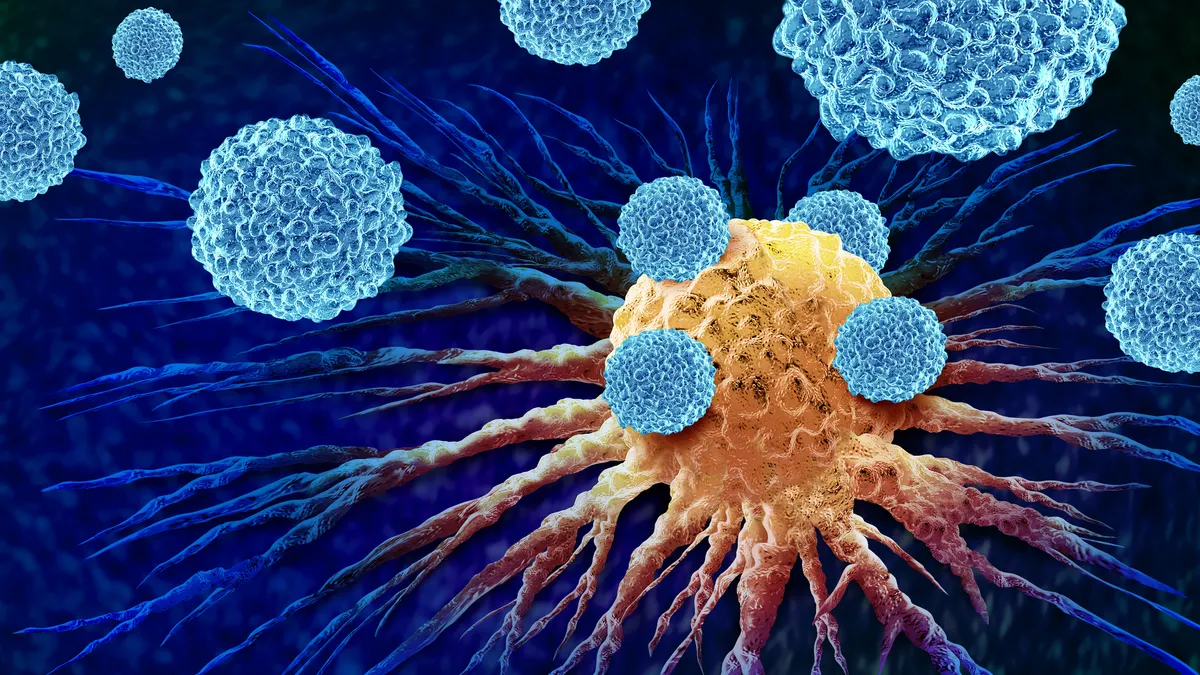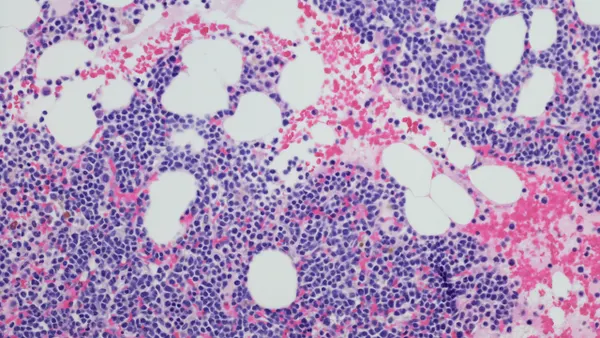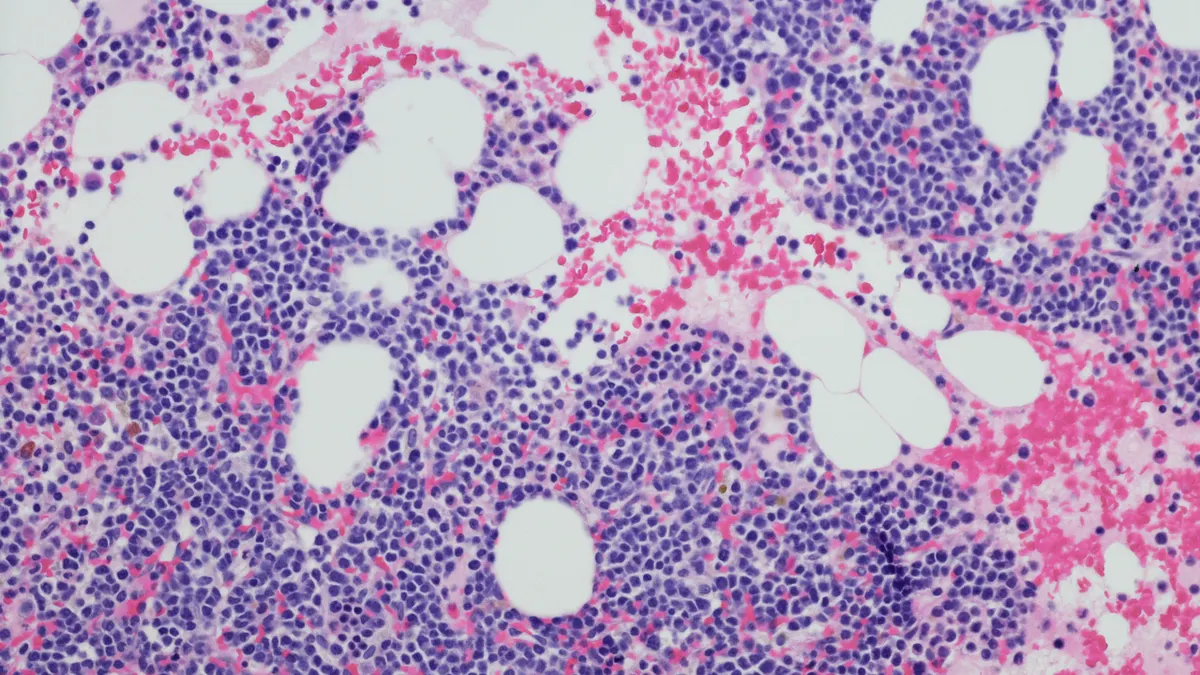
More than a decade ago, Amgen ushered in a new era of cancer care, bringing to market the first “bispecific antibody” designed to treat a malignancy.
The 2014 clearance of that drug, Blincyto, in leukemia kickstarted what’s since become a massive research push to widen the use of these treatments in oncology. Since then, Johnson & Johnson, AbbVie and Pfizer, among others, have successfully developed bispecific treatments for other blood cancers like multiple myeloma and lymphoma. Another, from Amgen, came to market for a type of lung cancer.
The upcoming American Society of Hematology meeting will showcase early data on what could prove to be another step forward. Abstracted data published on Wednesday showed that the meeting will feature multiple presentations on “trispecific” antibodies that bind to three targets instead of two. Drugmakers hope these three-pronged medicines could be better equipped to counter the tricks tumors use to resist treatment and, as a result, have longer-lasting effects.
J&J and AbbVie are among the leaders in developing trispecifics for multiple myeloma. Both have medicines in Phase 2 and Phase 1 testing, respectively, that’ll be showcased at ASH. But they’re flanked by China-based drugmakers Innovent Biologics and Shanghai Xianxiang Medical Technology, which are also presenting early data at the meeting. Kali Therapeutics, a Californian biotech startup, will spotlight preclinical research as well.
J&J’s prospect, “ramantamig,” binds to an immune cell target called CD3 and, on diseased multiple myeloma cells, the proteins BCMA and GPRC5D. J&J has approved bispecifics that individually target either BCMA or GPRC5D. Both of those medicines, Tecvayli and Talvey, have shown in testing they can cut the risk of disease progression or death in people with relapsed or resistant disease.
At ASH, J&J will present from a mid-stage trial testing ramantamig alongside Darzalex and Revlimid as an “induction” treatment in newly diagnosed multiple myeloma patients who are eligible for bone marrow transplants. A data abstract posted Wednesday indicated that all 20 patients who were evaluable after three cycles of treatment had “minimal residual disease negativity,” or no detectable diseased cells.
The abstract provides “strong early data” that suggests J&J “could add another important asset” to its already broad treatment portfolio in multiple myeloma, wrote RBC Capital Markets analysts in a Thursday client note.
AbbVie, meanwhile, will reveal data for a trispecific called ABBV-2001 that was licensed from Ichnos Glenmark. AbbVie’s drug binds to CD3, BCMA and another receptor called CD38. In Phase 1 testing in people with relapsed or refractory disease, the drug stimulated responses in 75% to 85% of enrollees. Additionally, 83% to 88% of those who achieved a “complete response,” or had no active signs of cancer, also achieved MRD-negative status.
Innovent’s trispecific, IBI3003, targets the same receptors as ramantamig. The drug was associated with similarly high response rates in a Phase 1 trial in people with late-stage disease, too. That number was 77% among patients receiving the dose selected for Phase 2.
A competing trispecific from Shanghai Xianxiang, called SIM0500, achieved an overall response rate as high as 86% at the highest doses tested.