Two months after China unveiled a five-year plan to accelerate the ascent of its fast-rising biotechnology sector, a prominent lobbying group is pitching a policy proposal designed to help the U.S. maintain an edge in the field.
The “action plan” by the Biotechnology Innovation Organization unveiled Tuesday lays out seven priorities Congress and the Trump administration should act on to “ensure” the U.S. remains the sector’s “global leader.” Called “BioAdvance: Securing America’s Biotech Century,” it involves ways to speed up drug development, improve the nation's clinical trial infrastructure, attract investment and better support biomedical research.
BIO also calls on the U.S. to establish a “White House Office of Biotechnology” to help coordinate these plans and keep them on track.
“This moment demands the ambition and determination that catalyzed the biotechnology revolution and made America the definitive global leader,” said BIO President and CEO John Crowley in a statement.
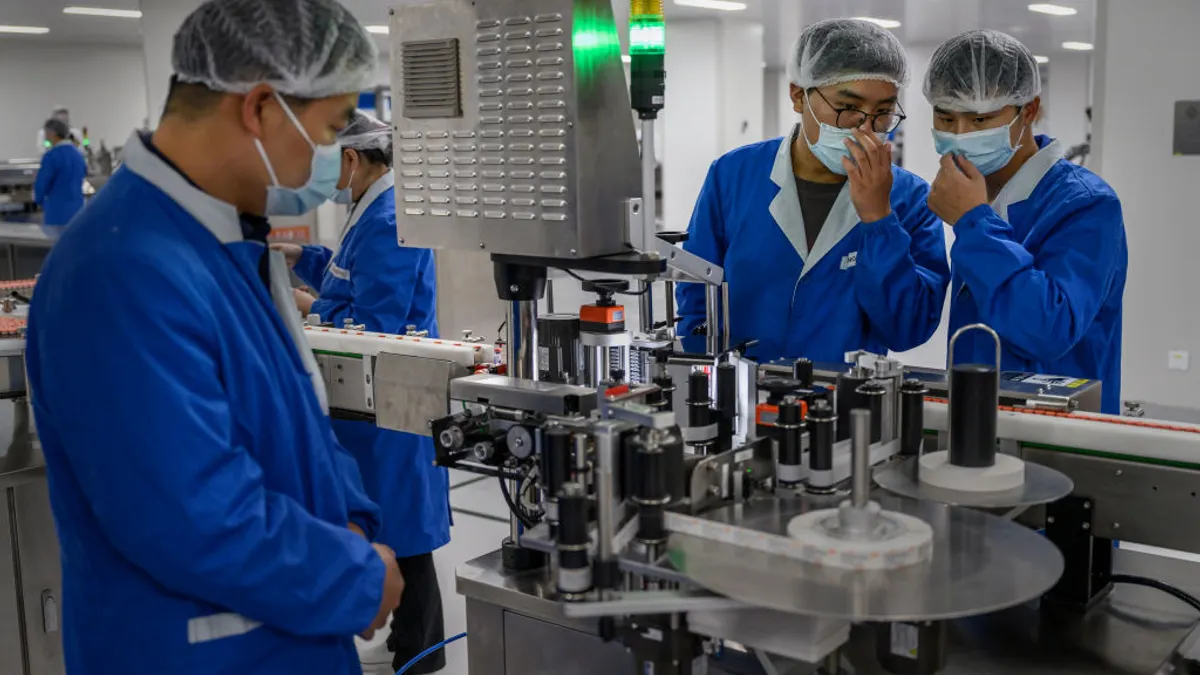
BIO’s proposal comes amid an escalating debate among biotech executives, investors and lawmakers as to how to respond to China’s emergence as a drugmaking force. The U.S. has long been the world’s standard-bearer in developing new medicines. Yet China has made biotech progress a strategic priority and invested heavily in the sector over the last decade or so.
That effort is now “paying off,” according to BIO. China now starts more than a quarter of the world’s clinical trials and initiates early-stage studies more quickly and cheaply. Dealmaking involving China-originated medicines has exploded of late, too. More than 100 licensing deals have been struck between Western pharmaceutical firms or biotechs and Chinese drugmakers, according to BioPharma Dive data.
China aims to make further inroads in the future. In a five-year plan released in September, the Chinese government indicated its goal is to develop at least a quarter of the world’s “first-in-class drugs” by 2030.
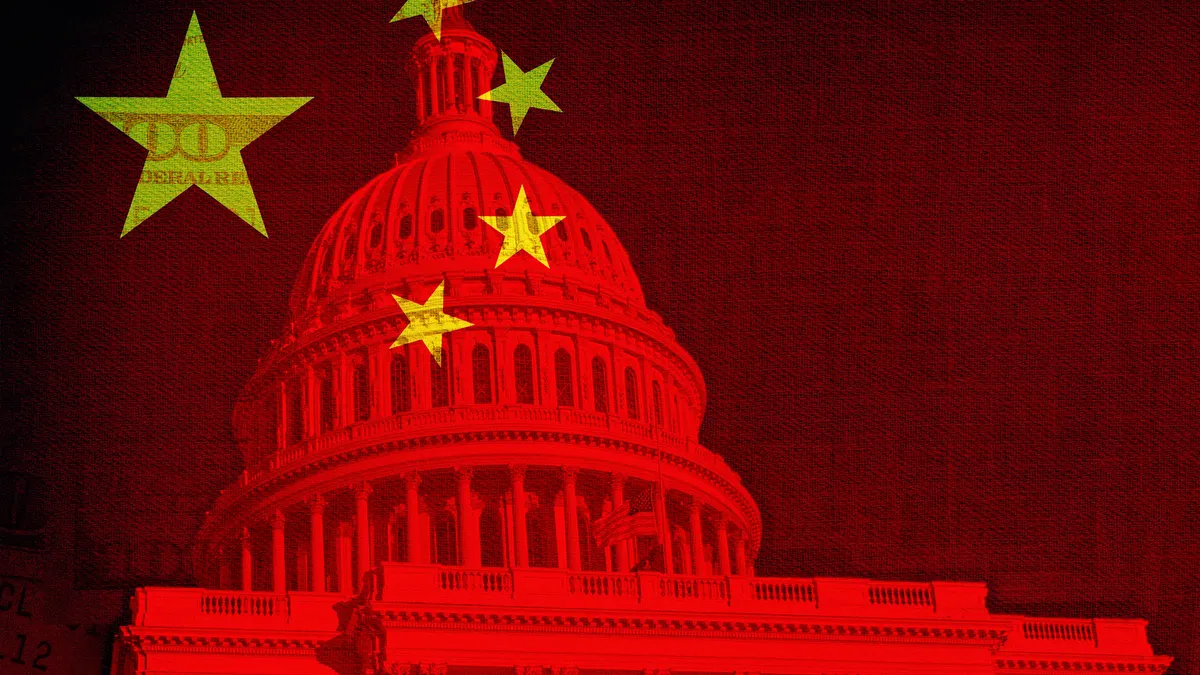
So far, the U.S. has waffled between trying to slow down China’s progress or boost its own sector. The Treasury Department, for instance, has floated a proposal to add biotech to the “COINS” Act, which could limit some deals and draw greater scrutiny to U.S. biotech investments in China. That approach has yielded criticism from BIO, whose leader Crowley warned in October that the U.S. “cannot restrict our way to success.”
“We need to ensure that we do not have an overly broad approach that would create uncertainty for innovators and investors, and that may unintentionally risk weakening U.S. biotech competitiveness,” Crowley said in a statement at the time.
Prominent biotech investment firms such as RA Capital Management have voiced similar criticisms, claiming putting biotech into the COINS Act “does nothing to shore up domestic manufacturing or restrict the ability of Chinese companies to control distribution of medicines.”
Meanwhile, U.S. regulators have unveiled programs to speed up clinical testing and make the U.S. a more attractive destination for starting first-in-human studies.
Now, BIO is trying to push the federal government to go further. Its proposal includes several ways to improve drugmaking efficiency in the U.S. while addressing structural weaknesses that slow down clinical research. Investors and CEOs interviewed by BioPharma Dive said the plan, which focuses more on shoring up America’s capabilities rather than striking back at China, is achievable and a welcome move.
“I think it’s a great list,” said Lindy Morris Fishburne, a managing partner at Breakout Ventures, which invests in early-stage life sciences startups. “But the world moves on incentives and people, and if those things are not aligned, then policy doesn’t matter.”
In its report, BIO pushed legislators and the Food and Drug Administration to adopt more flexible requirements for starting first-in-human trials, prioritize modernized alternatives to animal testing and centralize many of the processes required before testing can begin.
“Biotechnology companies must be able to efficiently test the safety and dosage of their innovations — and iterate quickly based on those results — to attract investment for early-stage research,” the organization wrote in its proposal.
The U.S.’ clinical trial network is currently “siloed and unevenly distributed,” creating capacity constraints for specialized Phase 1 studies and slowing down early research. As a result, many U.S.-based companies are conducting an increasing share of their early-stage drug development in countries such as China and Australia, “where the process is often faster, more predictable, and less expensive,” BIO said.
Quralis, a Cambridge, Massachusetts-based brain drug developer, launched several of its proof-of-concept trials outside of the U.S. “because the regulatory framework was not conducive” to doing so at home, said Kasper Roet, the company’s CEO.
The proposal suggests that U.S. regulators engage earlier with drug developers and clearly lay out expectations during meetings. BIO also wants policymakers to centralize approval processes across local clinical trial sites, expand the network of testing locations and create “user-friendly” tools to help doctors and patients find trials.
But those efforts — and any future plans to speed up human testing — hinge on having a fully staffed agency and leadership motivated to make those changes, according to Fishburne.
“You're going to have all this incredible technology advancing pipelines, lowering risk and answering questions earlier, and then you're going to hit this old-time bureaucratic wall,” she said.
BIO previously told the FDA in a public comment that its pilot program to accelerate early testing contains only “incremental improvements” to application reviews that are “unlikely to materially shift the timelines” for those trials or reverse the ongoing trend. Fishburne said the FDA’s efforts are welcome, but “feel more like disconnected green shoots rather than [an] overarching strategy.”
The proposal also calls on the Trump administration to put more money toward basic research through the National Institutes of Health. Last year, biotech investors and academics warned of dire long-term consequences for the life sciences if the government significantly cut NIH grant funding. Though a federal court ultimately barred a plan to cap NIH funding, many institutions are still affected by delays in grant renewals and sharp drops in dollars headed toward certain types of research, one NPR report found.
“Providing ample and predictable federal research funding” and establishing “reliable pathways” to attract talent to American universities are additional cornerstones of BIO’s proposal.
Strengthening the NIH and streamlining early clinical research are particularly important parts of BIO’s request, said Chris Bardon, a managing partner at the venture firm MPM BioImpact.
“NIH research has always been the name of the game,” Bardon said. “To really undermine that is, at the end of the day, what's going to harm the long-term competitiveness of our basic science as well as of our biotechnology industry.”
BIO pointed to other legislative initiatives to spur venture capital funding and protect intellectual property rights. Policymakers “should also reduce unnecessary regulatory burdens and adopt tax and economic incentives that encourage investment in innovative startups,” the organization wrote.
A new White House Office of Biotechnology could help carry these initiatives out and ensure the government adopts a “unified national strategy.” That office could also help identify "key policy priorities to promote U.S. biotech competitiveness" and coordinate plans with "trusted allies.”
Bardon said the BioAdvance plan could turn into a “bipartisan effort” to shore up an industry that has been “taken for granted.”
“The rise of China has woken up the United States to realize we were very comfortable being in the leading position, but now that is being challenged,” said Roet, Quralis’ CEO.