The Food and Drug Administration on Tuesday formally launched an initiative designed to speed up early clinical trials for new medicines, advancing a government-led push to entice drugmakers to start more of these studies in the U.S. rather than overseas.
The pilot program is part of "Operation Trialblazer," an effort first announced by the Department of Health and Human Services in June and meant to help drug companies get treatments into human testing more quickly. It’s supposed to counteract moves by drugmakers to run those studies in countries like China and Australia, where friendlier regulatory environments can fast-track budding research.
Under the “Expedited Investigational New Drug Pilot” announced Tuesday, the FDA will choose up to 10 “qualified research institutions” to work with drug companies on applications to start human trials. Those institutions will have “specialized and substantial scientific expertise,” which would enable the agency to conduct a “rolling review” as the components of a submission come in, according to the FDA.
The agency aims to select eight to 10 institution-drugmaker pairings in the pilot program. Applications are due by Oct. 30.
“The expedited IND pilot program is a direct response to a challenge we hear consistently from drug sponsors: the time and uncertainty involved in moving from scientific discovery to first-in-human trials,” said Mike Davis, the director of the FDA’s Center for Drug Evaluation and Research, in a Monday call ahead of the announcement.
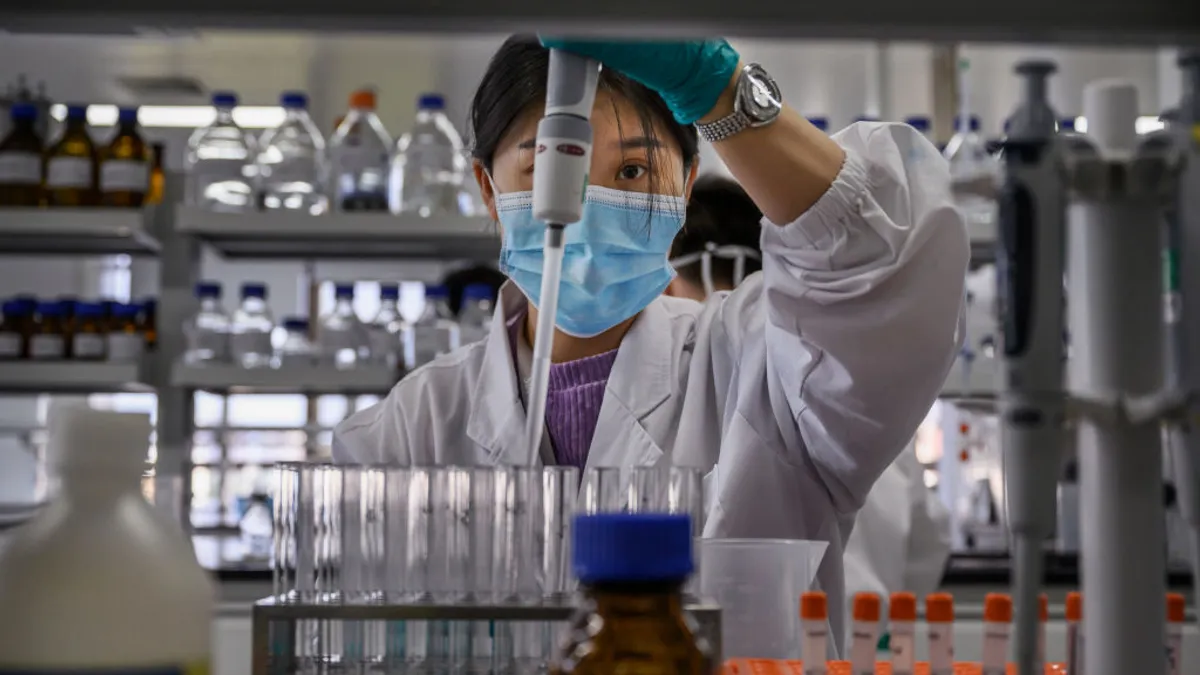
In the U.S., bringing a drug into clinical trials typically takes up to two years. Companies can shave several months off that process by starting those trials in Australia and China. In Australia, for example, trials can begin less than 70 days after the submission of a study protocol thanks to a combination of financial incentives and streamlined reviews. A series of reforms and heightened investment in biotechnology have similarly accelerated the pace of drug research in China.
The result has been an explosion in the number of trials conducted overseas. Australia has one of the highest “trials-per-capita” rates in the world, the HHS wrote in a memo. And China-run studies soared from just under 1,000 annually in 2010 to more than 5,000 in 2024, surpassing a stagnant rate of about 3,500 per year in the U.S., according to a paper from the National Bureau of Economic Research.
Those advantages in cost and speed have drawn the attention of large drug developers looking to shore up their pipelines. More than 100 licensing deals have been signed between a U.S. or European biopharmaceutical company and a Chinese-based drug developer since the start of 2025, according to BioPharma Dive data.
“When early stage clinical development shifts abroad, America risks losing investment, intellectual property, top scientific talent, and most importantly, early access to life-saving therapies for American patients,” Davis told reporters on Monday.
The newly launched program is meant to alter these trends by loosening “bottlenecks,” like ensuring trial site preparation and ethics reviews occur “in parallel” rather than “in sequence,” added Karim Mikhail, the director of the Center for Biologics Evaluation and Research. By conducting rolling reviews of submissions, the agency can “identify and resolve issues earlier, reduce the risk of clinical hold, and make the path to first-in-human trials faster and more predictable,” he said.
“The pilot not only pairs industry innovators with top research institutions to accelerate high-quality data being submitted to the FDA, it also tests whether the partnership can accelerate what happens after the FDA allows a clinical trial to proceed,” Mikhail said.
In August, the Biotechnology Innovation Organization, or BIO, a top lobbying organization that represents U.S. drugmakers, agreed that a rolling review process would “likely result in significant time savings.” However, BIO was skeptical that any single research institution could meet the requirements the FDA set forth, and was concerned that these evaluations might add “an additional layer of review” and slow progress.
Ahead of Tuesday’s announcement, an FDA spokesperson said that academic research centers, as well as contract research organizations, could fit the description of a qualified research institution. The pilot program is also open to all “eligible” drug sponsors, including smaller companies and startups, the spokesperson added. It will “reduce unnecessary delays at every stage of early development,” Davis said.
The pilot program and Operation Trialblazer are among the reforms the U.S. government is undertaking to try and better compete with China’s fast-rising biotech sector. In June, a bipartisan House bill proposed adding biotech to the list of industries where investments in China would come under scrutiny from federal regulators.