Dive Brief:
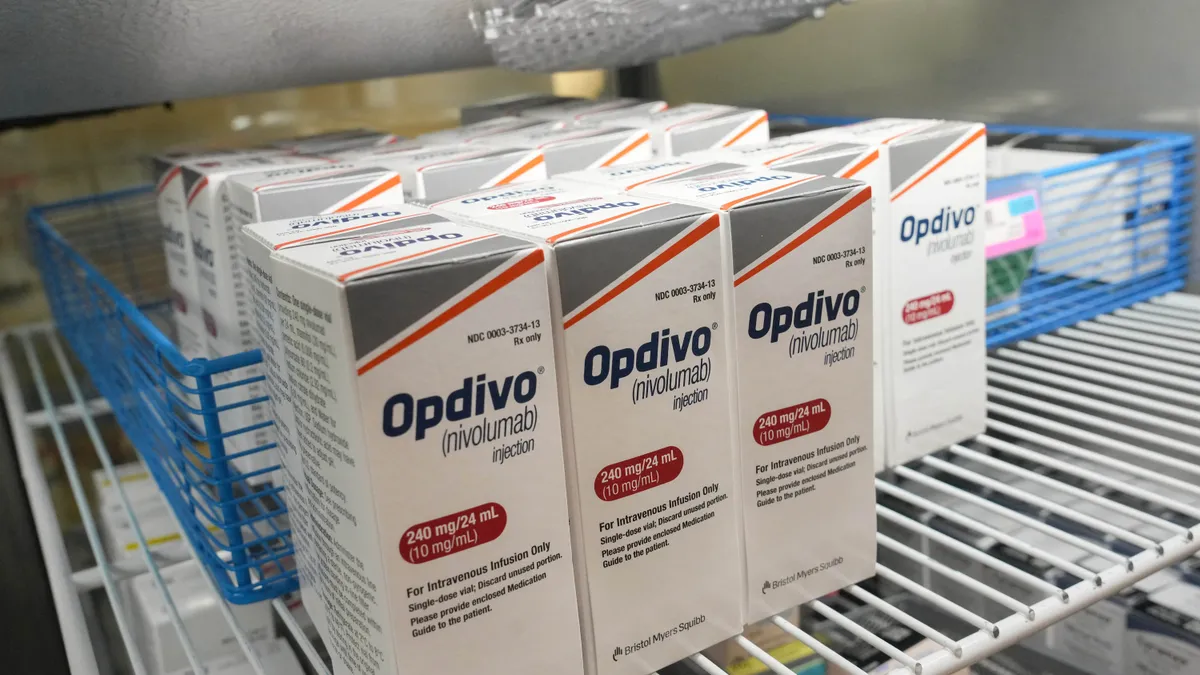
- Bristol Myers Squibb on Wednesday said it’s working with Anthropic to deploy the artificial intelligence tool Claude throughout its operations.
- The Princeton, New Jersey-based drugmaker outlined three priorities for the technology, starting with using Claude to help its engineers and data science teams speed software and AI development. The company also plans to use Claude in research, development, documentation, manufacturing, quality monitoring and engagement with healthcare professionals.
- Ultimately, Bristol Myers wants Claude to tap all of its institutional knowledge. Chief Digital and Technology Officer Greg Meyers says Claude will go far beyond a “chatbot” at Bristol Myers. “The real prize is the untapped value still trapped behind decades of data silos, and this collaboration is how we reach it,” he said in a statement.
Dive Insight:
Bristol Myers is the latest drugmaker to make a big bet on AI. Merck & Co. in April announced a potential $1 billion partnership with Google Cloud; days before that, Ozempic maker Novo Nordisk said it would work with OpenAI to integrate its tools into every step of drug development.
Other major players in the industry are partnering with younger drugmakers founded to take advantage of the quickly developing technology. Japan’s Takeda Pharmaceutical in February announced a deal potentially worth more than $1.7 billion to work with AI specialist Iambic Therapeutics. A month later, Lilly inked an agreement with Insilico Medicine that may be worth more than $2 billion.
The goal in engaging AI in early drug development is to zero in more quickly on more effective therapies, leaving behind the days of trial-and-error discoveries in nature or happy accidents such as the one that gave the world penicillin. Models are also being trained to look at the underlying causes of disease to find completely new targets for medicines.
But the technology faces hurdles. Large language models develop their “intelligence” by absorbing existing literature and information, and the limited available data can be inconsistent or incorrect. There’s plenty of skepticism about how much AI can ultimately transform the industry.
There’s also the well-known issue of hallucinations that could affect other areas of AI use. Bristol Myers would have to overcome that to reach a goal of using Claude to help draft clinical study reports and patient safety narratives as it uses the technology to support regulatory submissions.
Bristol-Myers, however, expressed no doubt about the future. “The companies that lead the next decade of biopharma will be the ones that learn to operate fundamentally differently with AI, and BMS intends to be one of them,” Meyers said.