Not six months ago, bankers and lawyers had significant reservations whether they could get larger biotechnology deals over the finish line.
Questions around interest rates, tariff policies and the direction of the Food and Drug Administration had turned an already down biotech market into a turbulent one in which stocks would swing by the double-digits weekly — sometimes daily — making it even harder for buyers and sellers to agree on price.
Facing such turmoil, dealmakers have made greater use out of an old tool known as contingent value rights. And the payoff is clear. Since July, at least two dozen biotech acquisitions worth $50 million or more have been signed, a boost from the first half of this year and a significant acceleration from the back half of 2024. Data compiled by BioPharma Dive show a third of those deals employed CVRs.
A CVR is essentially a promise to a seller’s shareholders that their payout will get bigger if the company’s assets go on to hit certain milestones. In an industry as fraught as biotech, where once-promising drugs can quickly become obsolete from a single study failure or regulatory setback, CVRs act as risk mitigators.
They’re also useful for hammering out price. Buyers get to pay less initially, while sellers get affirmation about the potential worth of their medicines. “It’s a clever workaround,” said Kevin Eisele, managing director at the investment firm William Blair.
The growing popularity is illustrated in a mid-October report from Jefferies that examined biotech mergers and acquisitions worth more than half a billion dollars. The report found that not only has the number of buyouts with CVRs increased “substantially” in recent years, but so, too, has the proportion of the deal tied to these rights. In 2025, CVRs have, on average, accounted for 37% of the total size of those larger transactions that incorporated them, according to Jefferies.
In some cases, the CVR offers a payout far higher than a deal’s upfront cost. Day One Biopharmaceuticals last month agreed to buy struggling cancer drug developer Mersana Therapeutics for $25 per share. But Mersana investors could take home an additional $30.25 per share from a CVR associated with the company’s most advanced research program.
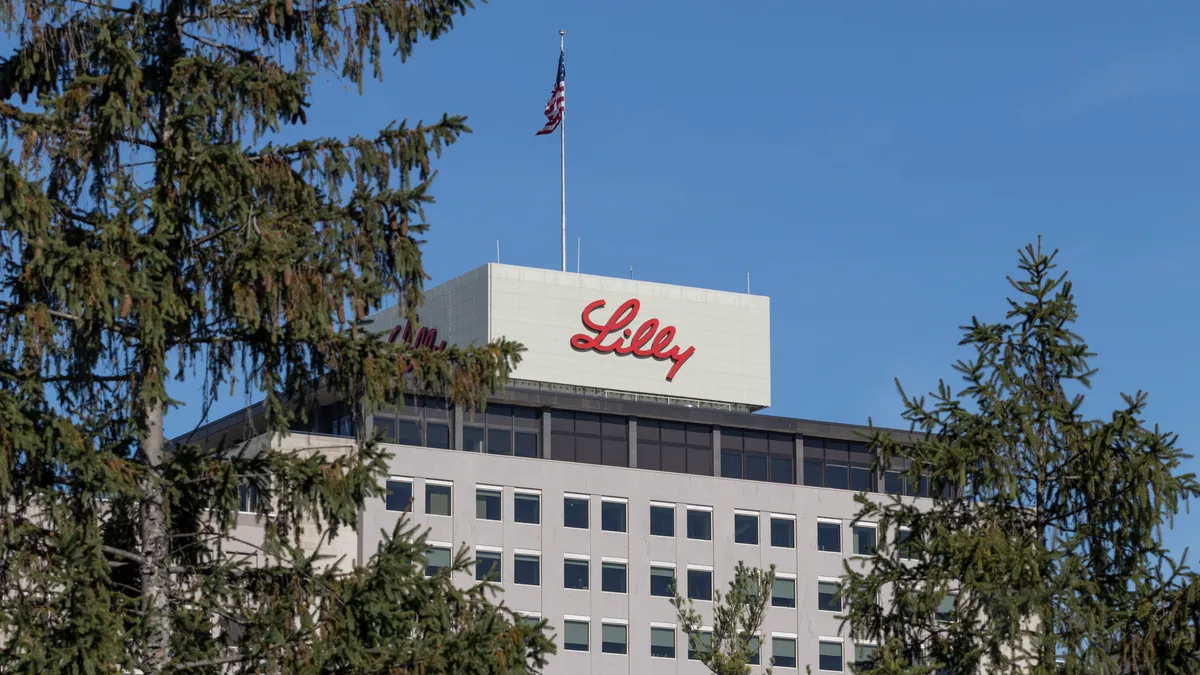
Even more stark is Eli Lilly’s bid for gene therapy developer Adverum Biotechnologies, which carries a CVR that could be worth 2.5 times the upfront payment of $3.56 per share.
Dennis Ding, an analyst at Jefferies, wrote how this uptick in CVR use is an added positive for biotech dealmaking, namely for companies that “one could argue seem expensive despite not yet being totally ‘derisked’ ahead of clinical or regulatory catalysts.”
Biotech M&A deals with a CVR announced in the second half of this year
| Buyer | Target | Upfront | CVR |
|---|---|---|---|
| Day One Biopharmaceuticals | Mersana Therapeutics | $129M | Up to $30.25 |
| Pfizer | Metsera | $10B | Up to $20.65 |
| Eli Lilly | Adverum Biotechnologies | $75M | Up to $8.91 |
| Chugai Pharmaceutical | Renalys Pharma | $98M | Up to ¥16B |
| Alkermes | Avadel Pharmaceuticals | $2.1B | Up to $1.5 |
| Novo Nordisk | Akero Therapeutics | $4.7B | Up to $6 |
| Roche | 89Bio | $2.4B | Up to $6 |
| MannKind | scPharmaceuticals | $303M | Up to $1 |
SOURCE: BioPharma Dive data
Dealmakers first began using CVRs in the late 1980s. These tools, as lawyers from Sidley Austin explained in a 2023 post to a prominent Harvard Law School forum, are particularly attractive during times of economic uncertainty. That’s been the case in the life sciences over the past four years, as a historic dive in the biotech stock market has left many drug developers cash-strapped and on tenterhooks.
Jefferies’ data reflects this. In both 2015 and 2016, two $500 million-plus deals had CVRs. The following two years saw none. There were five to 10 annually between 2019 and 2022. Then, in 2023, CVRs were in 14 of the 27 deals tallied by Ding and his team.
“Companies need to raise capital. And in a market where that’s challenging, a CVR provides a nice ability to get an upside on [an asset] you have confidence in,” said Daniel Rees, a partner at Latham & Watkins who also serves as global vice chair of the firm’s M&A and Private Equity Practice.
“It's a well-trodden path, and we’re seeing it increase,” said Latham partner Charles Ruck.
Ruck added that, from his experience, there isn’t much downside to a CVR. They can be complicated to structure — especially if they’re related to research or sales goals, rather than a “binary” event like an FDA approval — but he’s never heard of a CVR keeping a deal from happening.
They have, however, caused problems after acquisitions complete.
In 2019, Sanofi forked over $315 million to former shareholders of Genzyme, a company it acquired for roughly $20 billion, to settle claims that it purposely slowed development of the multiple sclerosis drug Lemtrada to avoid paying a $7-per-share CVR.
Two years later, a bank representing former Celgene investors filed a similar lawsuit against Bristol Myers Squibb, alleging the pharmaceutical giant dragged its feet trying to win approval of a cancer cell therapy that was part of a $9-per-share CVR. Had all the components of that CVR been met, Bristol Myers would have had to shell out an additional $6.4 billion.
A U.S. district judge dismissed that case this September, only for the Celgene shareholders to slap Bristol Myers with a renewed, larger lawsuit last month.
Such cases underscore that while CVRs float future payouts, sellers must have confidence that the acquirer will make a good faith attempt to hit the associated goals. Rees noted that, with a sales-based CVR, “the identity of who you're selling to becomes even more important. Because you're looking at: can they achieve those sales targets that you may not be as focused on if it's just a regulatory approval.”
Eisele expects that CVRs, despite being a “niche product” just several years ago, now look poised to “stick around.”
“There's a lot of focus on discipline on both sides of the table,” Eisele said. “Acquirers want to show they're not overspending on targets, while the targets are under liquidity pressures from existing investors after long periods of underperformance and want to get something out of the investment.”
“CVRs have helped bridge that gap.”