Eikon Therapeutics, a star-studded biotechnology startup that raised more than $1 billion in venture funding, said Wednesday it has secured $381 million more through an initial public offering.
The California biotech sold over 21 million shares at $18 apiece, far more than it initially set out to sell when it set terms for its offering last week. Shares will begin trading Thursday under the ticker symbol “EIKN.”
Eikon’s pricing comes during the busiest week for biotech IPO activity since early last year, according to BioPharma Dive data. Veradermics, a hair loss treatment developer, raised $256 million in an IPO on Tuesday. Inflammatory disease drugmaker Agomab Therapeutics and eye-focused biotech Spyglass Pharma could follow on Thursday, according to the Nasdaq stock exchange.
Such a week is an outlier in recent years. Since peaking in 2021, biotech IPOs have been much harder to pull off. Data show about two dozen in each of the following three years and only 11 in 2025. Industry watchers have suggested the pace of new stock offerings could pick up in 2026, though, fueled by the positive performance of last year’s small crop and pitches from more seasoned, IPO-ready companies.
There are early signs of a potential rebound. Last month, Aktis Oncology nabbed $318 million — including a $100 million buy-in from Eli Lilly — in one of the largest biotech IPOs in the last two years. Since then, nine other companies have publicly revealed IPO plans. More could come, as there’s a backlog of mature startups that are still privately held.
“When you look back at all the crossover rounds that have been done in the last few years, that is a reasonable number of companies that are in a position to have thought about IPOs,” Jonathan Norris, a managing director at HSBC Innovation Banking, said in a media briefing at the annual J.P. Morgan healthcare conference in January.
Eikon is a prime example. The company is run by a group of former Merck & Co. executives including ex-research chief Roger Perlmutter and one-time clinical development leader Roy Baynes. It raised close to $1.2 billion before going public.
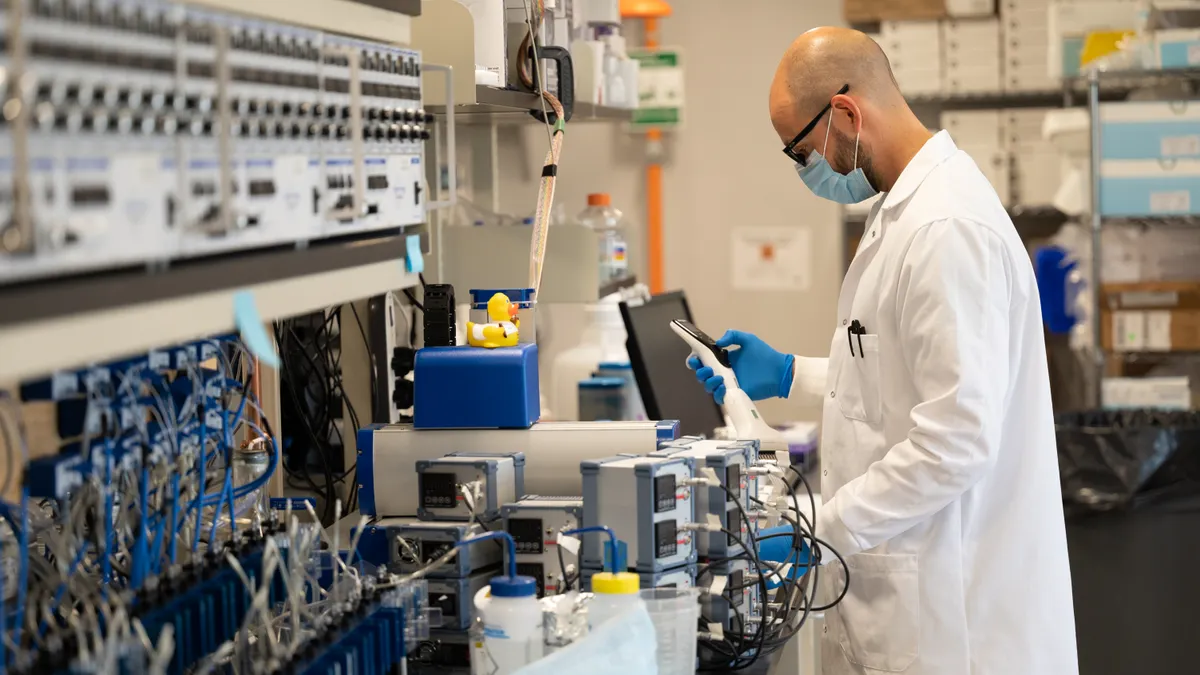
The company was initially built around Nobel Prize-winning technology called “super-resolution microscopy” that helps researchers look at how proteins move within the cell. But it later licensed drugs from Seven and Eight Pharmaceuticals and Impact Therapeutics that moved to the front of its research pipeline.
One of those drugs, codenamed EIK-1001, is now in a Phase 2/3 trial in melanoma and a mid-stage study in non-small cell lung cancer. Behind it in Phase 1 testing are a pair of “PARP” inhibitors that are supposed to be more selective than similar, available drugs like Merck and AstraZeneca’s Lynparza.
Eikon is also working on a drug candidate aimed at an enzyme, WRN helicase, implicated in the so-called MSI-high tumors with many DNA mutations.
The company has more than a dozen prospective drug candidates across various cancers and neurological conditions, according to its website.