Dive Brief:
- A bipartisan House bill proposed Tuesday would require government screening of U.S. investments in Chinese biotechnology in the wake of two pharmaceutical deals potentially worth more than $10 billion each.
- Reps. John Moolenaar, R-Mich., chairman of the Select Committee on China, and Debbie Dingell, D-Mich., are sponsoring the bill, dubbed the Biotech Investment National Security Act. It would amend the COINS legislation passed last year to restrict investment in certain sensitive technologies, adding biotechnology to the list.
- Under the new bill, licensing deals, joint ventures and equity investments in China could be subject to both Treasury and Defense Department reviews. Moolenaar and Dingell focused on licensing deals involving technology and intellectual property and excluded agricultural biotechnology, industrial fermentation and basic academic research.
Dive Insight:
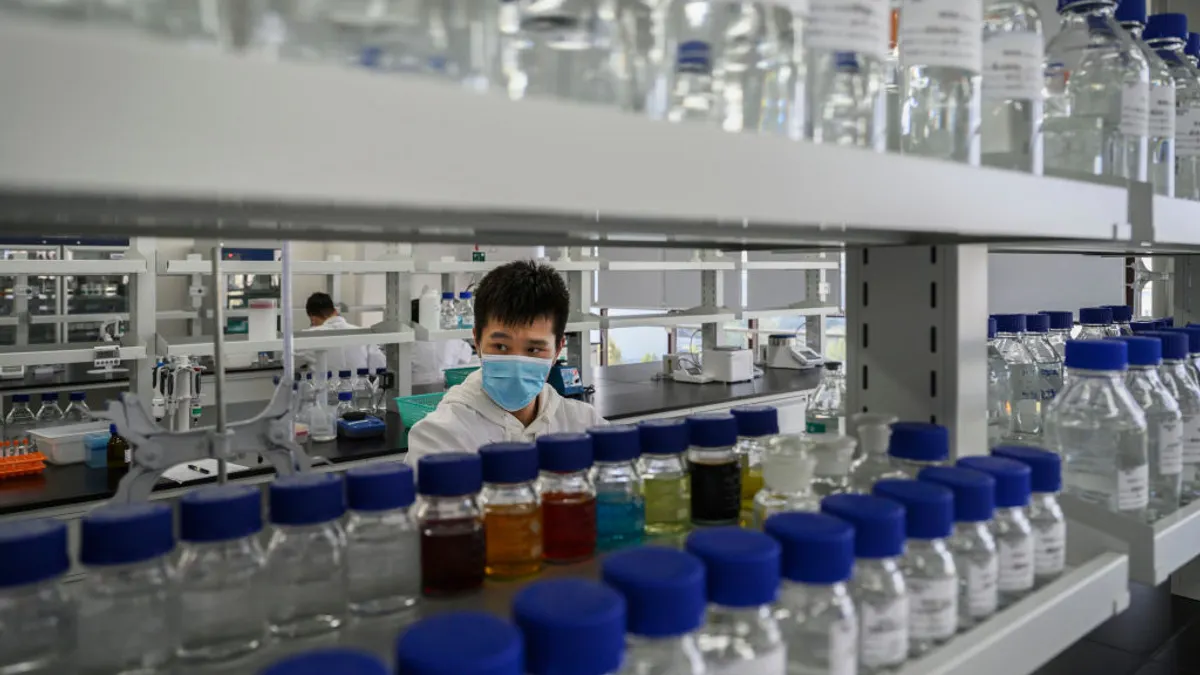
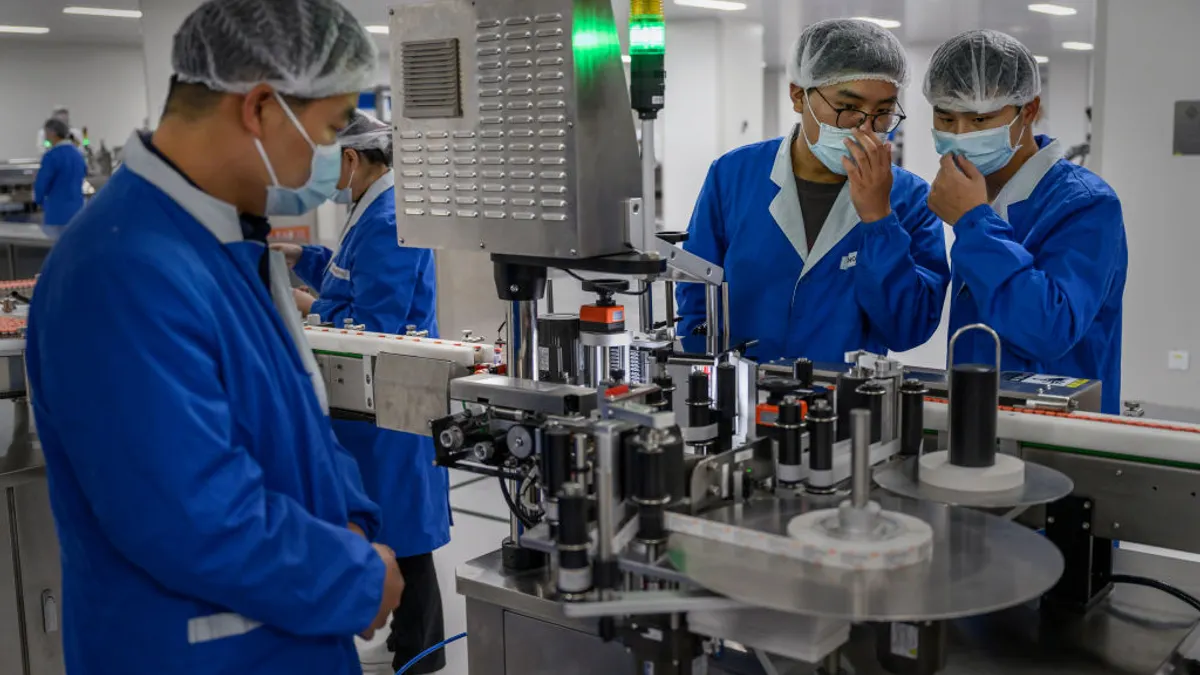
Lower costs and greater regulatory flexibility have turned China into an increasingly attractive source for new medicines. Cross-border licensing transactions reached $136 billion last year, up from less than $5 billion in 2020, according to the two lawmakers.
That trend has sparked concerns about the ability of U.S. biotechnology companies to compete and the potential for a transfer of critical technological know-how to endanger national security interests. Last year, a bipartisan commission issued a series of recommendations to help the U.S. industry stay competitive, including new outbound investment rules.
Moolenaar and Dingell proposed their bill after Pfizer and Bristol Myers Squibb each announced agreements that represented an evolution in the breadth of Chinese partnerships. Bristol Myers Squibb is joining forces with China’s Hengrui Pharma in an alliance that may be worth as much as $15.2 billion. Pfizer is working with Innovent Biologics in a deal potentially worth more than $10 billion.
American companies “are making dangerous deals with Chinese biotech companies that threaten the future of American pharmaceutical production,” Moolenaar said in a statement. “We must not allow American investment, expertise, and technology to offshore our biotech industry, hand Chinese companies another chokehold over our economy, and hollow out our nation’s research infrastructure.”
Moolenaar and Dingell may have an uphill fight to get their legislation passed. The current Congress set a modern record in 2025 for the lowest number of bills signed into law in the first year of a presidency, and lawmakers are now increasingly focused on the November elections. To win passage, the bill would likely have to be folded into a spending package.
There are also plenty of people, especially in the venture capital world, who argue that the ascendance of China’s biotechnology sector is a good thing. Moolenaar and Dingell’s effort is misguided and could end up hurting Americans by restricting access to life-saving drugs, according to Bruce Booth, a partner at Atlas Venture.
Biotechnology is unlike the “tech-heavy secretive” industries covered in the COINS Act and instead built on a tradition of shared scientific knowledge that Chinese labs participate in, he argued in a blog post. It’s also a much bigger ecosystem and benefits from global cooperation, he said. “A huge diversity of players, collaborating over time, is what makes this industry so dynamic.”
Booth pointed to the history of Takeda Pharmaceutical, which was the top Japanese drugmaker in 1990 at a time when many in the West feared the growing power of its country. Takeda became more global and is now the largest private-sector employer in Cambridge, Massachusetts; Chinese firms could well follow in its footsteps with a deeper presence in the U.S. and other Western countries, he said.
The rise of Chinese biopharma “is more opportunity than threat,” he said. Instead of restrictions, U.S. policy makers should think about ways to help the U.S. industry better compete, Booth said. “To respond dramatically now with isolationist policies risks putting even more strain on the U.S. biotech ecosystem, when some (many) would argue that we are already behind the competition.”