Dive Brief:
- A combination of Johnson and Johnson’s multiple myeloma drug Darzalex Faspro and immunotherapy Talvey significantly reduced the risk of disease progression or death in people with the blood cancer, opening the door to a potential label expansion for the latter.
- Data show that after two years, Talvey plus Darzalex Faspro, with or without the cancer medication Pomalyst, reduced the risk of death by as much as 53% when compared to the standard regimen in people with relapsed or refractory multiple myeloma. Additionally, the drug regimen reduced the risk of disease progression or death by up to 72%. The results were unveiled Saturday and presented at the European Hematology Association annual meeting, as well as published in The New England Journal of Medicine.
- J&J has been aiming to expand its blood cancer portfolio, and the latest results push forth Talvey’s prospects. While the drug is relatively new to its portfolio, J&J sees promise in its future. The company plans to expand its approval labeling in the U.S. and Europe.
Dive Insight:
Darzalex has long been a mainstay of multiple myeloma care, and quickly became a top-selling cancer drug for J&J with multiple label expansions.
However, the company is seeking to expand its cancer offerings as it sees plummeting numbers for its autoimmune drug Stelara, which now faces biosimilar competition.
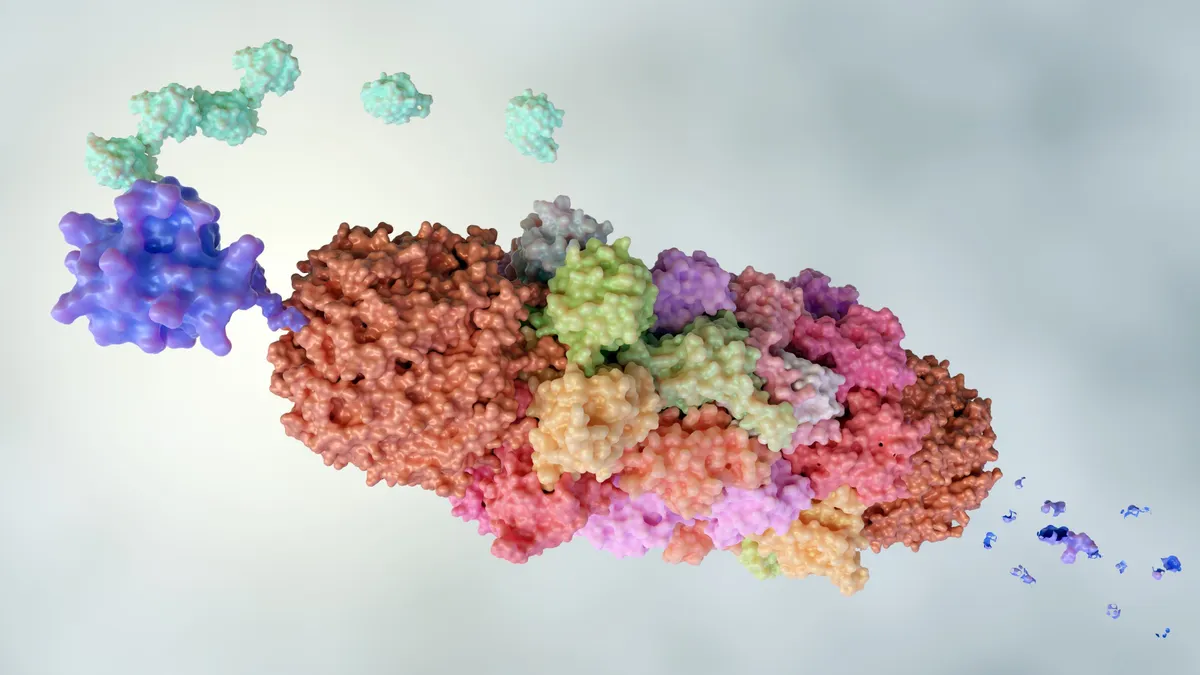
Talvey has become a central player in that goal. The drug is a bispecific antibody approved in 2023 for the treatment of multiple myeloma in adults who have received at least four prior lines of treatment. The drug is one of a growing class of medications called bispecific antibodies, binding to the CD3 protein on immune cells and also targeting a protein found on malignant blood plasma cells known as GPRC5D.
While Talvey is a relatively younger product, the drug produced revenue of $463 million in 2025, a 61% increase from its first full year on market at $287 million. Meanwhile, J&J’s oncology business increased overall by 22% from $20.8 billion in 2024 to $25.4 billion in 2025.
J&J said the Phase 3 results are the first to “demonstrate superior progression-free survival with a GPRC5D bispecific antibody combination in earlier-line multiple myeloma.”
The company says it is now working with global regulatory authorities to expand Talvey’s use.